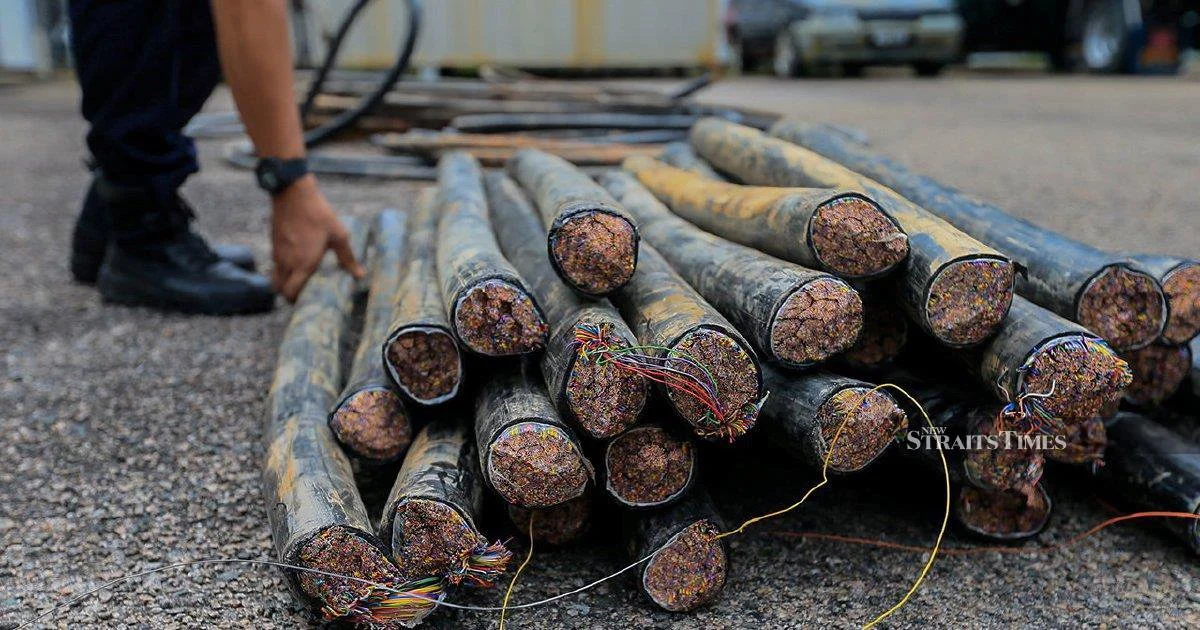
Cable theft in Kuala Lumpur appears to be losing momentum, according to latest police statistics that reveal a marked reduction in incidents during the opening months of 2025. Authorities have recorded just 71 reports of cable theft between January and May this year, a significant drop when measured against the previous year's tally of 205 cases throughout 2024. The decline suggests that intensified enforcement efforts and heightened public awareness may finally be yielding tangible results in combating this persistent form of urban crime.
The reduction in reported cases provides a cautiously optimistic outlook for the capital's infrastructure protection and public safety. Cable theft has long plagued major Malaysian cities, disrupting telecommunications networks, power supplies, and transportation systems while creating dangerous situations for unsuspecting members of the public. The thieves typically target copper cables and other valuable metals that can be quickly sold to scrap dealers, generating fast cash but causing extensive collateral damage to essential services.
Police efforts to curb the problem appear to be bearing fruit, with 85 suspects arrested during the five-month period under review. These arrests represent proactive law enforcement work aimed not only at apprehending offenders but also at dismantling the networks that facilitate the theft and resale of stolen materials. The intensity of police operations targeting this crime category demonstrates a strategic commitment to addressing infrastructure crime as a priority issue affecting urban livability.
The statistical comparison is particularly revealing when annualized. Had the January-May rate of 71 cases continued throughout 2025, the year would register approximately 170 incidents, representing a reduction of roughly 17 percent from 2024's 205 cases. While such projections carry inherent uncertainty, the trend direction appears encouraging. This improvement may reflect a combination of enhanced police patrols in vulnerable areas, improved coordination between security agencies and utility companies, and perhaps greater community reporting of suspicious activities.
Understanding the mechanics of cable theft networks is essential to appreciating the significance of the police arrests. Thieves operate within organized chains that include field operatives who identify and remove materials, intermediaries who transport stolen goods, and buyers at the scrap metal markets who convert theft into profit. By targeting 85 individuals across the supply chain, authorities have disrupted multiple links in these criminal networks, potentially impacting their operational capacity.
The cable theft problem extends beyond mere property crime to encompass serious public safety concerns. Unsafe removal of cables can cause electrocution deaths, while severed communications lines endanger emergency response capabilities. Infrastructure damage translates directly into economic losses for utility providers, telecommunications companies, and ultimately consumers who bear the burden through service disruptions and rate adjustments. Kuala Lumpur's standing as Southeast Asia's premier commercial hub makes such disruptions particularly consequential.
The enforcement success may also reflect improved coordination between Kuala Lumpur police and municipal authorities responsible for infrastructure. When utility companies enhance their own security measures—installing protective covers, increasing surveillance, and improving lighting around vulnerable installations—they create natural deterrents that complement police enforcement. Such multi-stakeholder approaches tend to prove more effective than policing efforts undertaken in isolation.
Geographic concentration of theft incidents has historically offered another avenue for police intervention. Certain areas, particularly those with aging infrastructure or inadequate security lighting, have traditionally experienced higher theft rates. Focused deployment of additional patrols and surveillance equipment in these hotspots creates an environment where potential offenders face increased apprehension risks, potentially shifting criminal activity elsewhere or deterring it entirely.
The arrested individuals now entering the criminal justice system will face prosecution under relevant statutes, including those addressing theft, receiving stolen goods, and potentially conspiracy charges depending on their roles within criminal networks. Successful prosecution and incarceration of key network participants serves a dual function: removing active offenders from circulation while signaling to potential recruits that participation in cable theft carries genuine legal consequences.
Looking ahead, maintaining this downward trend will require sustained commitment from police, enhanced infrastructure security investments by utility companies, and public cooperation in reporting suspicious activities. The progress achieved in the first five months of 2025 demonstrates that cable theft, while deeply entrenched in urban Malaysia's criminal landscape, is not inevitable or immutable. Continued strategic enforcement, coupled with infrastructure hardening and community engagement, offers realistic prospects for further reducing an offense category that has long inflicted disproportionate harm on Kuala Lumpur's urban residents and essential services.
The implications for Malaysian cities beyond the capital are worth considering. Cable theft remains a regional problem affecting Selangor, Penang, and other major urban centers. The operational strategies proving effective in Kuala Lumpur, if adapted and applied in other jurisdictions, could potentially generate similar reductions in incidents nationwide, contributing to more reliable infrastructure and safer urban environments across the country.