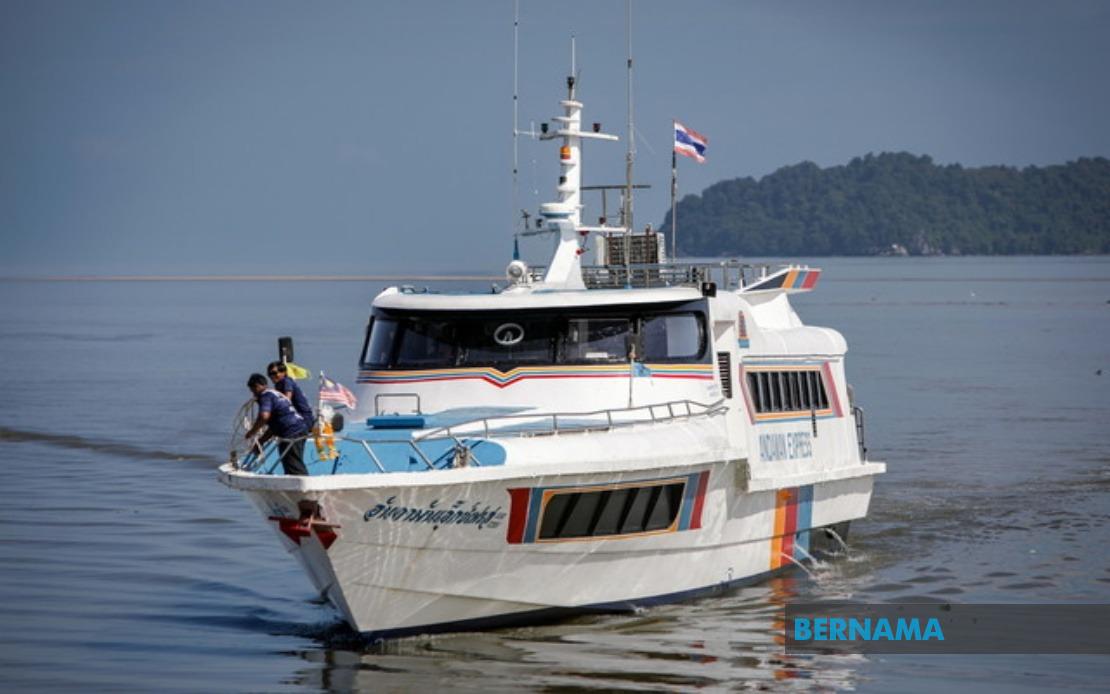
The sea crossing between Kuala Perlis in Malaysia and Satun in Thailand will resume operations on July 9, marking the return of a vital link severed by the COVID-19 pandemic. The reopening carries significant potential for revitalizing regional tourism networks and deepening economic integration between the two neighbouring countries, particularly for visitors exploring their respective geopark attractions.
Perlis Menteri Besar Abu Bakar Hamzah announced the development following a full operational simulation conducted at Tammalang Jetty in Satun. The exercise demonstrated that ferry operations, safety protocols, and procedural requirements met international standards on both sides of the Andaman Sea crossing. Abu Bakar stressed that all regulatory frameworks involving Malaysian customs, immigration, and marine authorities had been satisfied, ensuring a seamless transition from closure to regular service.
The strategic significance of this route extends beyond simple passenger convenience. Abu Bakar outlined an ambitious framework for regional cooperation that would unite three UNESCO Global Geopark destinations: Perlis Geopark on the Malaysian side, Satun UNESCO Global Geopark in Thailand, and Langkawi UNESCO Global Geopark further south. This collaborative structure represents an innovative approach to destination marketing, enabling tourists to experience interconnected geological formations and natural heritage across borders without navigating lengthy overland routes. The establishment of a dedicated coordinating committee comprising representatives from all three geopark areas signals serious commitment to sustainable, collaborative tourism development in the Andaman region.
For Malaysian travellers and businesses, the ferry service offers a direct gateway to southern Thailand's rapidly developing tourism infrastructure. Satun province has invested substantially in preserving its limestone karst landscapes and marine ecosystems, positioning itself as an alternative to more crowded tourist destinations. The short maritime crossing effectively shortens travel time for Perlis residents and West Coast visitors exploring Thailand's natural wonders, while simultaneously opening Thai tourists direct access to Malaysia's northwestern attractions.
The initial operating schedule will feature a single daily departure, a cautious approach that allows operators to assess demand and refine logistics before scaling up. Abu Bakar indicated that frequency expansion remains contingent on passenger volumes and market response. This phased rollout reflects practical business thinking; premature expansion could burden operators with unutilized capacity and rising costs, while conservative growth allows for gradual infrastructure improvements and staff training enhancements.
Fare pricing strategy represents another area receiving close governmental attention. Abu Bakar revealed that the Perlis state government is actively negotiating with ferry operators to maintain competitive pricing structures while exploring promotional fare schemes during the launch phase. Such incentives prove crucial for establishing traveller habits and building patronage momentum. By subsidizing or discounting early voyages, both governments recognize that generating initial passenger interest drives long-term viability and validates the investment in route maintenance and port infrastructure.
Physical infrastructure improvements at Kuala Perlis complement the service launch. The state government is upgrading the Roll-on-Roll-off terminal, including dedicated routing systems designed to streamline vehicle and passenger processing. These enhancements address longstanding operational bottlenecks and signal confidence in sustained service demand. Improved port facilities reduce turnaround times and enhance the passenger experience, factors that directly influence repeat usage and tourist satisfaction.
For Malaysia's eastern Perlis state, the ferry reopening addresses a geographical disadvantage. While neighbours Kedah and Penang benefit from established international tourism infrastructure, Perlis has historically remained peripheral to major tourist circuits. Direct maritime access to Satun provides a competitive advantage, positioning Perlis as a gateway for seamless regional exploration. This could catalyze secondary development: accommodation upgrades, restaurant expansion, and attraction enhancement throughout the state.
The wider Southeast Asian context reveals growing momentum towards cross-border tourism corridors. Thailand's Eastern Economic Corridor and Malaysia's regional development initiatives increasingly emphasize transnational destination packages rather than isolated national offerings. The Kuala Perlis-Satun route aligns with this strategic direction, demonstrating how bilateral cooperation transforms geographical proximity into tangible economic advantage. Similar initiatives across Southeast Asia suggest that reopened maritime routes, simplified border procedures, and coordinated marketing represent competitive strategies for post-pandemic tourism recovery.
For Thai authorities in Satun, the ferry service renewal strengthens their position within Thailand's tourism landscape. The province can now market itself not merely as a standalone destination but as an integrated component of a tri-geopark tourism zone. This positioning appeals particularly to experiential travellers seeking geological diversity and natural heritage experiences, demographics increasingly dominant in regional tourism preferences.
Operational synchronization across borders demands sustained diplomatic engagement. The successful simulation reportedly involved smooth coordination between Malaysian and Thai authorities, suggesting institutional readiness for regular cross-border operations. Maintaining this cooperation requires ongoing dialogue regarding schedule adjustments, emergency protocols, and regulatory harmonization—crucial elements often overshadowed by headline reopening announcements but essential for long-term service stability.
Looking forward, the ferry service's trajectory will depend on multiple factors: global tourism recovery patterns, regional economic conditions, and competitive pressures from alternative transport modes. However, the deliberate approach taken by both governments—emphasizing safety, infrastructure readiness, and market-responsive pricing—suggests serious intent to develop this route as permanent regional infrastructure rather than experimental project. Success could establish a template for similar bilateral tourism initiatives throughout Southeast Asia.

