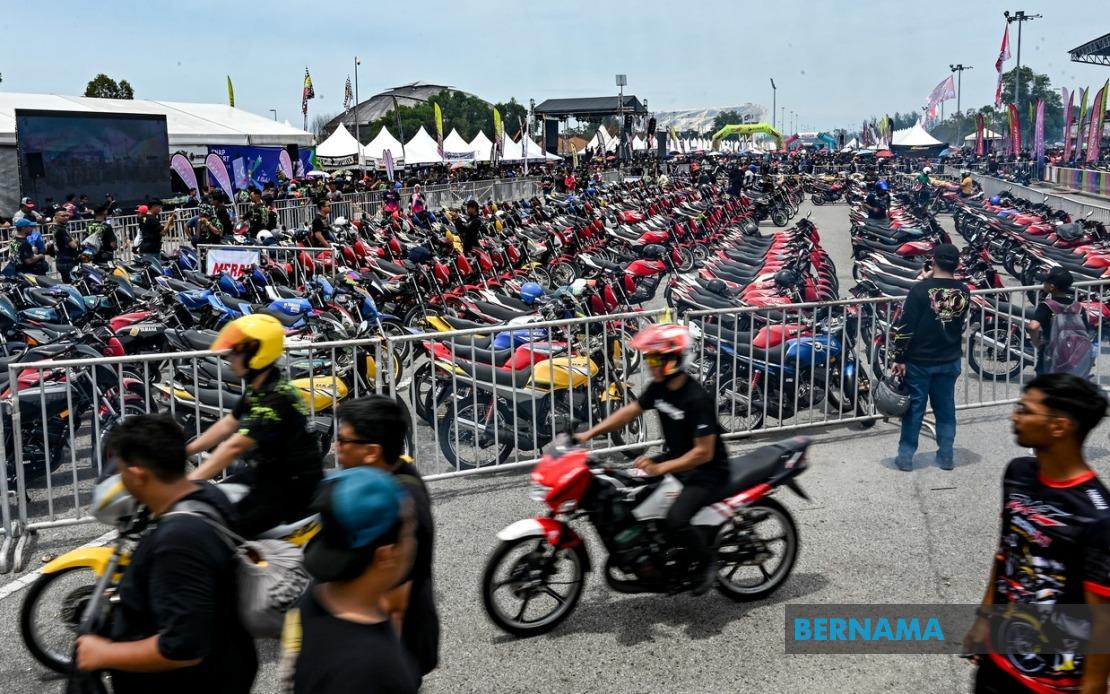
Kuala Terengganu City Council (MBKT) has incurred a substantial cleanup bill of RM40,000 following the RXZ Members 8.0 event held at the Gong Badak Motor Racing Circuit near Kuala Nerus last weekend. The significant expense underscores the growing challenge Malaysian municipalities face in managing environmental impact from large public gatherings, particularly when attendance projections exceed capacity and attendee behaviour falls short of environmental stewardship expectations.
The financial outlay encompasses overtime wages for municipal workers, multiple additional waste collection vehicle trips, and extended operating hours at the Sungai Ikan landfill facility. Kuala Terengganu mayor Lizan Che Mamat disclosed that approximately 130 tonnes of solid waste—predominantly food and beverage packaging—was collected from the event venue, necessitating a substantially scaled-up waste management response that strained council resources and budgets.
Lizan acknowledged the paradox facing event organisers and municipal authorities in modern urban management: while rubbish receptacles were positioned throughout the venue, attendees frequently disregarded these facilities and deposited litter indiscriminately across the grounds. This disconnect between infrastructure provision and public compliance represents a persistent problem affecting Malaysian cities hosting major events, from concerts to sports tournaments, where individual responsibility falters amid crowd dynamics and festive atmospheres.
The mayor attributed part of the challenge to unprecedented turnout. Attendance exceeded 100,000 people—apparently beyond original capacity forecasts—which may have strained waste management infrastructure designed for smaller crowds. However, Lizan emphasised that this explanation, while contextually relevant, could not excuse the widespread littering pattern observed throughout the site. He reiterated that attendees should have concentrated discarded materials at clearly designated collection points rather than distributing waste across the entire racing circuit.
Looking forward, MBKT intends to implement stricter regulatory mechanisms for future large-scale events. The council is contemplating making submission of comprehensive solid waste management plans a mandatory condition for event approval. This preventive approach would shift responsibility upstream to organisers, compelling them to develop detailed strategies addressing waste generation, collection logistics, and environmental safeguarding before events commence.
Simultaneously, the council is reviewing the cleaning deposit system currently imposed on event organisers. Lizan suggested that deposit amounts might be recalibrated to better reflect actual cleanup costs and to distribute financial burden more equitably between private event organisers and municipal authorities. This recalibration would theoretically incentivise organisers to invest in superior waste management systems while recovering costs more fairly from those generating the environmental impact.
Despite the cleanup challenges, municipal leadership expressed enthusiasm for continuing to host major events in Terengganu. Lizan recognised that large-scale activities and programmes generate tangible economic benefits, stimulating tourism revenue and invigorating local business sectors. This reflects the strategic calculus many Malaysian cities employ: welcoming high-profile events despite associated infrastructure costs, because the economic multiplier effects justify the investment.
However, this calculus depends upon improving environmental compliance. Lizan framed environmental stewardship as collective responsibility rather than solely a municipal obligation. His messaging implicitly critiques attendee behaviour while defending the council's willingness to facilitate events—contingent upon public cooperation in maintaining cleanliness standards. This rhetorical approach seeks to establish shared accountability, moving beyond the traditional model where councils absorb all cleanup responsibilities.
The RXZ Members 8.0 incident illustrates systemic challenges confronting Southeast Asian cities as event tourism accelerates. Infrastructure and regulation have not kept pace with attendance growth. Malaysian municipalities increasingly confront decisions about whether accepting large events justifies expenditure on cleanup and facility expansion, particularly when attendee compliance with environmental norms remains inconsistent.
For organisers across Malaysia and the region, the Kuala Terengganu experience signals tightening expectations. Future event approvals will likely depend upon demonstrating robust waste management planning and attendee education initiatives. Councils are consolidating expectations: yes to large events, but organisers must assume proportionally greater environmental responsibility rather than shifting all costs to municipal budgets.
The RM40,000 expenditure represents not merely cleanup costs but an implicit environmental tax on poor public behaviour—a burden ultimately borne by taxpayers. Whether forthcoming regulatory changes and deposit adjustments effectively discourage littering remains uncertain, but MBKT's proactive stance reflects broader regional recognition that sustainable event hosting requires evolving governance approaches that balance economic opportunity with environmental protection and fiscal responsibility.

