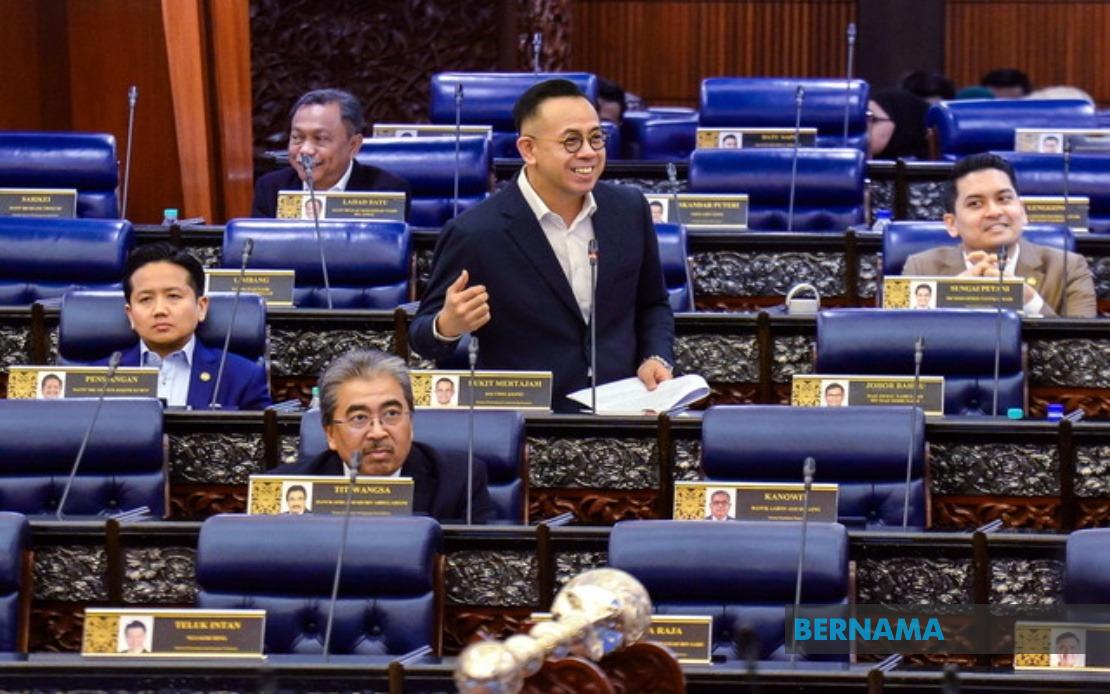
The Ministry of Entrepreneur and Cooperative Development (KUSKOP) has channelled nearly RM3 billion into a comprehensive suite of programmes aimed at strengthening Bumiputera entrepreneurship between 2023 and 2025, Minister Steven Sim Chee Keong revealed in parliament this week. The ministry's approach represents a significant commitment to expanding economic opportunities within Malaysia's indigenous business community, reflecting the government's strategic priority of inclusive economic development across diverse enterprise categories and geographical regions.
Measuring the success of such substantial public investment requires robust frameworks beyond simple expenditure tracking. Rather than relying solely on spending figures, KUSKOP has established specific performance benchmarks to gauge programme effectiveness. The ministry targets a minimum 20 per cent increase in sales revenue among participating entrepreneurs, alongside tracking the expansion of approximately 150 companies into larger operational scales. These metrics provide tangible evidence of whether interventions translate into genuine business growth, moving beyond inputs to demonstrate concrete outcomes for programme beneficiaries.
The government's evaluation methodology reflects a broader shift toward results-based accountability in development spending. Sim acknowledged that return on investment calculations require examining multiple indicators rather than relying on a single measure. For entrepreneurship support programmes, this means scrutinising whether participants achieve sustainable revenue growth, whether their enterprises expand to employ additional workers, and whether their market presence strengthens. Such outcome-focused assessment helps policymakers understand whether allocated funds genuinely catalyse business development or merely represent distribution without lasting impact.
Expanding the focus to 2025 year-to-date figures reveals accelerating programme momentum. During the first five months of 2025, KUSKOP had approved financing totalling RM5 billion reaching nearly 180,000 entrepreneurs across all racial backgrounds and diverse business sectors nationwide. This broader funding extends beyond Bumiputera-specific initiatives to encompass micro, small, and medium enterprises (MSMEs) operated by entrepreneurs of any heritage, demonstrating the ministry's commitment to inclusive economic participation across Malaysia's plural society.
Within this wider landscape, Bumiputera-targeted programmes remain a distinct policy focus. From 2025 through May 2026, specialised initiatives operating through KUSKOP's institutional network have approved RM1.407 billion in financing benefiting more than 53,000 Bumiputera entrepreneurs. This dedicated stream reflects constitutional protections for Bumiputera economic interests while supporting their fuller participation in Malaysia's evolving market economy. The granular breakdown further reveals that youth entrepreneurship represents a particular emphasis, with over 11,400 Bumiputera young people accessing more than RM251 million in support, suggesting governmental recognition that entrepreneurial capacity-building among younger generations carries strategic importance for long-term economic transformation.
Beyond financing, KUSKOP has integrated halal industry development into its broader empowerment strategy. As Malaysia positions itself as a global halal hub and export destination, helping entrepreneurs navigate certification processes and accessing halal-certified supply chains creates competitive advantages. The ministry's multiple agencies work to reduce barriers to halal compliance, enabling participants to access markets—both domestic and international—where halal credentials command premium valuations and expanding consumer preference. This dimension adds value beyond simple capital provision by addressing specific industry requirements relevant to Muslim-majority Southeast Asia's economic ecosystems.
Recognising the fragmentation that often characterises government support systems, parliamentarians have advocated for consolidated coordination mechanisms. Mas Ermieyati Samsudin raised concerns about the absence of unified databases or single-window facilities that entrepreneurs could approach for assistance. Such fragmentation imposes transaction costs on business owners seeking support, requiring them to navigate multiple agencies, application processes, and eligibility criteria scattered across different government entities. This dispersal can deter eligible entrepreneurs from accessing available resources, particularly those operating from less-resourced regions or with limited administrative capacity.
In response, KUSKOP has designated SME Corp Malaysia as the coordinating hub for entrepreneurship support across the ministry's portfolio. SME Corp functions as an integrated information centre and application gateway, consolidating financing options, grant programmes, and other development resources. The agency screens applicants and directs them to appropriate funding sources, reducing search costs and improving matching efficiency between entrepreneurs' needs and available government assistance. This intermediation role acknowledges that entrepreneurs require simplified pathways to support rather than exhausting navigations through multiple bureaucratic channels.
Expanding this coordination strategy, KUSKOP has developed an online portal listing over 60 government agencies' support offerings. This digital infrastructure aggregates entrepreneurship assistance across ministries and statutory bodies into a searchable, transparent inventory. Entrepreneurs can identify relevant programmes without personally contacting dozens of agencies, substantially lowering information barriers. For Malaysia's increasingly digital-savvy business population, particularly among younger cohorts and those in urban areas, such centralised online accessibility improves service utilisation and reduces administrative friction that historically deterred MSME support programme uptake.
The scale of this commitment—RM3 billion allocated specifically for Bumiputera empowerment, plus broader RM5 billion annual financing volumes—positions entrepreneurship development as a significant budget priority. For regional context, Malaysia's approach reflects broader Southeast Asian trends toward active government support for SME ecosystems, competing with Thailand's SME promotion policies, Indonesia's cooperative development strategies, and Singapore's enterprise development frameworks. However, Malaysia's particular emphasis on constitutional Bumiputera protections while maintaining inclusive access for non-Bumiputera entrepreneurs represents a distinctive balancing act between targeted affirmative action and non-discriminatory economic governance.
The effectiveness of these initiatives ultimately depends on implementation quality and participant engagement. RM3 billion mobilised toward entrepreneur support carries genuine transformative potential if programmes attract qualified participants, deliver relevant training and mentorship, and connect businesses to markets. Conversely, poorly designed or inadequately promoted schemes risk becoming ceremonial wealth transfers offering limited sustainable business development. The ministry's emphasis on measurable sales growth and business expansion metrics suggests awareness that true programme success requires moving participating entrepreneurs beyond subsidy dependence toward competitive market engagement, creating resilient enterprises that survive and prosper independently of government support.

