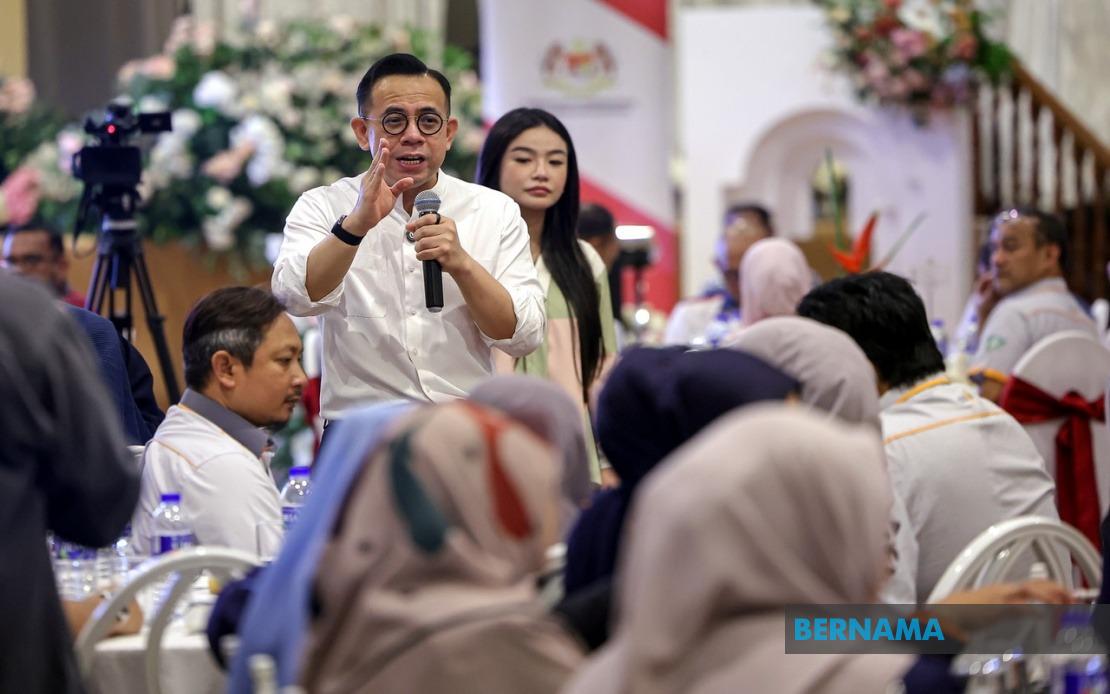
Malaysia's entrepreneurship support machinery has stepped up its financing efforts, with the Ministry of Entrepreneur Development and Cooperatives (KUSKOP) announcing the disbursement of nearly RM7 billion to over 213,000 micro, small and medium enterprises during the opening six months of 2026. Minister Steven Sim revealed this achievement in Seremban, underscoring the government's determination to strengthen the MSME sector amid persistent global economic uncertainty and international market volatility.
The funds represent substantial progress towards KUSKOP's RM15 billion annual disbursement target, channelled through a suite of financing and support mechanisms operating under the Power Up 10K umbrella programme. This halfway milestone suggests the ministry is tracking closely to meet its year-end objective, pending continued operational efficiency across its network of implementing agencies. The scale of distribution—benefiting a quarter-million enterprise operators in just six months—demonstrates the breadth of the government's reach into Malaysia's entrepreneurial ecosystem, from sole proprietors to larger small business concerns.
Negeri Sembilan has emerged as a notable beneficiary within this national framework, attracting RM345 million in Power Up programme funding directed to more than 6,600 local business operators. Sim highlighted this state-level performance as evidence that government capital is successfully penetrating to grassroots entrepreneurs rather than remaining concentrated in urban centres or major commercial hubs. This geographical distribution is significant for Malaysia's regional economic development strategy, as it suggests support mechanisms are reaching smaller towns and rural areas where enterprise density may be lower but growth potential remains substantial.
The underlying policy philosophy reflects a recognition that external economic pressures—including petroleum price fluctuations and international supply chain disruptions—remain beyond government control. Consequently, KUSKOP's strategic pivot centres on reducing the compliance burden that entrepreneurs face domestically. By streamlining regulatory costs and simplifying administrative procedures at the local government and federal agency level, the ministry aims to preserve business viability and competitiveness. This represents a pragmatic acknowledgment that support extends beyond direct capital injection to encompass the operational environment within which enterprises function.
Sim articulated a fresh institutional direction requiring all KUSKOP-affiliated agencies to position themselves as proactive partners rather than passive administrators. Rather than maintaining a reactive stance where entrepreneurs must navigate bureaucratic channels to identify available assistance, the ministry is mandating more aggressive outreach. This includes intensified roadshow activities, targeted social media campaigns, and direct engagement with business communities. The shift signals recognition that awareness gaps persist regarding available programmes and facilities, even among the intended beneficiary population.
This strategic reorientation introduces an element of healthy inter-agency competition centred on disbursement velocity. By encouraging state-level organisations to accelerate fund distribution rather than awaiting entrepreneur applications, KUSKOP aims to inject urgency into implementation. This approach contrasts with traditional bureaucratic pacing and suggests the ministry recognises that speed of capital access can meaningfully influence entrepreneur decision-making regarding expansion, technology adoption, or workforce development investments.
For Malaysian entrepreneurs, particularly those operating in secondary cities and towns, the expanded funding availability and simplified access mechanisms could enable business scaling that previously faced financing constraints. MSMEs constitute the backbone of Malaysia's employment structure and contribute substantially to domestic GDP, making their competitive resilience a national economic priority. Enhanced capital availability, combined with reduced compliance costs, potentially creates a more favourable operating environment for small business expansion and job creation.
The regional context matters considerably for Malaysian MSME performance. Southeast Asian economies increasingly compete for investment and market share in increasingly integrated regional supply chains. Malaysian entrepreneurs require both capital and operational flexibility to maintain competitiveness against businesses in Thailand, Vietnam, Indonesia, and other neighbouring nations. KUSKOP's dual emphasis on financing access and regulatory streamlining directly addresses these competitive pressures.
However, the success of such initiatives ultimately depends on implementation fidelity across KUSKOP's distributed agency network. Ensuring that RM7 billion in the first half translates to effective business outcomes—rather than merely capital allocation without corresponding productivity gains—requires ongoing monitoring and performance measurement. The ministry's emphasis on proactive engagement suggests awareness that even well-funded programmes can underdeliver if marketing and accessibility barriers prevent would-be beneficiaries from accessing support.
Looking forward, KUSKOP's trajectory will be closely monitored by both policymakers and the business community. Meeting the RM15 billion annual target while simultaneously improving programme accessibility and reducing compliance costs represents an ambitious operational agenda. The ministry's willingness to challenge traditional bureaucratic processes and introduce competitive dynamics among implementing agencies suggests organisational adaptability. Whether this energy translates into measurable improvements in MSME performance metrics—including revenue growth, employment expansion, and export participation—will ultimately determine whether the Power Up 10K initiative represents transformative policy or incremental adjustment.

