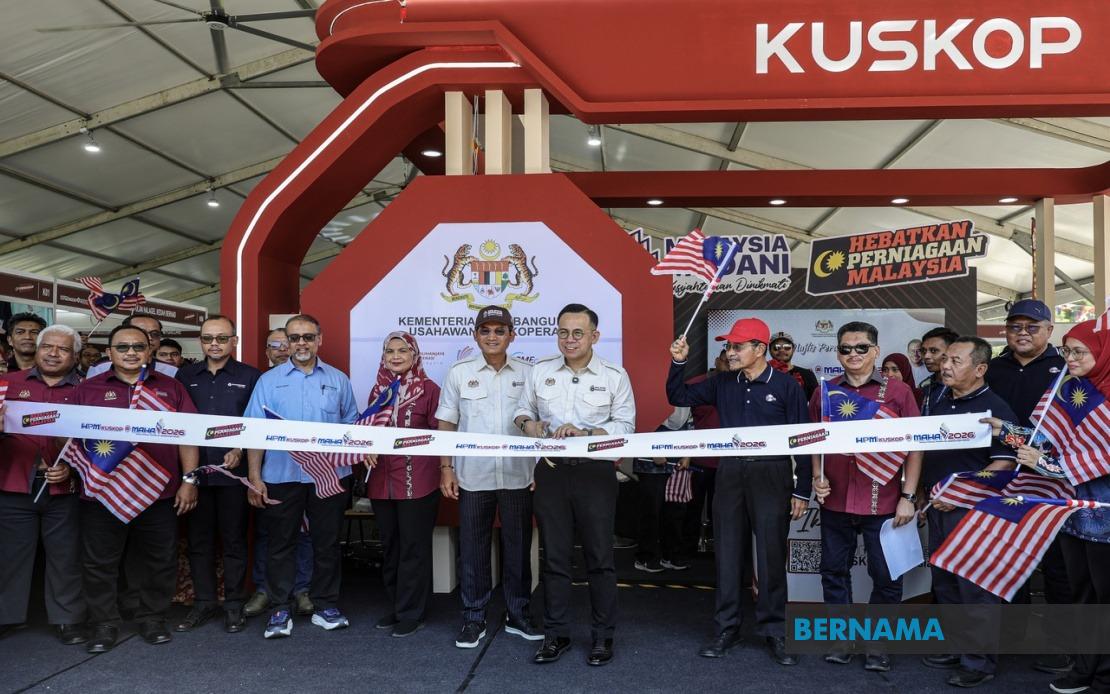
The Ministry of Entrepreneur and Cooperatives Development (KUSKOP) has set an ambitious RM500,000 sales target for its first-ever participation at the Malaysia Agriculture, Horticulture and Agro-Industry Exhibition (MAHA), held at Serdang. The inaugural HPMKUSKOP@MAHA 2026 site opened to considerable early momentum, with more than RM110,000 in sales already recorded before the official mid-point of the event, signalling strong visitor interest in the entrepreneurial offerings on display.
Minister Steven Sim announced the targets and progress during an officiating ceremony at the exhibition grounds, emphasizing the collaborative scope of KUSKOP's participation. The ministry has secured a single pavilion at the biennial showcase but filled it with substantial representation from Malaysia's business community. Approximately 66 firms, cooperative societies, and micro, small and medium enterprises (MSMEs) have established booths at the site, reflecting KUSKOP's commitment to providing a unified platform for entrepreneurs seeking market exposure and sales opportunities during one of the country's premier agricultural and commercial events.
The scale of visitor engagement has reinforced the value proposition of the MAHA platform for entrepreneurial ventures. More than 100,000 visitors had passed through the exhibition grounds in the days preceding the minister's remarks, creating a concentrated consumer base for the 66 participating enterprises. This foot traffic volume demonstrates the magnetism of MAHA as a destination where rural and urban audiences converge, offering businesses direct access to a demographically diverse purchasing pool that might not be easily reached through conventional retail or online channels alone.
The RM500,000 target, if achieved, would represent a meaningful validation of government support for entrepreneurship at a crucial juncture for Malaysian MSMEs. The nation's micro and small enterprise segment has faced persistent challenges in accessing capital, market visibility, and distribution networks. By organizing a coordinated exhibition space at MAHA, KUSKOP addresses multiple pain points simultaneously—providing logistical simplification for participating firms, pooling marketing efforts, and leveraging the agricultural show's existing reputation to draw potential customers. Early sales performance suggests this model resonates with both vendors and consumers.
KUSKOP's decision to debut at MAHA 2026 also signals a strategic pivot toward experiential commerce and direct-to-consumer engagement. The ministry recognizes that not all entrepreneurial success emerges from digital-first strategies; physical marketplaces remain vital for building brand awareness, collecting customer feedback, and executing volume sales that can accelerate business growth. Agricultural exhibitions in Malaysia have historically served this gatekeeping function, filtering viable enterprises and connecting them with supply chain partners, distributors, and end consumers simultaneously.
The composition of participating entities at the HPMKUSKOP@MAHA site reflects broader patterns in Malaysia's entrepreneurial ecosystem. Cooperatives have long been positioned as vehicles for collective bargaining and market access, particularly in rural contexts. Their presence alongside private MSMEs and larger companies suggests KUSKOP views the exhibition as an opportunity to demonstrate the cooperative model's continued relevance in contemporary commerce. For cooperative members, the shared exhibition space can lower individual barriers to entry while allowing collective branding strategies that might amplify visibility compared to standalone participation.
Second-phase planning and resource allocation at KUSKOP will likely depend on achieving or exceeding the RM500,000 target. Sales shortfalls might prompt adjustments to future exhibition strategies, pavilion sizing, or the composition of participating enterprises. Conversely, exceeding targets could justify expanded participation at future MAHA editions or investment in dedicated traveling exhibition formats throughout the year. Government agencies often use initial performance metrics to justify budget allocations and programmatic expansion, making the commercial success of this debut participation particularly consequential for KUSKOP's medium-term strategic direction.
The ministry's participation reflects broader government emphasis on entrepreneurship as an engine of inclusive economic growth. By curating and promoting 66 enterprises at a high-traffic venue, KUSKOP operationalizes its mandate to develop the entrepreneurship sector and strengthen cooperative institutions. The initiative also supports Malaysia's Shared Prosperity Vision by channeling consumer spending toward local enterprises and cooperatives rather than permitting market concentration among dominant retail chains or foreign e-commerce platforms.
Minister Steven Sim's public commendation of the Ministry of Agriculture and Food Security, led by Datuk Seri Mohamad Sabu, underscores the inter-ministerial coordination required to execute successful large-scale exhibitions. MAHA operates within the agriculture portfolio's purview, yet its commercial success depends on attracting exhibitors and visitors from diverse sectors. KUSKOP's participation exemplifies how Malaysia's government agencies increasingly recognize exhibition platforms as multi-stakeholder opportunities rather than isolated sectoral showcases. This cross-ministry collaboration suggests potential for similar coordinated exhibitions in future agricultural events or other commercial gatherings where entrepreneurship and cooperative development can be integrated into existing frameworks.
The attendance of KUSKOP secretary-general Datuk Seri Khairul Dzaimee Daud alongside the minister indicates institutional commitment to the initiative. Senior leadership presence at exhibition sites signals to participating enterprises that government support is substantive rather than nominal. This visibility also facilitates networking between government officials and business representatives, potentially catalyzing follow-up engagement or identifying emerging policy priorities grounded in direct entrepreneur feedback.
Looking forward, the success of HPMKUSKOP@MAHA 2026 may reshape how Malaysian government agencies approach marketplace activation and entrepreneurial support. If sales targets are met or exceeded, the model could become a template for integrating entrepreneurship programming into existing cultural, agricultural, and commercial events nationwide. For Southeast Asian counterparts, Malaysia's institutional approach to curated exhibition spaces offers instructive lessons in coordinating public sector resources, enterprise participation, and consumer engagement to achieve developmental objectives while supporting immediate business growth.

