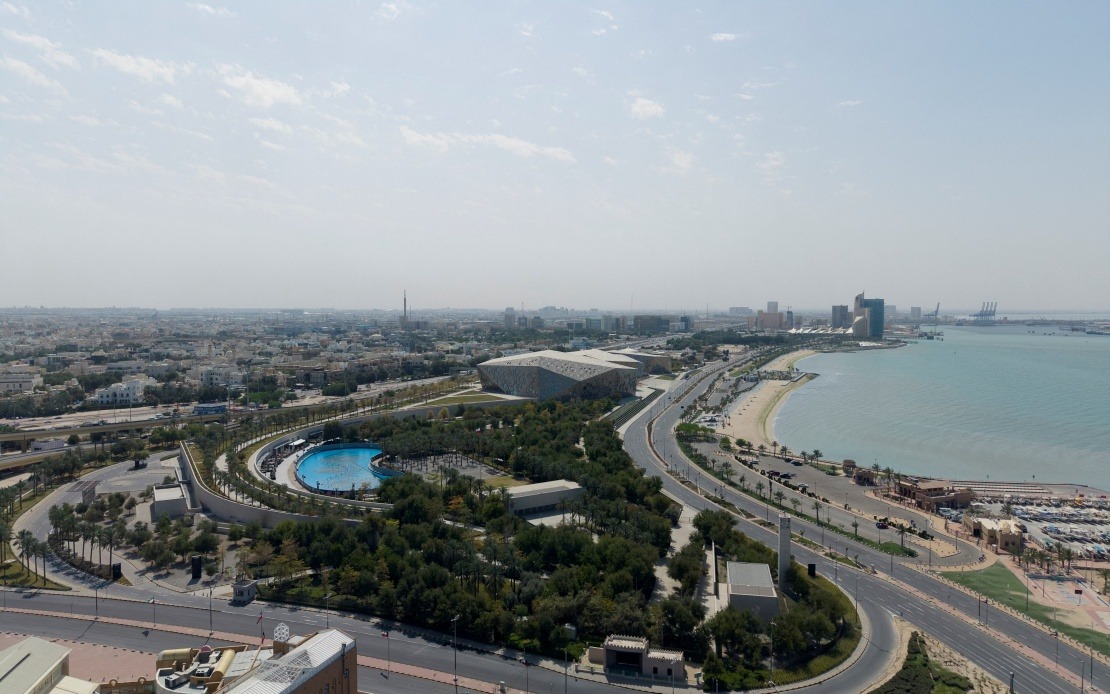
Kuwait's military mobilised its air defence systems in the early hours of Wednesday following what authorities characterised as a hostile drone incursion originating from Iran. The country's armed forces confirmed that air defence installations were actively intercepting incoming unmanned aircraft, cautioning residents that audible explosions across various parts of the nation would result from the defensive response rather than direct attacks. The military issued guidance to the public to adhere to safety protocols disseminated by relevant governmental authorities, indicating the seriousness with which officials treated the incident.
Prior to the drone engagement, Kuwaiti authorities reported that firefighting personnel had successfully contained a fire at an unspecified location believed to have been targeted during what they described as an Iranian military operation. Notably, officials provided no casualty figures and refrained from divulging either the strategic nature of the targeted site or its geographical location within the country, a reticence that likely reflected both security protocols and the sensitive nature of the regional dynamics at play.
The incident extended beyond Kuwait's borders, with Bahrain simultaneously experiencing its own defensive measures. The island nation's Interior Ministry activated air raid alert systems and appealed to both citizens and foreign residents to remain composed whilst proceeding to the nearest designated shelter. This coordinated response across two key Gulf Cooperation Council members underscored the coordinated nature of Iranian military operations and the widespread vulnerability affecting the broader regional security architecture.
Bahrain's own military had already publicly acknowledged defensive actions undertaken the previous day, with the Bahrain Defence Force announcing that its air defence capabilities had successfully intercepted and eliminated what it termed "treacherous Iranian aerial attacks." The language employed—particularly the characterisation as "treacherous"—reflected the intensity of animosity underlying the military exchanges and suggested these were not isolated incidents but rather part of an emerging pattern of direct Iranian military assertiveness.
These Gulf incidents represent the most recent manifestations of a broader and increasingly dangerous confrontation between the United States and Iran that has progressively destabilised one of the world's most economically critical maritime regions. Tensions centring on the Strait of Hormuz, through which approximately one-third of globally traded seaborne oil passes, have created cascading security implications extending far beyond the immediate combatants. American military forces have conducted strikes against Iranian targets, whilst Tehran has responded with retaliatory attacks directed at United States military installations distributed across multiple locations throughout the Middle East.
The escalatory spiral presents particular significance for Southeast Asian nations including Malaysia, which maintain substantial energy security dependencies on uninterrupted Gulf oil supplies and shipping through crucial maritime corridors. Any sustained interruption of traffic through the Strait of Hormuz would immediately transmit economic shocks throughout Asian supply chains and elevate regional energy costs, with compounding effects on inflation and economic growth across the region. The frequency and apparent coordination of these attacks suggest a deteriorating security environment rather than isolated incidents that might soon resolve.
Complicated efforts to arrest the escalatory trajectory have apparently yielded limited results. Pakistani-mediated diplomatic negotiations, culminating in a memorandum of understanding theoretically designed to terminate the conflict and establish enduring peace arrangements, have failed to constrain the military operations. The persistence of attacks notwithstanding such diplomatic overtures indicates that fundamental disagreements remain unresolved and that military actors may perceive advantages in continued confrontation that outweigh the benefits of negotiated settlement.
The operational capability demonstrated by Iranian forces—including the apparent coordination of simultaneous or near-simultaneous drone operations against multiple Gulf nations—reveals a sophistication and reach extending beyond previous known Iranian military activities. This suggests either significant technological advancement within Iranian defence industries or, alternatively, the supply of advanced systems from external sources, a consideration that adds additional layers of concern regarding potential third-party involvement in the regional conflict.
For Malaysia and other Southeast Asian maritime trading nations, the implications extend beyond energy security to encompass broader shipping and maritime commerce passing through regional waters. Insurance premiums for vessels transiting the Persian Gulf have escalated markedly, effectively imposing a "risk tax" on international commerce that ultimately burdens consumers throughout Asia. The unpredictability of military operations creates logistical complications for shipping operators and traders attempting to maintain reliable supply chains connecting Asia to Middle Eastern and European markets.
The absence of clear off-ramps from the current trajectory of escalation raises troubling questions about whether conventional diplomatic mechanisms remain adequate to the challenge. Previous regional conflicts have sometimes de-escalated through exhaustion or miscalculation that forced pragmatic reassessment, but the apparent determination of both American and Iranian leadership to maintain military pressure suggests that such mechanisms may not currently be operative. The regional governments of the Gulf, whilst directly endangered by the escalation, possess limited leverage to redirect the ambitions of the extra-regional great power locked in confrontation with Iran.
For Southeast Asian policymakers monitoring these developments, the situation underscores the vulnerability of regional economic systems to disruptions originating from distant geopolitical contests. The events of the past 48 hours in Kuwait and Bahrain, whilst dramatic, represent merely the visible manifestations of deeper structural tensions that show no immediate signs of resolution. Sustained engagement with both established maritime security frameworks and emerging multilateral initiatives addressing regional stability may offer pathways through which Southeast Asian interests can be protected amid continuing Gulf turbulence.

