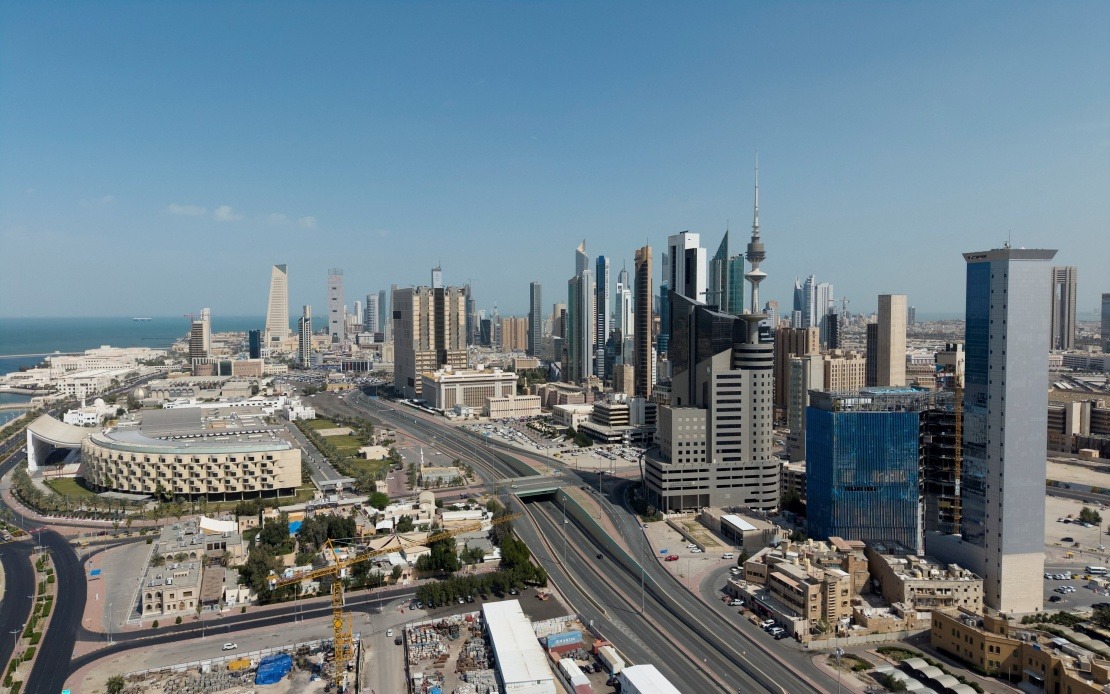
Kuwait has established a substantial emergency financing mechanism to address the physical damage sustained during escalating military tensions in the Persian Gulf region. The Kuwait Emergency Response Fund, capitalised at US$100 million and administered through the Kuwait Fund for Arab Economic Development (KFAED), represents a formal commitment to systematically restore critical infrastructure harmed in cross-border hostilities. Foreign Minister Sheikh Jarrah Jaber Al-Ahmad Al-Sabah unveiled the initiative at a formal press conference, positioning it as a cornerstone of Kuwait's crisis management strategy and national resilience framework.
The fund's establishment reflects Kuwait's vulnerability to regional instability and the tangible costs of geopolitical brinkmanship between major powers. Situated between Iraq and Saudi Arabia, with Iran across the Persian Gulf, Kuwait has historically borne the consequences of broader Middle Eastern conflicts. The damage referenced by Kuwaiti officials stems from the escalating confrontation that intensified in late February when the United States and Israel conducted coordinated military strikes against Iranian targets. Iran's subsequent response, involving ballistic missiles and unmanned aerial vehicles directed at Israeli and American military installations throughout the region, created ripple effects that extended to neighbouring Gulf states including Kuwait.
The governance structure of the emergency fund emphasises deliberate project prioritisation and resource allocation discipline. Acting Director General Waleed Al-Bahar clarified that the KFAED will evaluate incoming financing requests and rank projects according to strategic importance and reconstruction urgency. This methodical approach aims to maximise the impact of available capital by directing funds toward facilities delivering the greatest public benefit. The framework also incorporates mechanisms for assessing damage scope and determining appropriate intervention levels, moving beyond ad-hoc emergency responses toward institutionalised crisis financing.
Kuwait's appeal for contributions from both governmental bodies and private enterprises signals recognition that US$100 million, while substantial, may prove insufficient for comprehensive reconstruction across all affected sectors. Government ministries and independent businesses possess complementary resources, technical expertise, and operational capacity that can multiply the fund's effectiveness. This public-private partnership model has gained traction across the Gulf Cooperation Council region as nations confront infrastructure vulnerabilities exposed by military escalations. The collaborative approach also distributes financial burden more equitably while building consensus around national recovery priorities.
The regional context for Kuwait's initiative encompasses broader anxieties about the sustainability of the current security environment in the Gulf. The February military exchange represented an unprecedented direct confrontation between the United States and Israel on one side and Iran on the other, moving beyond proxy conflicts and covert operations that have characterised decades of regional tension. While the immediate intensity subsided after initial strikes and counter-strikes, the underlying structural tensions remain unresolved, leaving Gulf states in a state of prolonged uncertainty about future escalation risks.
For Malaysian observers, Kuwait's response illustrates how smaller and medium-sized regional powers navigate existential threats when caught between competing superpowers and regional hegemons. Similar dynamics affect several Southeast Asian nations balancing relationships with major powers while protecting critical infrastructure from potential collateral damage. Kuwait's model of rapid institutional response and transparent governance may offer insights for regional neighbours managing comparable vulnerabilities. The emphasis on formal crisis frameworks rather than reactive measures reflects evolving international best practices in disaster and conflict resilience management.
The economic dimensions of reconstruction extend beyond immediate repair costs. Infrastructure damage inflicts productivity losses, disrupts commerce, and erodes investor confidence in regional stability. By establishing dedicated financing mechanisms and demonstrating governmental commitment to systematic recovery, Kuwait attempts to reassure domestic stakeholders and international partners that normalcy will be restored. This confidence-building function proves as important as the capital deployment itself, particularly for economies dependent on foreign direct investment and international trade flows.
The KFAED's expanded mandate reflects evolving expectations for development finance institutions in conflict-prone regions. Traditionally focused on poverty reduction and economic development across Arab nations, the fund now incorporates emergency response functions and conflict-related reconstruction. This evolution mirrors adaptations by multilateral development banks and regional institutions globally as security instability increasingly intersects with development priorities. The transformation acknowledges that sustainable development proves impossible without addressing conflict-induced shocks and ruptures to economic activity.
Kuwait's proactive stance contrasts with the passivity sometimes observed when regional conflicts erupt. Rather than awaiting international aid or allowing damage to accumulate, the government has mobilised domestic resources and institutional capacity immediately. This approach reflects confidence in Kuwait's financial reserves and institutional capabilities, positioning the nation as an actor managing its own recovery rather than a dependent awaiting external assistance. Such agency carries political significance beyond mere pragmatism, reinforcing national sovereignty and self-determination narratives.
The fund's longer-term implications depend significantly on whether regional tensions moderate and whether the US$100 million proves adequate for identified reconstruction needs. Should hostilities resume or expand in scope, the emergency mechanism may require rapid recapitalisation or reprioritisation of projects. Conversely, if the current de-escalation trajectory holds, the fund can focus on systematic infrastructure restoration and capacity building. Either scenario underscores that Kuwait's initiative represents not a final resolution but rather an adaptive institutional response to enduring regional volatility.

