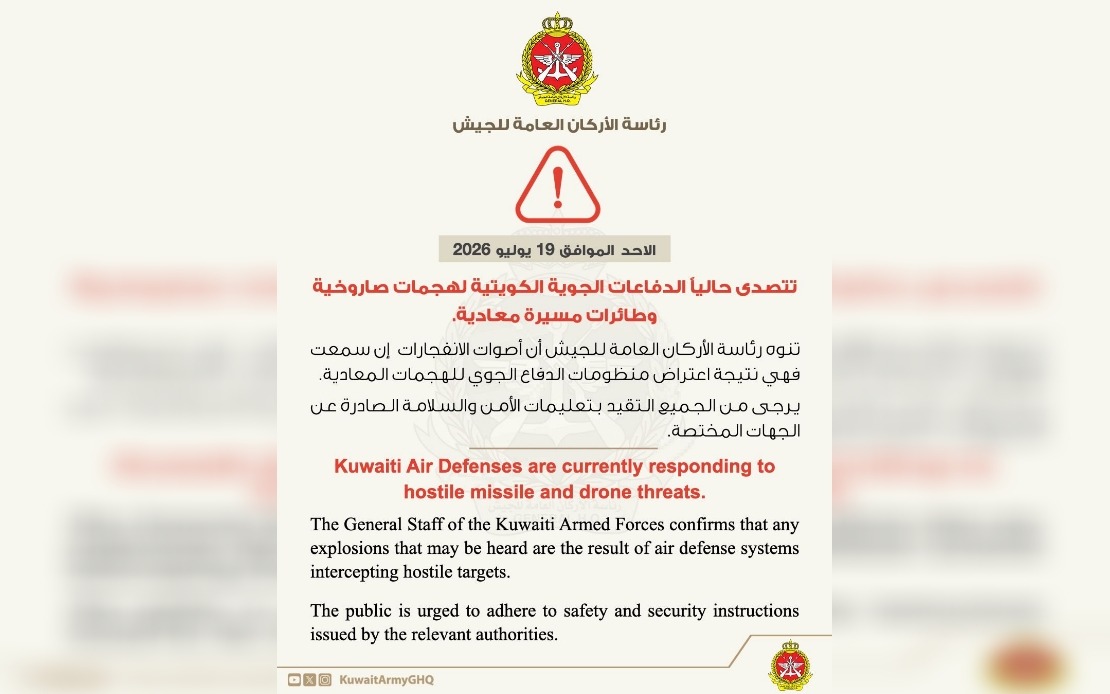
Kuwait's military has announced it is mounting active defences against a barrage of Iranian missile and drone strikes, with air defence systems currently engaged in intercepting incoming hostile targets across the country. The Kuwaiti armed forces disclosed the situation through a public statement on Sunday, alerting residents that any explosive sounds heard throughout the nation stem from defensive interception operations rather than direct attacks on populated areas. The statement reflects the precarious position of the small Gulf state, which finds itself caught between two major regional powers locked in an escalating military confrontation.
The intensification of Iranian attacks represents a significant escalation in what has become a dangerous cycle of tit-for-tat military strikes spanning the past week. Beginning with successive waves of American military operations targeting Iranian sites within Iran's borders, the situation has evolved into a broader regional conflict as Tehran has responded by launching strikes against what it claims are American military installations and facilities across multiple countries in the Gulf and Middle East. Kuwait, hosting significant US military presence including troops and forward operating bases, has emerged as a particularly vulnerable target in this exchange.
This latest flare-up underscores the fragility of earlier diplomatic efforts aimed at de-escalation. In June, Pakistan had brokered a memorandum of understanding between Washington and Tehran with the explicit goal of terminating their ongoing conflict and establishing a sustainable framework for peace. However, that agreement appears to have collapsed or proven ineffective, as both sides have resumed military operations with apparent disregard for the diplomatic channel. The breakdown of the Pakistan-mediated arrangement signals that underlying tensions between the two powers remain unresolved and that military posturing continues to dominate decision-making in both capitals.
For Kuwait and other Gulf Cooperation Council members, the resumption of hostilities creates immediate security concerns that extend beyond the current crisis. The country's geography and strategic importance as a hub for international commerce and energy production make it vulnerable to any sustained conflict between major regional and international powers. Kuwait's relatively modest defence capabilities compared to larger Gulf neighbours mean the country relies heavily on external security partnerships and air defence systems to protect against sophisticated threats such as cruise missiles and armed drones.
The Kuwaiti authorities have issued formal security instructions to civilians, asking them to remain vigilant and comply with official guidance as the military situation remains fluid. This administrative response reflects standard crisis protocols but also underscores the genuine risk perception among officials. Residents are being prepared for the possibility of continued intercepts and the sounds associated with active air defence operations, which can cause public alarm if not properly explained.
From a Southeast Asian perspective, this crisis illustrates the broader destabilisation affecting the Middle East and the potential consequences for global energy markets and international shipping. Malaysia and other ASEAN nations depend significantly on stability in the Gulf region for oil and gas supplies, making any sustained conflict in Kuwait or nearby waters a matter of direct economic interest. The disruption of shipping lanes or energy infrastructure could have cascading effects on regional economies across Asia.
The role of Pakistan as a diplomatic broker, though ultimately unsuccessful in preventing this escalation, highlights the complex web of regional relationships in West and South Asia. Pakistan's involvement reflects its historical ties to both Gulf monarchies and its strategic relationship with Iran, positioning it as a natural mediator despite its own domestic challenges. The failure of the memorandum of understanding raises questions about whether any diplomatic framework can effectively constrain the military competition between Washington and Tehran given their fundamentally opposed regional interests.
Iran's decision to maintain offensive operations despite the earlier peace agreement suggests that Tehran views the current military balance as favourable or believes that military pressure serves its strategic objectives better than diplomatic restraint. The Iranian leadership may be calculating that demonstrated capability and willingness to strike American interests regionally will enhance its bargaining position in any future negotiations. Conversely, Washington's continuation of strikes indicates a determination to degrade Iranian military capabilities and demonstrate resolve to regional allies concerned about Tehran's influence.
The situation highlights the vulnerability of smaller Gulf states that lack the defence infrastructure of larger neighbours like Saudi Arabia and the United Arab Emirates. Kuwait, despite its significant oil wealth, must navigate a precarious balance between maintaining relations with the United States as a security guarantor and managing its complex relationship with Iran as a neighbour and trading partner. The current military escalation forces Kuwait into a passive role, absorbing the consequences of a conflict between powers over which it exercises limited influence.
Looking forward, the sustainability of this escalatory cycle depends on whether either side perceives it is achieving strategic objectives or incurring unacceptable costs. Continued Iranian strikes and American responses risk creating a pattern that becomes self-sustaining and increasingly difficult to interrupt through diplomatic means. The international community, including countries like Malaysia invested in Gulf stability, faces limited options for de-escalation once military operations have resumed and both sides have become committed to demonstrating resolve.

