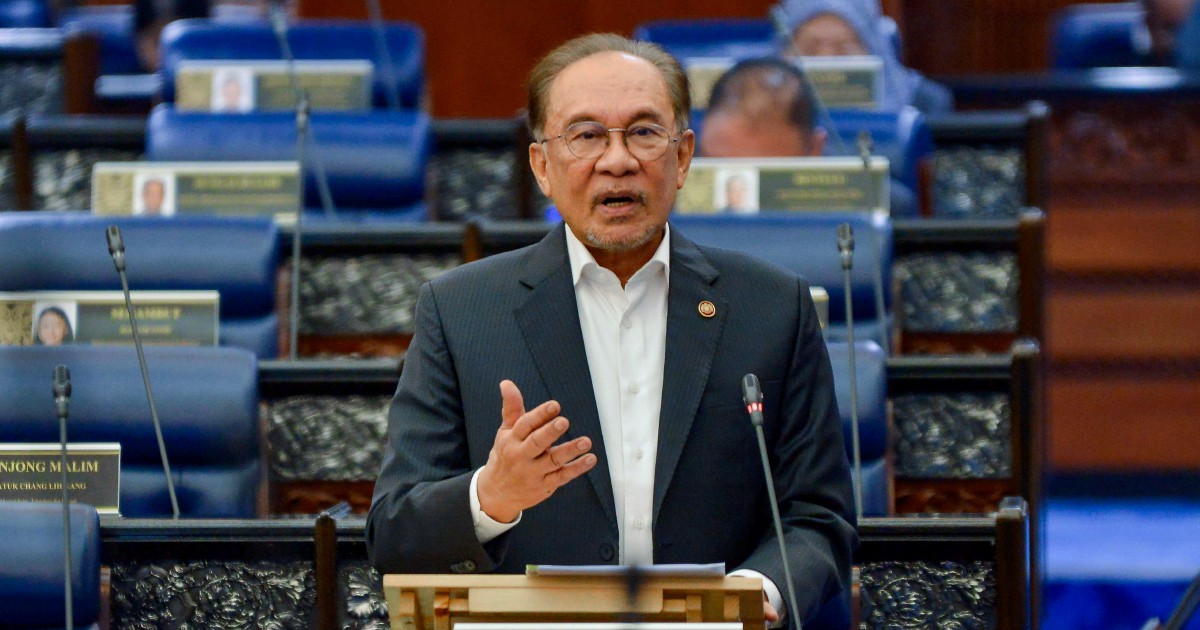
Prime Minister Datuk Seri Anwar Ibrahim has drawn attention to a substantial structural imbalance in Malaysia's public pension system, pointing out that the Retirement Fund Incorporated's (KWAP) annual investment earnings of RM12.9 billion cannot adequately meet the government's mounting pension commitments, which total approximately RM45 billion each year. This pronounced gap underscores the mounting fiscal pressures facing the nation as its retiree population expands and pension obligations continue to grow.
The revelation by the Prime Minister exposes a critical weakness in the nation's retirement funding architecture. Malaysia's civil service and armed forces retirees depend heavily on government-financed pension schemes, a system that has become increasingly strained as life expectancy increases and more public sector workers reach retirement age. The KWAP, established as a dedicated investment vehicle to manage retirement funds, has generated substantial returns in absolute terms, yet these earnings represent only slightly more than one-quarter of the annual pension bill that government budgets must accommodate.
This funding gap reflects a broader global challenge faced by developing economies with mature civil service populations and defined-benefit pension schemes. Unlike private sector retirement systems that rely on worker and employer contributions, Malaysia's public pension system operates primarily as a pay-as-you-go model, where current government revenues directly finance retiree benefits. The structural mismatch between KWAP's investment income and pension payouts suggests that general taxation and other government revenues bear the burden of covering the shortfall.
For Malaysian taxpayers and policymakers, this situation carries significant implications. The pension liability represents one of government's most substantial fixed obligations, competing with spending on healthcare, education, and infrastructure for limited budget resources. As Malaysia aims to develop its economy and invest in future competitiveness, the growing pension burden constrains fiscal flexibility and potentially limits funds available for growth-oriented initiatives. The gap also raises questions about the long-term sustainability of the current system and whether adjustments to retirement benefits, contribution rates, or workforce policies may eventually become necessary.
The Prime Minister's public acknowledgment of this challenge suggests awareness within government of the need to address pension sustainability systematically. Several policy levers exist to manage the imbalance over time: enhancing KWAP's investment returns through diversification or improved fund management, adjusting retirement age thresholds to reflect increased longevity, increasing contribution rates from remaining working members of the public sector, or recalibrating benefit structures. Each approach carries its own trade-offs and political considerations, particularly given the politically sensitive nature of pension reforms affecting government employees and retirees.
Regional context adds weight to Malaysia's pension challenge. Several neighbouring countries, including Thailand and Indonesia, face similar demographic and fiscal pressures as their populations age and public service retirements accelerate. Singapore, by contrast, has managed pension sustainability partly through mandatory individual retirement savings accounts and higher retirement ages, a model that differs significantly from Malaysia's traditional approach. The experiences of regional peers may offer valuable lessons as Malaysian policymakers contemplate long-term solutions.
The timing of Anwar's statement underscores the urgency with which government views this issue. As Malaysia navigates post-pandemic fiscal recovery and seeks to stabilize its debt-to-GDP ratio, pension obligations represent a structural cost that will not diminish without deliberate policy intervention. The RM32 billion annual gap between KWAP's earnings and pension payouts—roughly equivalent to the entire defence budget or the annual education allocation—illustrates the scale of the challenge.
Investor confidence in Malaysia's fiscal trajectory also depends partly on how government manages long-term liabilities. Rating agencies and international creditors scrutinize pension obligations and unfunded liabilities when assessing sovereign risk. A transparent acknowledgment of the pension funding gap, combined with credible plans to address it, may actually strengthen Malaysia's financial standing by demonstrating responsible long-term fiscal stewardship.
The path forward will likely involve technical analysis of KWAP's investment strategy and potential improvements in asset allocation, coupled with broader policy discussions around retirement age, benefit levels, and contribution structures. Government may also explore hybrid models combining investment-based funding with adjusted pay-as-you-go components. Whatever direction policymakers choose, addressing the pension funding gap will require sustained attention and potentially difficult decisions that balance current obligations against future fiscal sustainability. For Malaysia's nearly two million public sector retirees and hundreds of thousands more expecting government pensions, how government resolves this challenge will prove consequential.

