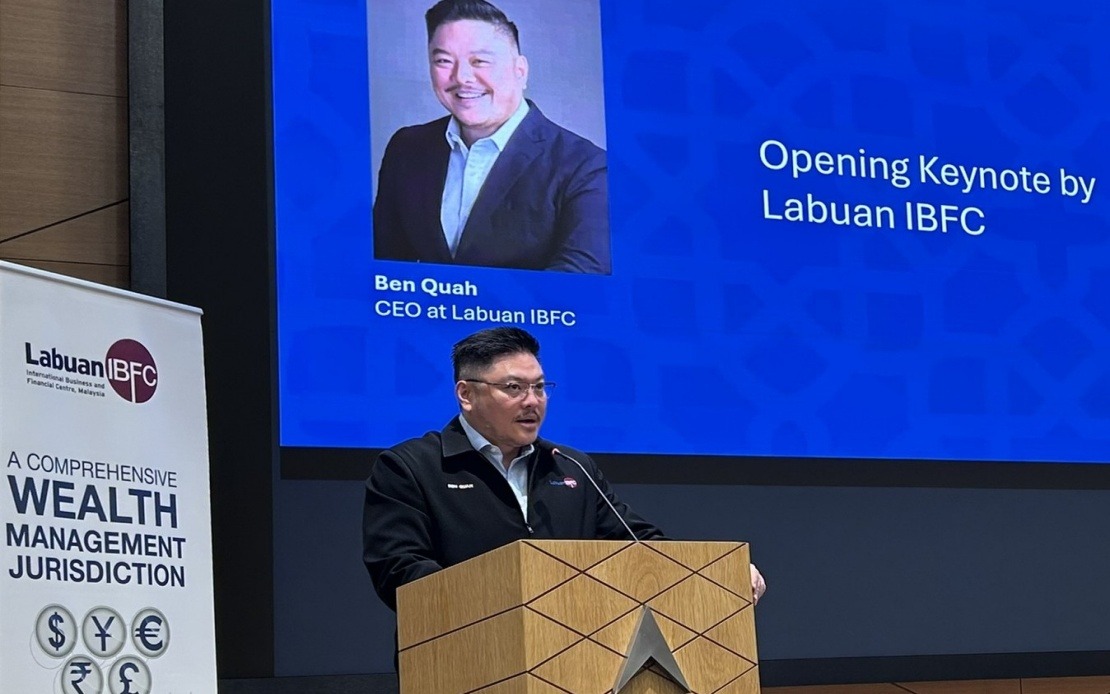
Three leading industry bodies have joined forces to advance Islamic wealth planning practices across Malaysia and the region. Labuan IBFC Incorporated Sdn Bhd, the marketing authority for Labuan International Business and Financial Centre, convened the Islamic Wealth & Legacy Forum 2026 in Kuala Lumpur in collaboration with the Association of Shariah Advisors in Islamic Finance Malaysia (ASAS) and the Society of Trust and Estate Practitioners (STEP) Malaysia. The gathering assembled wealth managers, Shariah advisers, estate planning professionals, legal practitioners and financial experts to examine contemporary approaches to preserving, protecting and transmitting family assets in accordance with Islamic principles.
The forum's central theme—"Beyond Faraid: Islamic Wealth Governance, Labuan Structures and Legacy Continuity"—reflects a growing recognition that traditional Islamic inheritance law, while foundational, represents only one dimension of comprehensive wealth planning. Faraid, the Islamic law of succession, provides essential principles but must be complemented by modern estate administration techniques, trust structures and governance frameworks to ensure wealth objectives are achieved across multiple generations and jurisdictions. This integration of classical Islamic jurisprudence with contemporary wealth management represents a maturation in how the region approaches intergenerational wealth transfer.
Ben Quah, chief executive of Labuan IBFC Inc, underscored the centre's strategic positioning within Malaysia's growing Islamic finance ecosystem. As global wealth increasingly crosses borders and involves complex family structures spanning multiple countries, he noted, families require flexible solutions that simultaneously deliver asset protection and institutional continuity while remaining Shariah-compliant. Labuan IBFC's regulatory framework and infrastructure enable the structuring of international family wealth arrangements that complement Malaysia's established leadership in Islamic private wealth management. The centre offers technical capabilities and legal structures unavailable in many other jurisdictions, allowing wealthy families to coordinate their affairs with both efficiency and religious propriety.
Farah Deba, chair of STEP Malaysia, articulated how the three organisations brought complementary expertise to the forum. STEP members typically advise families across generational transitions, providing technical estate planning guidance rooted in common law traditions. Labuan IBFC contributes the international dimension, offering cross-border structuring vehicles and jurisdictional options for family wealth. ASAS brings the Shariah perspective, ensuring that planning methodologies and outcomes align with Islamic jurisprudential principles. This collaborative model reflects a recognition that Islamic wealth planning cannot succeed when any of these elements operates in isolation; rather, effective outcomes emerge from integrating expertise across all three domains.
The forum's substantive programming addressed several technical areas central to contemporary Islamic estate administration. Opening sessions examined the practical difficulties families encounter when attempting to implement Islamic succession principles in modern contexts, particularly when assets span multiple countries with different legal systems, or when family structures deviate from traditional nuclear family arrangements. Subsequent dialogues explored how comprehensive governance frameworks and meticulous documentation can ensure that wealth arrangements operate consistently with Shariah requirements throughout implementation, reducing disputes and protecting the testator's intentions. These practical considerations matter significantly; poor documentation and governance frequently undermine even well-intentioned Islamic wealth plans, creating disputes among heirs or unintended deviations from Shariah principles.
Afternoon sessions focused on the mechanics of implementing wealth preservation strategies within Islamic frameworks. Panellists examined how takaful insurance products, trust arrangements, and alternative asset structures could serve multiple functions simultaneously: managing liquidity needs, protecting assets from creditor claims, facilitating risk management, and enabling smooth wealth transfer across generations. In the Malaysian context particularly, where Islamic finance has achieved significant sophistication across banking, insurance and investment sectors, these tools have become increasingly accessible to high-net-worth families seeking Shariah-compliant solutions. The integration of such structures within an overall Islamic estate plan requires careful coordination; improper structuring can inadvertently create tax inefficiencies or generate Shariah compliance issues.
The forum concluded with a panel discussion addressing ecosystem development for Islamic wealth planning across Malaysia and the region. Participants from wealth management, financial planning, estate administration and Shariah practice shared perspectives on how professional standards, continuing education, and cross-disciplinary collaboration could strengthen the entire industry. This ecosystem approach recognises that Islamic wealth planning quality depends not only on individual practitioner expertise but also on how these professionals interact, share knowledge, and maintain consistent standards across disciplines. Malaysia's advantage in this area stems partly from having concentrated expertise in Islamic finance and law, enabling practitioners to develop collaborative relationships more readily than in markets where Islamic finance expertise remains dispersed.
Yusaini Yusof, representing ASAS, emphasised in closing remarks that sound Shariah governance ensures wealth legacies are properly structured, successfully implemented, and ultimately serve the deeper purposes underlying Islamic law—the Maqasid Shariah. This concept extends beyond technical compliance with succession rules to encompass the broader objectives Islam seeks to advance: protection of faith, life, intellect, family and wealth. A comprehensively planned Islamic estate should safeguard not only the family's financial position but also the values, principles and charitable intentions the deceased sought to perpetuate. ASAS committed to supporting continued professional development and engagement within the Shariah practitioner community to advance these outcomes.
The collaborative initiative builds on a memorandum of understanding previously established between Labuan IBFC Inc and ASAS, formalising their commitment to advancing Islamic wealth planning standards. This partnership reflects a strategic shift within Malaysia's financial services industry toward sectoral collaboration rather than competition when developing emerging practice areas. By institutionalising cooperation through formal agreements and coordinated forums, the three organisations create accountability mechanisms and establish expectations for ongoing engagement. Such structured collaboration may serve as a model for other emerging Islamic finance specialisations, particularly those requiring integration across multiple professional disciplines and jurisdictions.
For Malaysian wealth managers and estate planning professionals, the forum's outcomes carry several practical implications. First, clients increasingly expect advisers to demonstrate facility with both classical Islamic principles and modern wealth structuring tools; practitioners lacking competence in either domain risk losing market share. Second, cross-border wealth arrangements—increasingly common among Malaysia's growing high-net-worth demographic—require coordination with experts in multiple jurisdictions; local practitioners must develop networks and knowledge of international Islamic finance hubs. Third, documentation and governance frameworks matter as much as substantive asset allocation decisions; time spent creating comprehensive, well-documented plans that clearly articulate Shariah compliance represents a valuable investment. The forum's emphasis on practical implementation, rather than theoretical discussion, reflected practitioners' recognition that Islamic wealth planning success ultimately depends on execution excellence across multiple technical and interpersonal domains.

