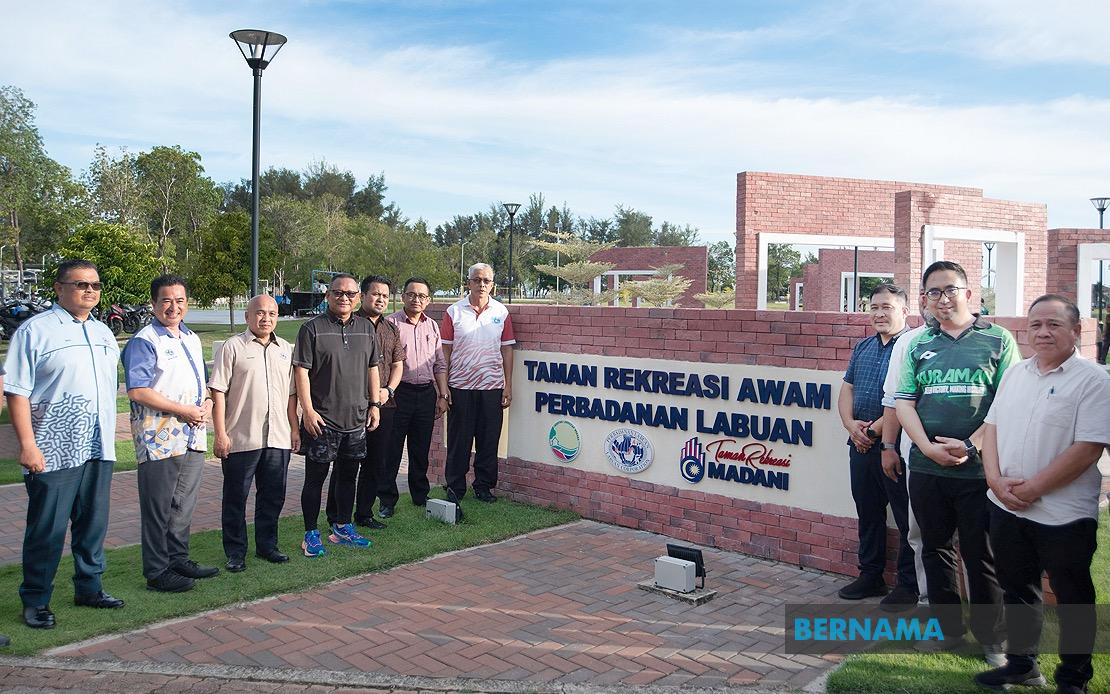
The federal territory of Labuan marked a significant milestone in community infrastructure development on June 24 with the official opening of the Labuan Public Recreation Park at Tanjung Purun, nestled in the commercial heart of the downtown area. The RM495,382 transformation, executed under the Madani Recreation Park initiative, represents a strategic urban renewal effort aimed at revitalizing underutilised public spaces and promoting healthier lifestyles among residents and visitors.
Rithuan Ismail, chief executive officer of Labuan Corporation, outlined the broader vision underpinning the project during the opening ceremony. He emphasised that the park embodies the administration's dedication to establishing inclusive recreational environments where citizens across all age groups can engage in physical activity, find moments of respite, and strengthen interpersonal bonds within their communities. The facility deliberately targets multiple demographics, from young families seeking weekend activities to fitness-conscious individuals pursuing regular exercise routines.
The initiative draws financial support from the National Landscape Department, which operates under the purview of the Ministry of Housing and Local Government (KPKT). The 2024 allocation enabled the comprehensive redevelopment of the former LDA Field, transforming a neglected parcel of real estate into a modern recreational destination. The selection of this particular location proved strategic on multiple fronts: its proximity to downtown Labuan ensured accessibility for working professionals and residents, the available land dimensions accommodated diverse facilities, and the absence of contentious ownership disputes allowed for expedited development and implementation.
Prior to the upgrade, the site presented considerable challenges that contributed to its underutilisation despite occupying prime commercial territory. Inadequate illumination discouraged evening visitors and raised security concerns among potential users. The recreational infrastructure was sparse and outdated, failing to attract the families and fitness enthusiasts who might otherwise have utilised the space. Moreover, mature casuarina trees on the grounds had deteriorated to the point where they posed genuine safety hazards, creating liability concerns and necessitating their removal as part of the development process.
The completed facility now showcases contemporary amenities designed to accommodate diverse recreational preferences and age groups. A welcoming entrance garden establishes an inviting atmosphere that encourages foot traffic and lingering. The centrepiece 800-metre jogging track provides runners and walkers with a measured circuit for cardiovascular exercise, while positioned benches throughout the grounds offer seating for those preferring lighter activity or social gatherings. Notably, the inclusion of outdoor fitness gym equipment democratises access to strength training and conditioning, eliminating barriers that prevent some residents from pursuing organised fitness programmes at commercial facilities.
The evening hours have already emerged as the park's peak usage period, suggesting that adequate lighting improvements have successfully addressed previous safety concerns. This temporal pattern mirrors trends in other Southeast Asian cities where tropical climates and working schedules make late afternoon and evening recreational activity preferable to midday exertion. The park's design appears responsive to these local behavioural patterns.
Future enhancements currently in development will extend the facility's appeal and competitive positioning within Labuan's recreational landscape. Three dedicated courts for pickleball and sepak takraw are scheduled for completion by year-end, introducing sport-specific infrastructure that caters to growing interest in both international recreational sports and traditional Southeast Asian athletics. Pickleball, in particular, has experienced explosive growth across Malaysia in recent years, attracting players from diverse age groups and backgrounds. Sepak takraw, the traditional net sport played throughout the region, maintains cultural significance while offering competitive outlets for enthusiasts.
Labuan Corporation's commitment extends beyond infrastructure provision to encompass stewardship and maintenance protocols. During his address, Rithuan issued a measured appeal to the broader public, requesting active participation in preserving the facility's condition. This collaborative approach to asset management reflects recognition that even well-designed infrastructure deteriorates rapidly without community engagement and social responsibility. The effectiveness of the park as a long-term community asset depends substantially on user behaviour and collective commitment to maintaining shared resources.
The park's development aligns with broader Malaysian governmental priorities around urban wellness and quality-of-life improvements. The Madani Recreation Park initiative itself represents a nationwide push to distribute recreational infrastructure more equitably across population centres, addressing historical disparities where certain communities lacked adequate public exercise and gathering spaces. For a federal territory like Labuan, competing with larger peninsular cities for investment and amenities, such projects carry particular significance in enhancing livability and competitiveness.
The Tanjung Purun facility also addresses documented gaps in Labuan's public infrastructure portfolio. As an increasingly important financial and commercial hub, the territory attracts business professionals and their families who increasingly prioritise quality-of-life considerations when evaluating relocation prospects. Modern recreational facilities serve as tangible indicators of community investment and quality governance, influencing both residential settlement decisions and corporate location choices.
From a regional perspective, Labuan's investment in recreational infrastructure reflects broader Southeast Asian urbanisation trends. Across Malaysia, Singapore, and neighbouring territories, city administrations increasingly recognise that vibrant public spaces and wellness facilities constitute essential components of competitive urban environments. The park represents a recognition that such spaces generate positive externalities extending well beyond physical health, fostering social cohesion and civic pride.
The project also demonstrates the viability of adaptive reuse strategies for underperforming public properties. Rather than selling the LDA Field to private developers, authorities opted for public interest preservation, converting dormant space into community assets. This approach maximises public benefit from publicly-owned land whilst retaining local control over the space's character and accessibility.
As Labuan continues its development trajectory, the Public Recreation Park at Tanjung Purun stands as tangible evidence of commitment to holistic community development. The success of this facility will likely influence future infrastructure planning decisions, potentially catalysing additional public space improvements throughout the territory. Critically, the project's long-term viability depends upon sustained community engagement, responsive management, and continued administrative support for maintenance and enhancement initiatives.