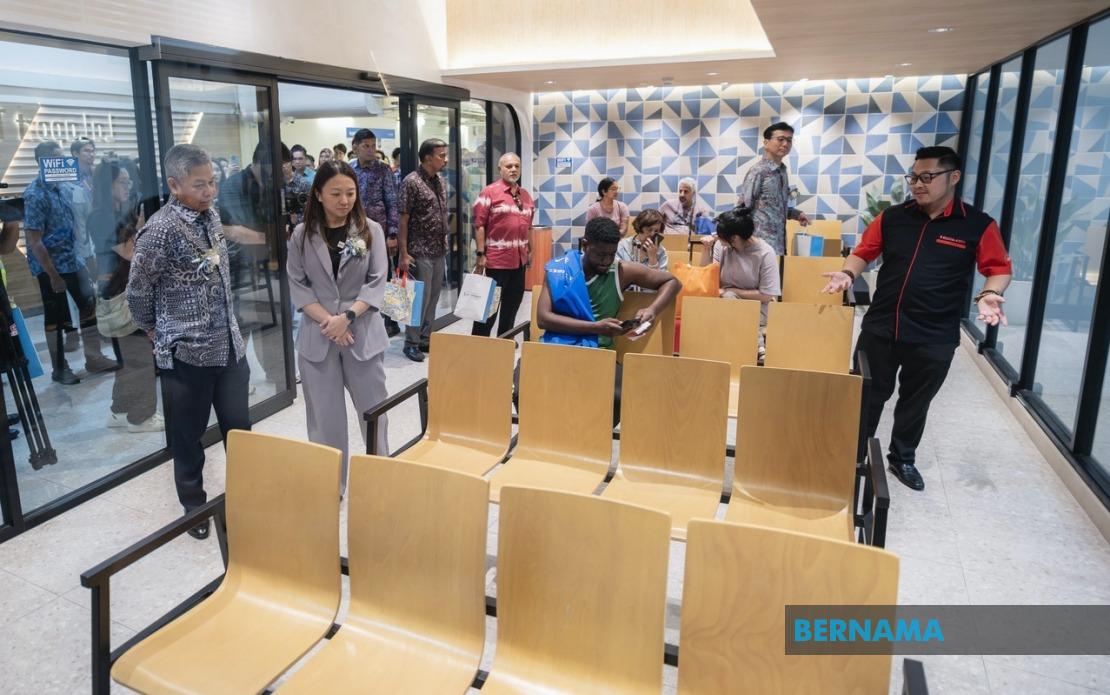
Kuala Lumpur has opened a significant new transportation facility designed to streamline passenger movements across the city and between Malaysia and Singapore. The LaLaport Transportation Hub (LTH), unveiled this week beside the Hang Tuah LRT and Monorail interchange, represents a major infrastructure investment aimed at handling up to 10,000 daily passengers through a unified transport network. The facility integrates multiple modes of transport—including rail links, express buses, e-hailing vehicles, traditional taxis, and shared mobility platforms—under one roof, all connected by covered pedestrian walkways that shield travellers from the tropical climate.
Minister in the Prime Minister's Department (Federal Territories) Hannah Yeoh underscored the strategic importance of the development during its launch, noting that Kuala Lumpur experiences extraordinary mobility demands. The city sees approximately 1.2 million individuals entering and exiting daily, with transport systems logging roughly 5.5 million journeys each day. These figures illustrate why transport infrastructure improvements have become critical for maintaining the city's economic competitiveness and quality of life. Yeoh positioned the hub as a natural response to these pressures, providing what she described as a welcome modernisation of Kuala Lumpur's fragmented transport ecosystem.
The hub's physical location at the East Atrium's LG1 level offers practical advantages for seamless passenger transfers. The facility features 11 bus parking bays alongside an air-conditioned waiting area, staffed customer service counters, self-service information kiosks, and a Passenger Information Display System that delivers real-time bus schedule updates. This combination of amenities addresses longstanding passenger complaints about comfort and information access at traditional transport terminals. The emphasis on climate control and clear signage reflects changing expectations among urban commuters, particularly as Malaysia positions itself as a regional hub for business and leisure travel.
Operator Asia Success Resource Sdn Bhd projects that the terminal will accommodate approximately 150 daily bus trips, anchored by a 24-hour express service connecting Kuala Lumpur directly with Singapore. This cross-border route carries particular significance for the region, as the KL-Singapore corridor represents one of Southeast Asia's busiest transportation arteries. The hub's design specifically caters to this demand, with about 30 bus operators expected to establish the facility as their primary city-centre transit point. For commuters and business travellers moving between the two countries, the terminal offers a consolidated alternative to the fragmented departure points that previously scattered KL's long-distance bus services across multiple locations.
Beyond interstate connectivity, the hub addresses internal city mobility through complementary services. The Boleh-Boleh Ride on-demand van shuttle program connects passengers to major business and entertainment precincts throughout the city centre, reducing reliance on private vehicles for short urban journeys. Additionally, shuttle van services linking directly to Kuala Lumpur International Airport's Terminals 1 and 2 position the hub as a gateway facility for arriving and departing travellers. This multi-layered approach reflects contemporary transport planning philosophy, which emphasises integrated solutions rather than siloed point-to-point services.
The governance framework supporting the hub signals administrative evolution in Malaysia's transport sector. Dewan Bandaraya Kuala Lumpur (DBKL) has shifted from annual operating licences to three-year renewable permits for transport terminals, a change that Yeoh indicated provides operators with greater stability and security. This institutional reform removes uncertainty that previously discouraged infrastructure investment in terminal facilities. The regulatory shift also acknowledges that terminal operations require sustained investment in maintenance and service quality—investments operators hesitate to make under annual renewal arrangements where business continuity remains uncertain.
Security infrastructure represents another strategic component of the hub's design. DBKL is simultaneously deploying approximately 10,000 operational closed-circuit television cameras across Kuala Lumpur, with the transportation hub benefiting from this broader citywide surveillance initiative. For passengers accustomed to safety concerns at traditional bus terminals, the visible security presence carries psychological value beyond technical crime prevention. This investment reflects growing recognition among Malaysian policymakers that public transport usage correlates directly with perceived safety and cleanliness.
The hub's opening reflects deeper bilateral cooperation between Malaysia and Japan in urban development. Japanese Ambassador Noriyuki Shikata attended the launch, emphasising the connection between the project and Japan's strategic engagement with Malaysia. His remarks referenced Prime Minister Datuk Seri Anwar Ibrahim's recent Japan visit and upcoming celebrations of 75 years of diplomatic relations between the nations. This international framing transforms a local transport project into a symbol of technology transfer and development partnership, positioning Malaysia as a credible regional actor in adopting Japanese best practices for urban infrastructure.
The demographic and economic logic underlying the hub's creation extends beyond simple passenger counts. Kuala Lumpur's position as Southeast Asia's third-largest metropolitan area places it under constant pressure to absorb both permanent population growth and temporary visitor movements. The hub addresses this challenge by formalising and improving what were previously informal transport arrangements. By bringing express bus operators into a licensed, purpose-built facility with modern amenities, authorities effectively upgrade service quality while simultaneously establishing regulatory oversight that was previously absent or scattered across multiple informal termini.
The project also carries implications for Malaysia's broader sustainability agenda. Integrated transport terminals that reduce friction between different transit modes encourage modal shift away from private vehicles. When travellers can seamlessly transition from a taxi or e-hailing service to an express bus within a single covered facility, the economic logic of driving shifts in their favour. This structural encouragement toward public transport usage aligns with Malaysia's climate commitments and addresses chronic traffic congestion that costs the economy billions annually in lost productivity.
For Southeast Asian observers, the hub exemplifies how medium-sized cities can leverage targeted infrastructure investment to compete for business travel and tourism. The combination of international connectivity, modern amenities, and integrated design appeals to the growing class of Asian business travellers who value efficiency and comfort. By positioning the hub as a gateway between Kuala Lumpur and Singapore—two major regional economic centres—Malaysia enhances its positioning within the increasingly dense corridors of Southeast Asian commerce and movement.
The facility's early projections suggest it will quickly establish itself as a reference point for transport terminal design in the region. The emphasis on environmental controls, clear information systems, and integrated payment options represents best practice that Malaysian planners extracted from international experience. Whether the hub achieves its 10,000-passenger target will partly depend on operator execution, but the infrastructure foundation appears professionally conceived. If successful, this model may inform future terminal development elsewhere in Malaysia and across Southeast Asia, where cities continue struggling to manage exponential growth in passenger volumes with ageing transport infrastructure.

