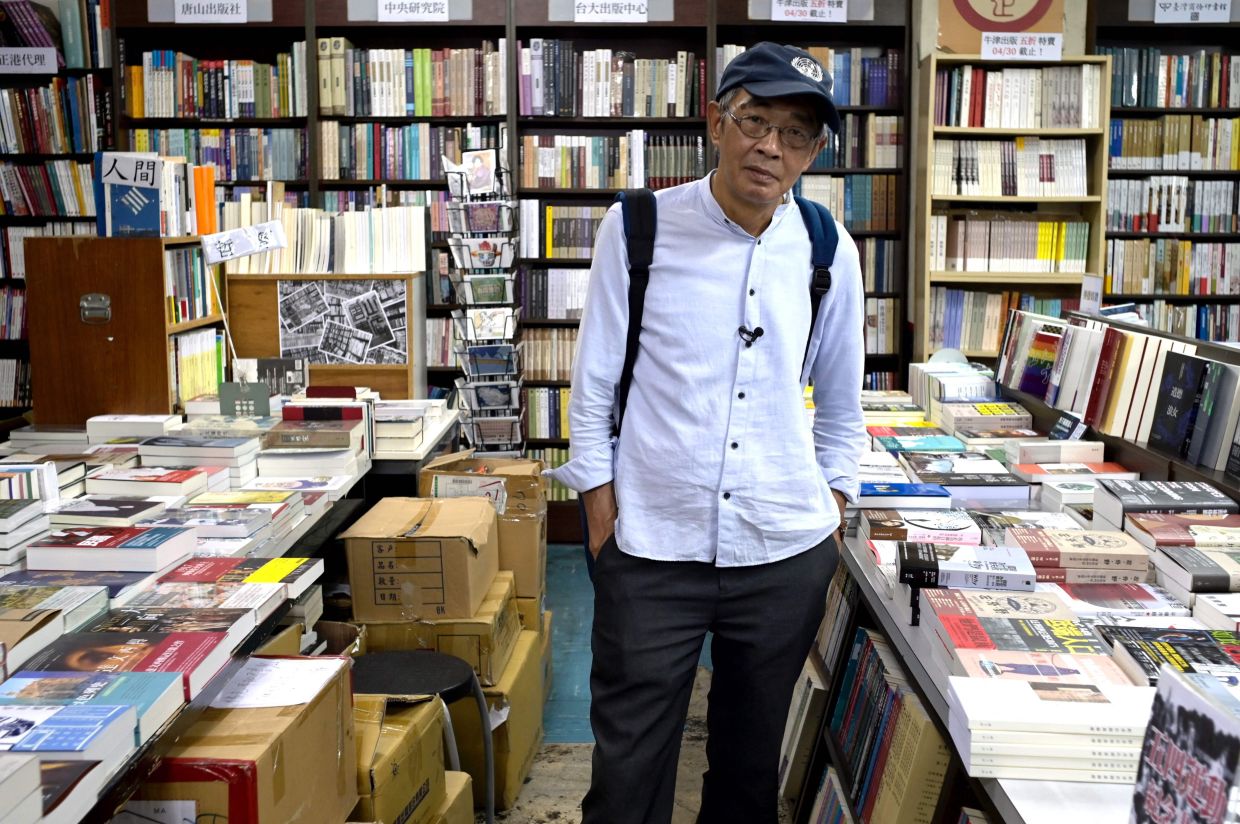
Lam Wing-kee, the former Hong Kong bookseller who emerged as a potent symbol of resistance to Beijing's assault on freedom of expression, has died in Taiwan at the age of 70. The Taiwan Central News Agency confirmed his death, citing reports that the longtime bookstore manager succumbed to complications following a cancer relapse. Lam had been hospitalized at MacKay Memorial Hospital in Taipei earlier this week, slipping into a coma before his passing on Thursday evening. His death marks the end of a turbulent journey that began with his mysterious abduction in 2015 and evolved into a decades-long struggle against authoritarian constraints on speech.
Lam's final years were spent in self-imposed exile in Taiwan, having fled Hong Kong in 2019 as legal pressures mounted. He established a new branch of Causeway Bay Books in Taipei in 2020, attempting to preserve the bookstore's legacy and mission in a place where political freedoms remained more robust. Yet illness forced the temporary closure of the establishment last month, and Lam acknowledged uncertainty about whether it would reopen. The symbolism was poignant: a bookstore devoted to circulating materials suppressed by Beijing, operating from an island that has become an increasingly precarious refuge for those fleeing the mainland's tightening controls. Taiwan's President Lai Ching-te acknowledged Lam's passing with a statement recognizing his sacrifice as a testament to the value of liberty and the necessity of perpetual vigilance in defending democratic institutions.
The circumstances of Lam's detention in 2015 became a defining moment in Hong Kong's modern political history. He was one of five individuals connected with Causeway Bay Books who vanished that autumn, an incident that triggered alarm bells about China's capacity to project its security apparatus directly into Hong Kong's territory, circumventing the territory's nominally separate legal framework. The bookstore had built its reputation on stocking volumes unavailable on the mainland—publications exploring the private dealings of Communist Party leadership and exposing alleged improprieties within China's political elite. These titles, though innocuous by international standards, represented genuine threats to Beijing's monopoly on information control.
Lam's own account of his ordeal, delivered at a 2016 press conference in Hong Kong, provided rare firsthand testimony to the mechanisms of extrajudicial detention. He described being apprehended at a border crossing in Shenzhen, then blindfolded for thirteen hours as authorities transported him by train to Ningbo in eastern China. Once detained, he endured five months of confinement in a single room, subjected to constant surveillance by rotating pairs of guards. The psychological toll of such isolation, combined with interrogation and coercion, ultimately led to televised confessions extracted under duress—a standard tactic employed by Beijing to delegitimize dissidents and create propaganda material.
Among the five disappeared booksellers, Gui Minhai's fate proved particularly severe. The publisher and part-owner of Causeway Bay Books had been holidaying in Thailand when he vanished, later to be tried and convicted in China on charges of illegally transmitting classified information abroad. A decade-long prison sentence awaited him, illustrating Beijing's determination to make examples of those who challenge its information monopoly. The collective disappearance demonstrated that Hong Kong's supposed autonomy and separate legal system offered minimal protection when powerful interests in Beijing deemed action necessary. The incident anticipated the broader erosion of Hong Kong's freedoms that would accelerate following the 2019 pro-democracy protests.
The 2019 anti-government demonstrations that paralyzed Hong Kong represented a watershed moment in the territory's relationship with mainland control. The uprising exposed deep public anxiety about the direction of the city's future and sparked international condemnation of Beijing's heavy-handed police response. Rather than moderating its approach, China doubled down, implementing the National Security Law in 2020 and subsequently intensifying suppression of dissent across every dimension of civil society. The bookstore seizures continued: as recently as June 2024, Hong Kong police operating under the new security framework arrested two individuals suspected of operating a bookshop distributing what authorities classified as seditious materials and allegedly receiving overseas funding.
Lam's relocation to Taiwan in 2019 reflected the grim calculus facing Hong Kong's intellectual and cultural figures. The territory could no longer be relied upon as a haven for free expression or political activity deemed objectionable by Beijing. Taiwan, despite its own complicated relationship with mainland China, offered greater institutional protections for press freedom and political pluralism. Yet even in Taipei, Lam remained acutely aware of the precariousness of his position and the broader regional implications of Beijing's expanding reach. His bookstore became a quiet repository of the publishing mission he had championed in Hong Kong—maintaining access to ideas and information that China's authorities sought to suppress.
The broader significance of Lam's death extends beyond the loss of an individual voice. His ordeal and subsequent testimony provided documented evidence of what intelligence analysts and human rights organizations had long alleged: Beijing maintains clandestine security operations capable of extracting and detaining individuals across jurisdictional boundaries. The case also illustrated the asymmetry of power between individual activists and a state apparatus with virtually unlimited resources. Lam's physical removal from Hong Kong, his imprisonment, and his forced televised confessions represented a comprehensive suppression strategy designed not only to eliminate a specific threat but to send unmistakable signals to others contemplating similar activities.
For Southeast Asian observers and policymakers, Lam's trajectory carries cautionary implications. The ease with which Beijing orchestrated his abduction from Hong Kong and the subsequent inability of international pressure to secure his release or significantly alter Chinese behavior suggest limits to external leverage. The case also demonstrates how authoritarian security interests can override commitments to international norms or domestic legal frameworks. Thailand's apparent inability or unwillingness to prevent Gui Minhai's disappearance from its territory, combined with China's successful prosecution and imprisonment of a publisher on politically motivated charges, illustrated Beijing's determination to pursue its perceived enemies across borders and legal systems.
Lam's death also marks a symbolic turning point in Hong Kong's transformation from an open, cosmopolitan metropolis into an increasingly controlled territory. The generation of bookstore owners, publishers, and intellectuals who built Hong Kong's reputation for intellectual freedom has been dispersed through emigration, imprisonment, or, in Lam's case, mortality. The bookstore he managed became emblematic of a lost world—one where subversive texts could circulate openly, where press freedom was taken for granted, and where the boundary between Hong Kong and mainland China seemed genuinely meaningful. His passing in distant Taiwan, far from the city where he had built his life and career, encapsulates the human cost of Beijing's relentless consolidation of political control.

