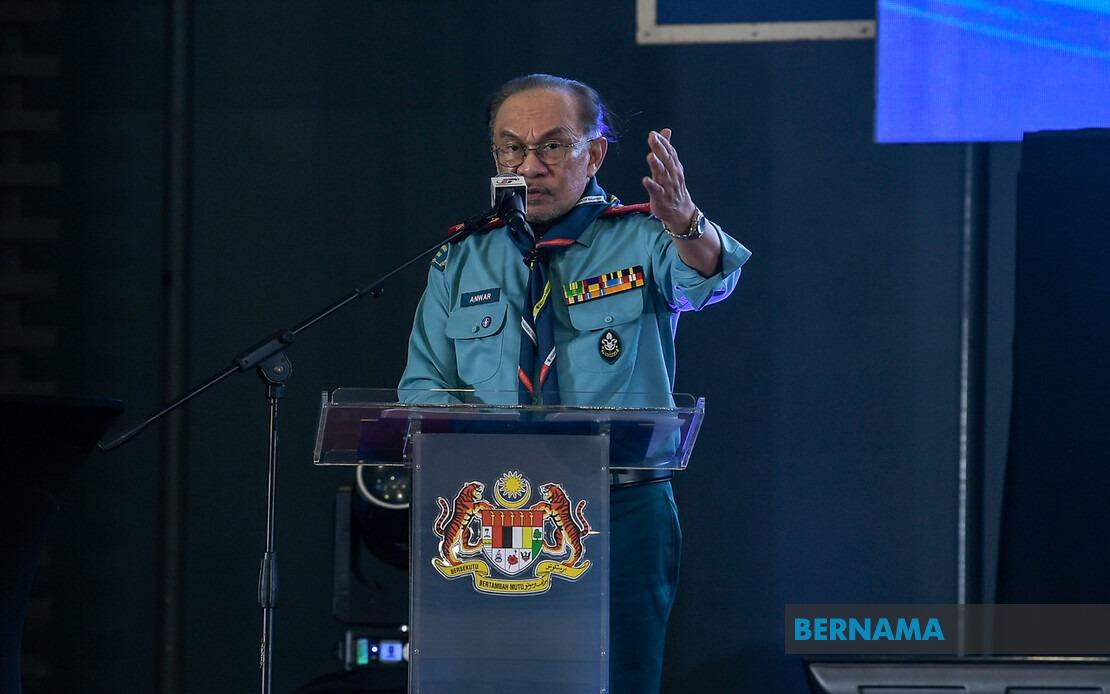
Prime Minister Datuk Seri Anwar Ibrahim has moved to defuse tensions surrounding language policy, asserting that championing Malay need not come at the expense of other languages. Speaking at the Ambang Merdeka Sahabat MADANI 2026 programme at Universiti Teknologi MARA (UiTM) Permatang Pauh, Anwar reframed what might otherwise be portrayed as a zero-sum competition between languages into a complementary framework where proficiency in multiple tongues strengthens rather than fragments the nation.
The Prime Minister's remarks reflect an attempt to navigate a historically sensitive terrain in Malaysian public discourse. Language has long intersected with questions of national identity, constitutional obligations, and intercommunal relations. By emphasizing that maintaining Malay as the official language represents a constitutional and cultural imperative while simultaneously advocating for robust multilingualism, Anwar seeks to establish common ground across Malaysia's diverse linguistic communities. This positioning differs markedly from more absolutist framings that treat language advocacy as inherently zero-sum.
Anwar elaborated that every Malaysian citizen, irrespective of ethnic background, should possess strong command of the national language. However, this foundational requirement need not preclude or diminish the development of proficiency in English, Mandarin Chinese, Tamil, and other regional languages. Rather, he suggested, such multilingual competence opens pathways to both educational advancement and economic opportunity that would otherwise remain inaccessible. The framing transforms language learning from potential cultural competition into practical skill acquisition.
The Prime Minister specifically highlighted English's evolution into a global lingua franca, arguing that Malaysia's education and economic systems must embrace this reality. Anwar stressed that English proficiency does not threaten Malay's status but instead complements it, providing Malaysians with access to international knowledge, commerce, and professional networks. This pragmatic stance reflects Malaysia's position as a trading nation heavily integrated into global supply chains and financial systems where English remains the dominant business language.
Regarding Mandarin Chinese, Anwar pointed to its increasing importance as a major regional economic language. Given Southeast Asia's deepening commercial ties with China and the Chinese-speaking diaspora's substantial economic influence throughout the region, proficiency in Mandarin represents what Anwar characterized as an economic imperative rather than a cultural luxury. This argument recognizes that Malaysian citizens with Mandarin skills possess competitive advantages in regional commerce, investment, and professional mobility that benefit both individual families and national economic interests.
Anwar's framework equally acknowledged Tamil, noting that many Malaysians express interest in strengthening their command of this language. By including Tamil alongside English and Mandarin, Anwar signaled recognition of Malaysia's Tamil-speaking communities as integral to the nation's multilingual fabric. The inclusion also suggests that language policy need not be hierarchical, with secondary or tertiary languages classified as less important than dominant regional languages.
The Prime Minister explicitly rejected characterizing multilingualism as a zero-sum competition. He encouraged parents to facilitate their children's acquisition of Chinese language skills while ensuring that Malay proficiency remains solid and comprehensive. This both-and approach challenges narratives that frame language promotion as necessarily sacrificing other languages. Instead, Anwar argued, learning the languages of the region positions Malaysians advantageously rather than creating disadvantage or cultural dilution.
Beyond technical language competence, Anwar invoked the concept of economic self-interest. He characterized multilingual proficiency as essential for Malaysian citizens to secure their own futures and develop their potential. Rather than presenting language learning as a sacrifice or obligation imposed by external forces, he recast it as rational self-interest—acquiring skills that enhance earning potential, professional mobility, and access to opportunities. This motivational framing may resonate more broadly than appeals based solely on cultural obligation or national policy directives.
The Prime Minister cautioned Malaysians against sowing seeds of racial hostility and reminded the nation that social harmony cannot be assumed as permanent. Underlying Anwar's language comments appears a broader anxiety about Malaysia's social cohesion. By positioning multilingualism as complementary rather than competitive, he attempts to preempt framing language policy as benefiting one community at another's expense—a narrative that has historically inflamed intercommunal tensions. Anwar's intervention suggests concern that language debates risk becoming proxies for deeper anxieties about cultural preservation and communal advantage.
Anwar emphasized that a spirit of mutual sharing, care, and reciprocal support must undergird Malaysian society. He argued that inclusive development—where all citizens regardless of racial or religious background can equitably benefit from national progress—requires deliberate cultivation rather than spontaneous emergence. This reflects recognition that Malaysia's multicultural model requires constant tending and intentional effort to remain functional and stable.
The implications for Malaysian education policy are substantial. Anwar's remarks suggest a philosophical framework wherein schools might simultaneously reinforce Malay literacy and facility while expanding opportunities for students to develop proficiency in English, Mandarin, Tamil, and potentially other languages. Such an approach would require carefully sequenced curriculum design, adequate teacher preparation, and sustained funding—challenges that many Malaysian schools currently struggle to address despite policy directives.
For the broader Southeast Asian region, Anwar's position reflects wider trends whereby multilingualism is increasingly recognized as economically rational rather than culturally threatening. As regional integration deepens through mechanisms like ASEAN Economic Community initiatives, proficiency in multiple languages—whether English for international business, Mandarin for commercial ties with China, or regional languages for local networking—enhances individual and national competitiveness. Anwar's framing aligns Malaysian language policy with this regional economic logic.

