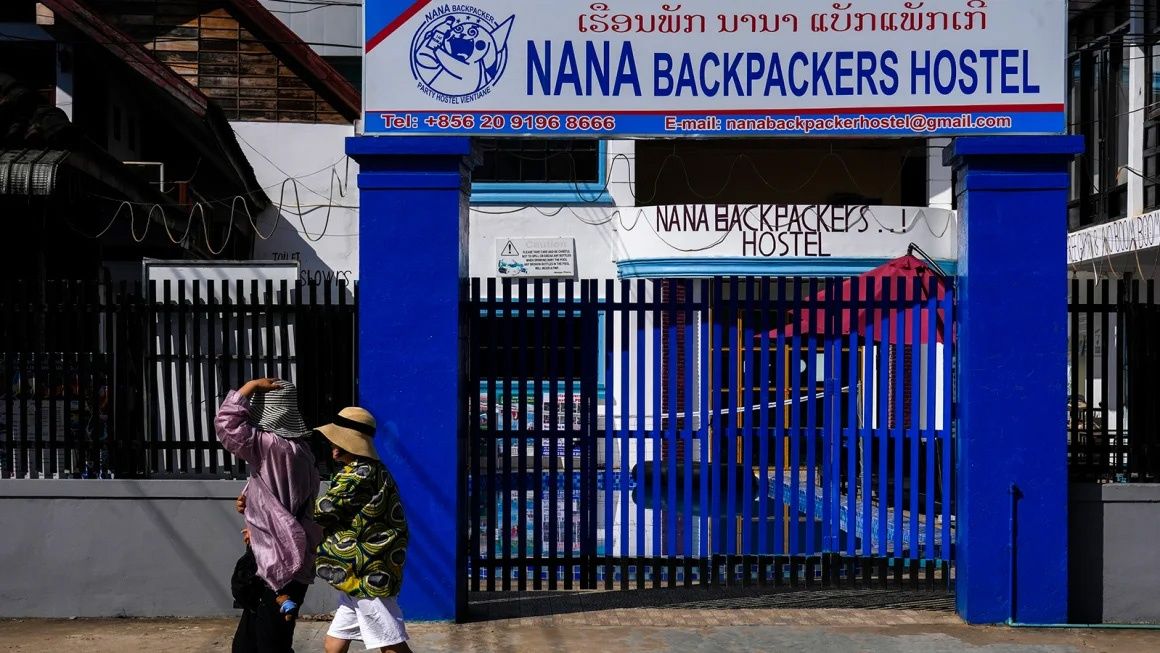
A Laotian court has filed charges against a distillery owner linked to the deaths of six foreign tourists who consumed tainted alcohol at a backpacker hostel in Vang Vieng last November, authorities announced Friday. However, the charges—selling harmful food and operating an illegal business—carry maximum penalties of four years imprisonment and fines, drawing sharp criticism from Denmark, Australia, Britain, and the United States, whose nationals were among the victims. The limited scope of the prosecution has left grieving families frustrated and international governments questioning whether justice will be adequately served.
The incident claimed the lives of Danish women Anne-Sofie Orkild Coyman, 20, and Freja Vennervald Sorensen, 21; Australian teenagers Bianca Jones and Holly Morton-Bowles, both 19; British lawyer Simone White, 28; and American James Louis Hutson, 57. All six individuals died after drinking methanol-contaminated liquor provided at the Nana Backpacker Hostel, a common waypoint for young travellers pursuing adventure and nightlife in Southeast Asia's budget tourism circuits. The backpacker culture that has made Vang Vieng a magnet for international youth seeking thrills has now cast a shadow over the destination's safety standards.
According to Denmark's foreign ministry statement released Friday, Lao authorities indicated that the case will remain formally open for 15 years, leaving room for prosecutors to escalate charges to negligent homicide or similar more serious offences if additional evidence emerges. This procedural opening appears designed to mollify international pressure, though victims' families and foreign governments viewed it as cold comfort given the apparent weakness of the initial indictment. The statement from Copenhagen notably avoided confirming whether the charges apply to all six deaths or only some, creating ambiguity about prosecutorial priorities.
Danish Foreign Minister Lars Løkke Rasmussen expressed his "deep disappointment" that the indictment failed to reflect the gravity of a tragedy affecting multiple families across continents. While acknowledging the legal complexities of meeting evidentiary thresholds for serious charges in foreign jurisdictions, Rasmussen stated that the lenient nature of the prosecution makes it difficult for grieving relatives to find closure or vindication. The Danish government has committed to coordinating with affected families and other nations to explore further legal options, signalling that diplomatic pressure will likely intensify.
Australia's response proved more forceful, with Foreign Minister Penny Wong describing herself as "deeply frustrated and bitterly disappointed" by prosecutors' failure to pursue maximum charges. Prime Minister Anthony Albanese dispatched a government envoy to Vientiane to formally lodge objections and demand a more rigorous investigation. Australia's ambassador to Laos was also recalled for consultations, and Canberra summoned the Laotian ambassador in a show of diplomatic displeasure. Such measures, while symbolic, underscore how significantly the deaths have strained bilateral relations.
The families of the deceased have proven far less restrained in their public criticism. Bianca Jones' mother Michelle delivered an anguished statement to assembled media, saying "It's like their lives didn't even matter," and describing the anticipated charges as devastating. Her daughter and the others were young people engaged in what Michelle characterised as ordinary rites of passage for teenagers and young adults—a statement that underscores how the tragedy resonates across Western societies where backpacking through Asia has become normalised. The parents of Freja Vennervald Sorensen revealed to Danish broadcaster DR that they received no autopsy report, and that their daughter's death certificate attributed death to natural causes rather than methanol poisoning, raising concerns about investigative rigour.
Methanol contamination in alcoholic beverages remains an underappreciated public health hazard in developing economies and poor regions globally. The poisonous compound, cheaper than ethanol, is sometimes deliberately added to mixed drinks at unscrupulous establishments or emerges inadvertently as a byproduct of poorly managed distillation in unlicensed operations. According to data compiled by Doctors Without Borders, Indonesia, India, and Russia report the highest numbers of suspected cases, though the true incidence likely remains undercounted in nations with limited medical surveillance. In Laos, one of Southeast Asia's poorest countries, enforcement of standards governing alcohol production remains nascent, making contamination a recurring risk for both tourists and local consumers.
The victims had congregated at the Nana Backpacker Hostel, where they consumed complimentary shots of Laotian vodka before proceeding to other venues in Vang Vieng. When Bianca Jones and Holly Morton-Bowles failed to check out as scheduled, hostel staff discovered them gravely ill in their room. Both were evacuated across the border to Thai hospitals, where they subsequently died alongside their peers. The location of the poisoning and the mechanism of death—free promotional drinks at a tourist accommodation—underscores how backpacker establishments may inadequately screen their alcohol suppliers or fail to store beverages properly.
Vang Vieng has cultivated a reputation as Southeast Asia's premier destination for young backpackers seeking affordable lodging, recreational drug availability, and extreme sports such as cave tubing and zip-lining. The town's economy depends heavily on this market segment, creating potential institutional pressure to minimise scrutiny of safety hazards that might deter visitors. Shaun Bowles, father of Holly Morton-Bowles, warned that inadequate prosecution would discourage future travellers and damage Laos' standing as a tourist destination. His concerns reflect a broader dynamic in which weak legal accountability for tourist deaths may reshape travel patterns and regional reputation within youth tourism networks.
Laos, governed as an authoritarian one-party communist state with tightly controlled information flows, has exercised considerable discretion in prosecutorial decision-making without meaningful transparency or public explanation. The Lao foreign ministry informed The Associated Press that details would be disclosed only at a news conference restricted to local media and concerned foreign embassies—a practice that has prevented independent journalism from scrutinising the charges or the evidence supporting them. This opacity, combined with the minimal nature of the charges, has fuelled speculation among observers that political or diplomatic considerations may have influenced prosecutors' strategic choices.
The case now stands as a test of whether international pressure and coordinated diplomatic action can persuade authorities in a less-developed nation to pursue justice more vigorously. The 15-year window for escalated charges provides a theoretical pathway toward accountability, yet victims' families have little confidence in that mechanism given the initial indictment's weakness. For Malaysian and broader Southeast Asian audiences, the incident serves as a stark reminder that backpacker destinations, regardless of their popularity or economic importance, require credible legal frameworks protecting tourists from exploitation and negligence. The inadequate prosecution may ultimately do more damage to Laos' international reputation than a swift and serious prosecution would have.

