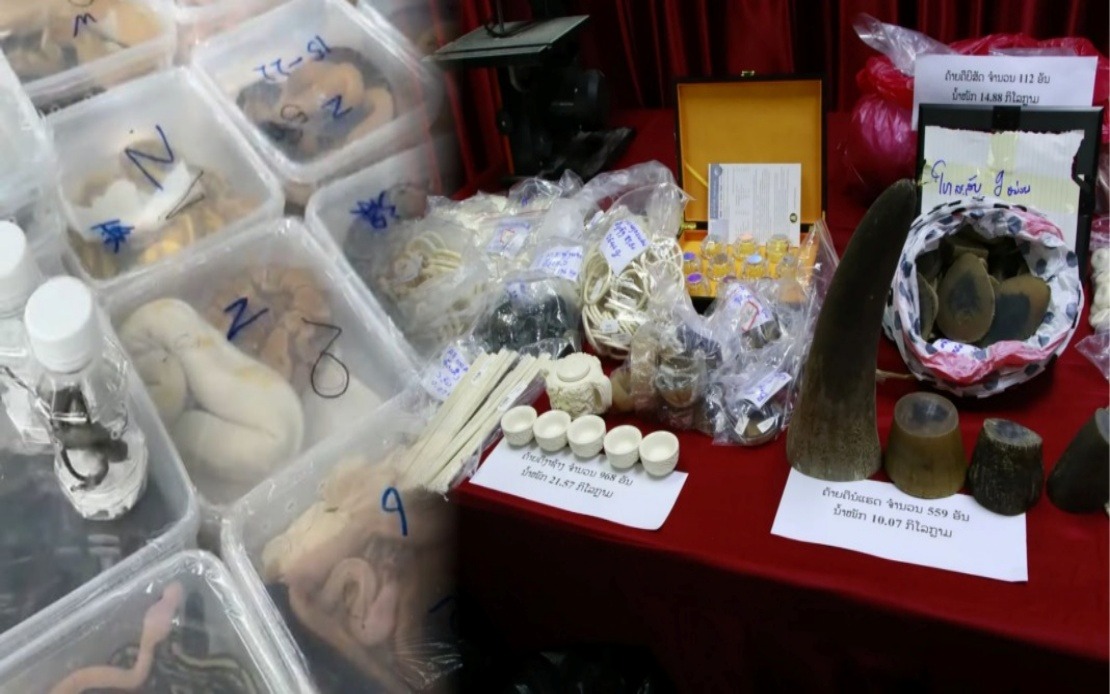
Law enforcement agencies across the Mekong region have dealt a significant blow to wildlife smugglers in a series of coordinated operations that exposed the scale of endangered animal trafficking along the Laos-Thailand border. The recent seizures mark a crucial moment in the region's fight against an underground economy that continues to threaten species survival and fuel international crime networks. These busts, which occurred over just two weeks, reveal a sophisticated trafficking operation moving contraband through established border checkpoints and passenger transport routes that cross into Thailand and beyond.
The Lao Wildlife Enforcement Network's operation in Luang Prabang, one of Southeast Asia's most visited destinations, uncovered 60 kilogrammes of suspected illegal wildlife merchandise during searches last week. The haul included products not typically sourced from Laos itself, suggesting an international supply chain channelling animals and animal-derived goods through the country towards lucrative markets. Among the confiscated items were objects resembling ivory, extracted animal gallbladders, pangolin scales—a particularly concerning find given the species' critically endangered status—and rhinoceros horn fragments. Additional discoveries included powdered elephant skin, bear gallbladder materials, preserved hornbill heads, and bottles of traditional herbal medicine suspected of containing wildlife derivatives. Each item represents not just a violation of Lao environmental law but evidence of poaching and butchering of wild creatures across the region.
Four days after the Luang Prabang operation, wildlife officers intercepted a passenger bus at Vang Tao International Checkpoint in Champasak Province that was transporting 294 live animals bound for Thailand. The shipment comprised diverse reptile species—multiple turtle varieties, pythons, green snakes, gold-ringed cat snakes, and various lizard species—packed and hidden aboard a vehicle registered for tourist passengers. The choice of a cross-border bus service demonstrates how traffickers exploit the movement of legitimate travellers to move contraband through official channels. Using passenger transport rather than dedicated smuggling vehicles reduces detection risk and allows operators to blend illicit cargo with regular commercial activity.
These coordinated enforcement actions represent only the visible tip of a much larger trafficking apparatus. Just weeks prior, Thai authorities arrested a woman operating a souvenir shop and traditional medicine store in Nakhon Phanom, a border town in Thailand's northeast. Police seized over 100 protected animal remains believed to have originated from Laos, establishing the connection between retail establishments and smuggling networks. In a separate May 16 operation along the Thai-Lao frontier, authorities intercepted a smuggling attempt involving 130 kilogrammes of cut elephant ivory and animal carcasses, dismantling another trafficking cell. These sequential operations suggest enforcement agencies are gaining intelligence and disrupting supply chains before goods reach final destinations in Thailand, Vietnam, or beyond.
Laos's geographical position makes it uniquely vulnerable to becoming a trafficking hub. Sharing borders with Cambodia, China, Myanmar, Thailand, and Vietnam, the country sits at the intersection of major poaching regions and wealthy consumer markets. The relative porosity of Lao borders, combined with lower enforcement capacity compared to neighbouring nations, has created conditions where smugglers route contraband through the country with relative ease. Wildlife from across Southeast Asia can be consolidated in Laos and exported through multiple exit points, complicating international tracking efforts. The country's developing infrastructure also means remote border areas remain difficult to monitor consistently, allowing traffickers to operate in gaps between patrols.
The merchandise seized in these operations reflects global demand patterns. Traditional medicine markets in East Asia, particularly in China, drive trade in bear gallbladder, rhinoceros horn, and pangolin scales despite international bans. Elephant ivory continues flowing towards buyers despite the 1989 CITES ban, fuelling poaching that decimates wild herds. Exotic reptiles supply the pet trade, pulling wild populations towards extinction. Each product category involves distinct criminal networks, suppliers, transporters, and end-consumers, creating a complex web of environmental destruction. Understanding these supply chains is essential for meaningful enforcement, yet many operations focus solely on interdiction without dismantling underlying demand or the corruption enabling trafficking.
Corruption remains the critical vulnerability in Southeast Asia's wildlife enforcement architecture. The United Nations Office on Drugs and Crime highlighted this factor in its 2024 World Wildlife Crime Report, identifying bribes and official complicity as fundamental facilitators of smuggling operations. When border officials, police, or customs agents become compromised, interdiction becomes virtually impossible. Traffickers operating the Mekong networks likely operate with advance warning of enforcement activities, allowing them to shift routes or delay shipments. Addressing trafficking thus requires parallel efforts to strengthen institutional integrity, increase ranger salaries, and establish whistleblower protections alongside direct enforcement operations.
The economic dimensions of wildlife trafficking rival those of drug smuggling and human trafficking. The United Nations estimates illegal wildlife trade generates approximately US$10 billion annually, placing it among the world's most lucrative criminal enterprises. This valuation excludes the ecological costs—species extinction, ecosystem collapse, and disruption of food chains affecting agricultural productivity. For countries like Laos with economies dependent on natural resources and ecotourism, wildlife depletion undermines long-term economic potential. Yet short-term profits from trafficking, distributed among corrupt officials and criminal networks, often outweigh conservation considerations in policy decisions.
These seizures demonstrate that enforcement mechanisms exist and can function effectively when resources and political will align. The Lao Wildlife Enforcement Network's coordination with Thai authorities and apparent intelligence gathering capabilities suggest institutions capable of disrupting trafficking when empowered. However, sustained impact requires consistent funding, training, and operational support. Individual busts, however impressive in scale, cannot dismantle trafficking networks without complementary strategies addressing poaching at source, demand reduction in consumer markets, and institutional reform addressing corruption. Regional cooperation mechanisms and intelligence sharing between Lao, Thai, Vietnamese, and Cambodian authorities remain underdeveloped relative to the scope of the problem.
For Southeast Asian nations more broadly, these operations highlight both the urgency and complexity of wildlife crime. Malaysia, through its own wildlife enforcement agencies, confronts similar trafficking pressures as animals transit through its territory bound for regional markets. The sophistication revealed by the Mekong operations—use of passenger transport, integration with legitimate commerce, involvement of retail establishments—mirrors patterns observed domestically. The approximately 300 animals rescued in recent weeks represent species that might have supplied Malaysian and regional pet markets, traditional medicine retailers, or international smuggling networks. Understanding Laos's role in trafficking networks is essential context for Malaysian enforcement priorities.
Looking forward, the current enforcement momentum must translate into structural changes within Lao institutions and regional frameworks. Increasing ranger deployment at remote borders, establishing dedicated wildlife crime units within police forces, implementing DNA tracking for seized animals, and sharing real-time intelligence across borders could significantly impede trafficking operations. International support through UNODC and regional conservation organisations can strengthen capacities without compromising national sovereignty. The animals rescued in recent weeks represent second chances for species threatened by poaching; scaling these successes requires transforming temporary enforcement victories into permanent institutional improvements that make trafficking economically and logistically unviable across the Mekong region.
%22%2F%3E%3C%2Fpattern%3E%3C%2Fdefs%3E%3Crect%20width%3D%22100%25%22%20height%3D%22100%25%22%20fill%3D%22url(%23ph2a6gag)%22%2F%3E%3Crect%20width%3D%22100%25%22%20height%3D%22100%25%22%20fill%3D%22url(%23ph2a6gap)%22%2F%3E%3Ctext%20x%3D%2250%25%22%20y%3D%2250%25%22%20text-anchor%3D%22middle%22%20dominant-baseline%3D%22central%22%20fill%3D%22rgba(255%2C255%2C255%2C0.95)%22%20font-family%3D%22Georgia%2C%20'Times%20New%20Roman'%2C%20serif%22%20font-weight%3D%22700%22%20font-size%3D%22151%22%20letter-spacing%3D%22-0.02em%22%3EMalaysian%3C%2Ftext%3E%3C%2Fsvg%3E)
%22%2F%3E%3C%2Fpattern%3E%3C%2Fdefs%3E%3Crect%20width%3D%22100%25%22%20height%3D%22100%25%22%20fill%3D%22url(%23ph5lritg)%22%2F%3E%3Crect%20width%3D%22100%25%22%20height%3D%22100%25%22%20fill%3D%22url(%23ph5lritp)%22%2F%3E%3Ctext%20x%3D%2250%25%22%20y%3D%2250%25%22%20text-anchor%3D%22middle%22%20dominant-baseline%3D%22central%22%20fill%3D%22rgba(255%2C255%2C255%2C0.95)%22%20font-family%3D%22Georgia%2C%20'Times%20New%20Roman'%2C%20serif%22%20font-weight%3D%22700%22%20font-size%3D%22320%22%20letter-spacing%3D%22-0.02em%22%3EKPKT%3C%2Ftext%3E%3C%2Fsvg%3E)