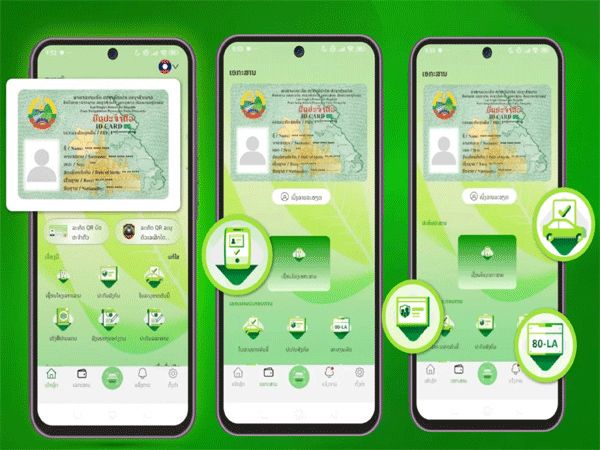
Laos has taken a significant leap in modernising its public administration infrastructure by formally retiring its decades-old paper identity system and introducing LAeID, a mobile-based digital identification platform. The Ministry of Public Security has declared the once-familiar white and green identity cards, along with paper household registration books, invalid for official transactions from July 18 onwards. This transformation consolidates multiple personal documents into a single smartphone application, reshaping how Laotian citizens interact with government agencies and access public services.
The nationwide rollout of LAeID represents a watershed moment for Southeast Asia's most digitally conservative economies. All government ministries, agencies, and organisations have been formally notified of the transition, and citizens across the country are being encouraged to register through district and provincial public security offices. This coordinated shift from analogue to digital documentation underscores Laos' commitment to joining the digital governance revolution that has already transformed bureaucratic systems in neighbouring Thailand, Vietnam, and Indonesia. For a nation where multiple visits to different government offices have historically been required to verify identity and access basic services, the consolidation into a single application promises substantial operational efficiency gains.
The registration process itself follows a straightforward model designed to be accessible across Laos' varied geography. Citizens use their identity number as their username or identity card number, with passwords delivered via SMS following account approval, though users may alternatively create their own credentials during the initial registration phase. The Ministry of Public Security maintains direct control over the system's management, ensuring consistent standards and security protocols. This centralised approach, while potentially raising questions about data privacy that remain largely unaddressed in public communications, allows for coordinated rollout and uniform implementation across the country's administrative divisions.
The immediate practical benefits for ordinary Laotians should not be understated. Citizens will no longer need to carry multiple bulky documents to different offices or spend considerable time navigating complex bureaucratic procedures. A single smartphone application transforms citizens into their own portable identity verification system, dramatically reducing the friction in accessing public services. This convenience factor carries particular weight in a developing economy where time spent navigating administrative systems directly translates to lost income opportunities for workers and significant transaction costs for businesses. The reduction in paperwork processing also promises direct cost savings for both citizens and government agencies already struggling with resource constraints.
While the initial phase currently offers only the core digital identity card function, the LAeID architecture has been designed with ambitious future expansion in mind. The ministry envisions eventually integrating a comprehensive ecosystem of official documents into this single platform: birth certificates, marriage certificates, health insurance credentials, social security information, vehicle registration documents, driving licences, and passports. This integrated approach mirrors the successful model adopted by Estonia and increasingly replicated across Southeast Asia, where digital identity serves as the foundation for accessing government services, financial products, and essential transactions. The phased implementation strategy—adding linkages with other government databases gradually—suggests recognition that such a transformation requires careful coordination and capacity building across multiple government departments.
Laos' digital transformation initiative extends well beyond mere document consolidation. The transition reflects a broader strategic objective to modernise public administration, enhance data management capabilities, and establish the digital infrastructure necessary for a more efficient state apparatus. By connecting disparate government databases through the LAeID platform, authorities can eventually enable citizens to conduct numerous official transactions entirely online, eliminating the necessity for in-person visits to government offices. This shift carries particular significance for rural Laotians who often face considerable travel distances and time commitments to reach provincial administrative centres. The accessibility implications are substantial, potentially democratising access to government services across geographic and socioeconomic divides.
The transition from paper to digital identity also provides government agencies with unprecedented data management advantages. Centralised digital records enable better tracking of population movements, improved coordination between different administrative levels, and more accurate resource allocation based on demographic information. For policymakers and planners, this represents a transformative shift in administrative capability. However, such comprehensive data integration simultaneously raises governance questions about citizen privacy, data security protocols, and appropriate safeguards against potential misuse. These concerns, while not explicitly addressed in official announcements, remain pertinent considerations for a nation still developing its digital governance frameworks and regulatory approaches.
The LAeID system's rollout occurs within Laos' broader context of digital advancement across Southeast Asia. Neighbouring countries have pursued similar initiatives with varying degrees of success and public acceptance. Thailand's digital ID system, Vietnam's e-passport programme, and Indonesia's electronic identity card (e-KTP) offer instructive models, though each encountered implementation challenges and public concerns along the way. Laos appears to be learning from these regional experiences, implementing a deliberately phased approach that prioritises core functionality before expanding into more complex integrations. This measured pace may help identify and address technical issues and user adoption challenges before the system becomes unavoidably central to accessing essential services.
The voluntary registration requirement during this initial transition period reflects pragmatic acknowledgment that such systemic change requires public cooperation and gradual habituation. Citizens must actively register for their digital identity cards before activating electronic identification accounts, suggesting a transition period where both systems may operate in parallel. This grace period allows government agencies and citizens to build confidence in the new system while developing necessary digital literacy. However, with the old documents already declared invalid from July 18, the practical pressure to register quickly becomes evident, even within this ostensibly voluntary framework.
For Malaysian observers and policymakers, Laos' experience offers relevant perspectives on digital identity implementation in developing economies with dispersed populations and varying digital access. Malaysia already operates sophisticated digital governance infrastructure through its MyDigital framework and digital ID initiatives, positioning it further along the transformation curve. However, Laos' approach to consolidating household registration alongside personal identification within a single platform represents an intriguing policy choice that differs from Malaysia's more compartmentalised approach to various digital credentials. The regional trajectory is unmistakably toward integrated digital identity systems, with implications for cross-border recognition, ASEAN digital integration, and the eventual harmonisation of regional digital standards.
The successful implementation of LAeID will significantly influence how other Southeast Asian nations approach digital transformation. Should Laos successfully navigate the technical and social challenges of wholesale transition from paper to digital identity, the accomplishment could accelerate similar initiatives across the region. Conversely, implementation difficulties could provide cautionary lessons about the pace and scope of digital administrative reform. For Laotian citizens, the transition represents a fundamental reshaping of their relationship with state institutions—moving from document-centric bureaucracy to data-centric administration. As the system expands to incorporate additional government functions and databases, the LAeID application will increasingly become an indispensable component of daily life, underlining both the potential and the stakes of comprehensive digital transformation in Southeast Asia's developing economies.

