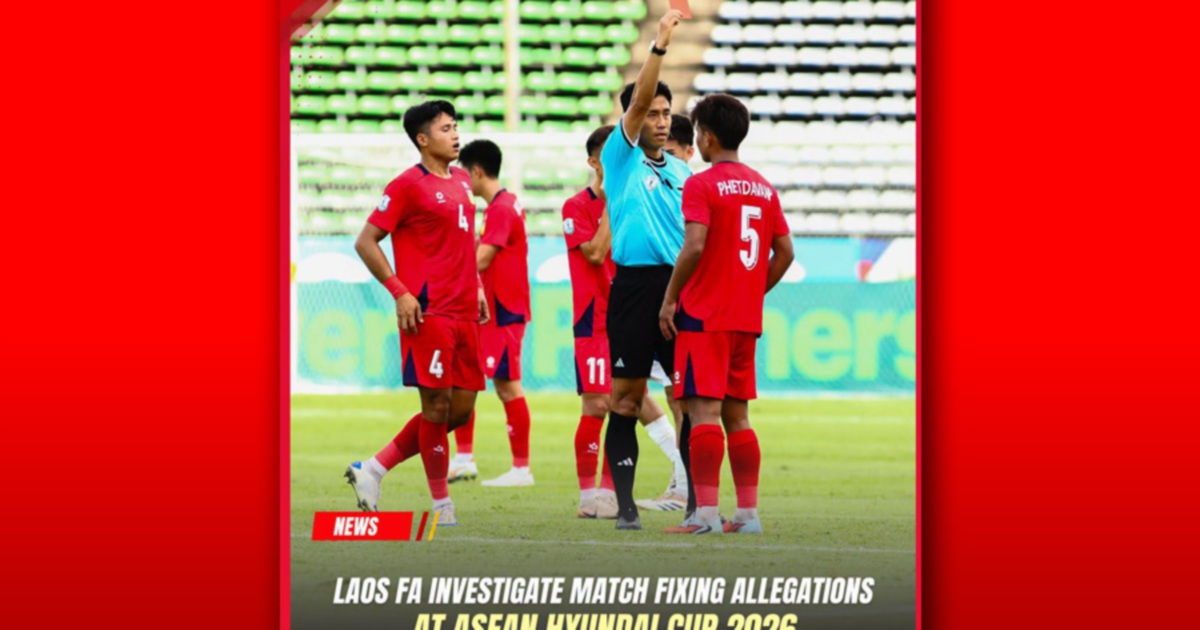
Southeast Asian football faces a fresh integrity crisis following the Lao Football Federation's decision to launch a formal investigation into widespread allegations of match-fixing, bribery, and unregulated gambling activities allegedly involving members of the national team. The announcement signals mounting concern at the highest levels of Laotian sport administration and threatens to cast a shadow over upcoming regional competitions, including the Asean Cup, where the credibility of participating teams remains paramount to tournament organisers and fans alike.
The gravity of the allegations has prompted the LFF to escalate the matter beyond routine administrative channels, seeking intervention from senior government and sports officials to ensure the probe possesses sufficient authority and resources to pursue leads across borders if necessary. Such intervention at a high level typically occurs only when evidence suggests systemic rather than isolated misconduct, pointing toward a potentially widespread network of corruption that may have operated across multiple fixtures or timeframes. This structural concern represents one of the most serious threats to regional football's integrity in recent years.
Match-fixing scandals have periodically emerged across Southeast Asia over the past decade, but the involvement of a national team rather than club-level players elevates this case significantly. International tournaments depend upon the assumption that competing nations field their strongest available players competing with genuine intent to win, making allegations affecting national squads particularly corrosive to event credibility. Tournament organisers and fellow participating nations now face questions about whether results from Laos matches can be considered reliable.
The intersection of organised illegal gambling with match-fixing creates additional complexity for investigators. Unregulated betting operations throughout the region have long sought to leverage fixed results for financial gain, and the involvement of national team members suggests either sophisticated criminal networks penetrating national structures or inadequate safeguards within Laotian football administration. Understanding the precise connection between gambling syndicates and alleged fixes will be crucial to determining whether corruption represents opportunistic individual behaviour or coordinated institutional failure.
Bribery allegations add a third dimension to the investigation, suggesting that individuals outside the team may have sought to influence players through financial inducement rather than coercion. This pattern indicates that corrupt actors identified sufficient vulnerability within national squad environments to believe direct monetary approaches would succeed, raising questions about player vetting procedures, education initiatives, and welfare systems within Laotian football.
The timing compounds concerns for the LFF and other Asean football authorities. Investigations into match-fixing typically require weeks or months to produce conclusions, yet Asean Cup commitments proceed according to fixed schedules. Tournament organisers must now determine whether postponing Laotian participation represents the appropriate response or whether matches can proceed under enhanced monitoring protocols. Early suspension of the national team risks appearing punitive prior to investigation completion, yet proceeding without measures to ensure fixture integrity undermines tournament legitimacy.
Regional neighbours have genuine incentive to observe the LFF investigation closely. If corruption has penetrated Laotian football at the national level, similar vulnerabilities may exist elsewhere across Southeast Asia, suggesting the need for broader preventive measures across Asean football structures. The Asean Football Federation and participating nations may accelerate anti-corruption initiatives, education programmes, and oversight mechanisms in response to these revelations.
Financial dimensions of Southeast Asian football remain relatively modest compared to European or East Asian markets, which theoretically reduces incentives for organised fixing. However, poverty and limited economic opportunity in some regions can create susceptibility to corruption that wealthier footballing nations do not experience. The fact that match-fixing allegations have surfaced in a less wealthy footballing nation highlights how economic disparities between regions can create different corruption vectors.
The investigation's outcome will significantly influence Asean football's credibility heading into major tournaments scheduled over the next two years. Should investigators identify systematic corruption involving multiple players or officials, the findings will prompt introspection across regional football governance regarding structural weaknesses in player monitoring, corruption prevention education, and whistleblower protections. Conversely, if the investigation concludes that isolated individuals acted without broader institutional knowledge, such findings might actually strengthen confidence in the region's capacity for self-policing.
The LFF's decision to pursue external investigation rather than contain the matter internally represents a potentially positive signal about governance intentions. However, regional observers will assess investigation transparency, timeliness, and willingness to impose meaningful sanctions on implicated individuals regardless of their status or connections within Laotian football. The quality of this investigation will establish precedent for how similar allegations are handled across Southeast Asia.
Meanwhile, players on the national team face uncertainty about their immediate futures, particularly those selected for Asean Cup participation. Team management must balance the presumption of innocence against institutional duty to protect competition integrity, navigating complex personnel decisions during what represents a reputationally damaging period for Laotian football. Individual players uninvolved in any misconduct bear reputational cost through association with organisational scandal.
Security of evidence and investigator impartiality will prove critical as the probe advances. Match-fixing investigations frequently encounter obstruction or witness intimidation, and investigators must implement protocols to ensure safe participation by potential informants while preserving forensic evidence. International cooperation may become necessary if evidence suggests involvement of actors based outside Laos.
The broader implication for Southeast Asian football extends beyond Laos alone. This scandal occurs within a region where governance capacity and resources for anti-corruption initiatives vary considerably between nations. The investigation outcome and consequent remedial measures may establish benchmarks against which other nations' anti-corruption frameworks are assessed, potentially prompting structural improvements across Asean football administration and regulatory systems.

