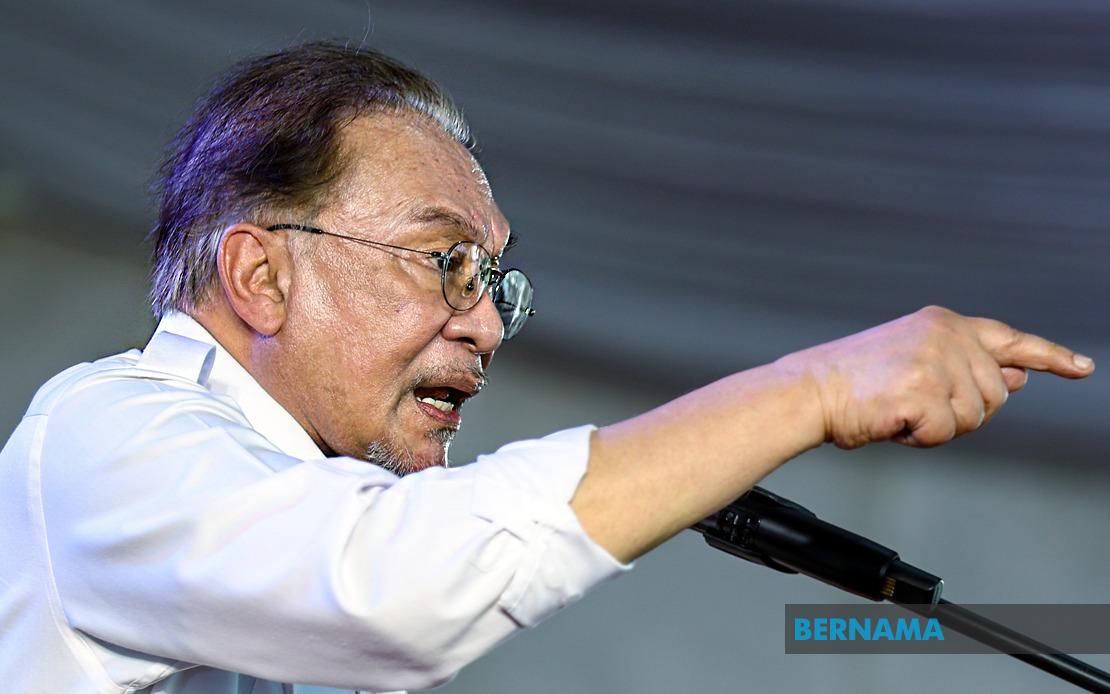
Prime Minister Datuk Seri Anwar Ibrahim has called on leaders across all tiers of government to maintain fair and inclusive engagement with diverse communities, arguing that such an approach forms the bedrock of Malaysia's long-term stability and national unity. Speaking during a hi-tea session with community leaders in Johor Bahru on July 4, Anwar underscored the critical importance of translating reform commitments into consistent practice at the state and municipal levels, noting that while the MADANI Government has initiated reforms nationally, significant work remains to embed these principles throughout the country's administrative structures.
The Prime Minister made clear that equitable governance does not require approval of every appeal or application submitted to authorities. Rather, he argued, the fundamental principle centres on affording all segments of Malaysian society a genuine opportunity to present their position and articulate their case through transparent mechanisms. Such an approach, he suggested, ensures that governance institutions are widely perceived as operating with integrity and fairness rather than partiality. This distinction represents a subtle but important reframing of administrative responsibility, moving beyond simple compliance with legal procedures toward demonstrating demonstrable commitment to inclusive decision-making processes that build public confidence.
State governments and local councils bear particular responsibility in this framework, according to Anwar, as these bodies interact most directly with citizens on matters affecting daily life. While maintaining that such authorities must remain receptive to community engagement and dialogue, he emphasised that their decisions must remain anchored to existing legal frameworks and established principles. This balance between accessibility and adherence to rules reflects the complex challenge facing Malaysian governance, where competing demands for consultation and accountability must be reconciled with the need for consistent, principled administration.
Beyond questions of procedural fairness, Anwar articulated a broader vision of national progress that extends far beyond conventional economic metrics. The Prime Minister contended that Malaysia's advancement should be measured not solely through gross domestic product growth or investment figures but through its capacity to sustain and strengthen the bonds of unity, compassion and mutual respect that bind its ethnically and religiously diverse population. This conceptualisation positions social cohesion as a development indicator equally important as infrastructure or productivity gains, reflecting concerns that purely economic-focused policy approaches may neglect the interpersonal dimensions essential to a functioning multiethnic democracy.
Economic expansion itself, Anwar noted, is increasingly reaching beyond traditional investment hubs. Development is now extending into regions previously on the periphery of Malaysia's growth narrative, including Negeri Sembilan, Melaka and Johor through the Johor-Singapore Special Economic Zone initiative, as well as Sabah and Sarawak. This geographic diversification of economic opportunity carries implications for regional political dynamics and can help address longstanding grievances about unequal development. The Prime Minister's emphasis on this trend suggests an administration cognisant of the political risks inherent in concentrated economic benefits and seeking to demonstrate that prosperity is not confined to historically privileged areas.
Anwar articulated particular concerns about technological and structural transformations reshaping the Malaysian economy, specifically artificial intelligence adoption, digital transition initiatives and energy sector reorientation. While embracing these changes as necessary, he cautioned that their implementation must remain tethered to robust moral frameworks, cultural sensitivity and religious principles. This stance reflects awareness that technological disruption, if perceived as disrespecting traditional values or marginalising particular communities, could become a source of destabilisation rather than progress. The statement implicitly acknowledges tensions between modernisation imperatives and the expectations of constituencies wary of rapid social change.
Central to Anwar's message was an expression of concern regarding persistent divisive narratives centred on race and religion that he characterised as testing Malaysia's social fabric and corroding national unity. The Prime Minister called upon religious leaders to assume expanded roles in promoting faith-based virtues including compassion, justice and mutual understanding within their respective congregations and communities. This appeal to religious figures reflects recognition that such leaders exercise significant influence over public attitudes and can either amplify or counteract divisive messaging depending on their approach.
Accompanying this call for religious leadership was an equally explicit assertion that political and public figures bear responsibility for circulating accurate information and actively rejecting narratives that weaponise racial and religious identity for partisan advantage. Anwar's framing positioned the exploitation of communal divisions as a deliberate political strategy rather than organic social expression, suggesting that vigilance against such narratives should be a collective responsibility transcending sectarian lines. The emphasis on information accuracy and narrative contestation reflects contemporary anxieties about misinformation and its capacity to inflame communal tensions in the Malaysian context.
Anwar grounded his argument by returning to fundamental aspirations that he suggested transcend ethnic and religious boundaries. He noted that most Malaysians share common desires for quality education, healthcare provision, community infrastructure development and, crucially, freedom to practise their respective beliefs as constitutionally enshrined. By locating these expectations within the constitutional framework established at independence, Anwar sought to reframe inclusive governance not as a novel concession but as fidelity to founding principles. This rhetorical move acknowledges that portions of the Malaysian public may experience appeals for interethnic engagement as novel or threatening, requiring reassurance that constitutional protections and community rights remain secure.
The gathering's inclusion of Deputy National Unity Minister R Yuneswaran underscored the government's institutional commitment to the messaging, linking high-level political rhetoric with a specific ministerial portfolio tasked with operationalising unity initiatives. This administrative pairing suggests that Anwar's remarks represent not merely aspirational leadership communication but form part of a coordinated policy approach with designated institutional responsibility and accountability mechanisms.

