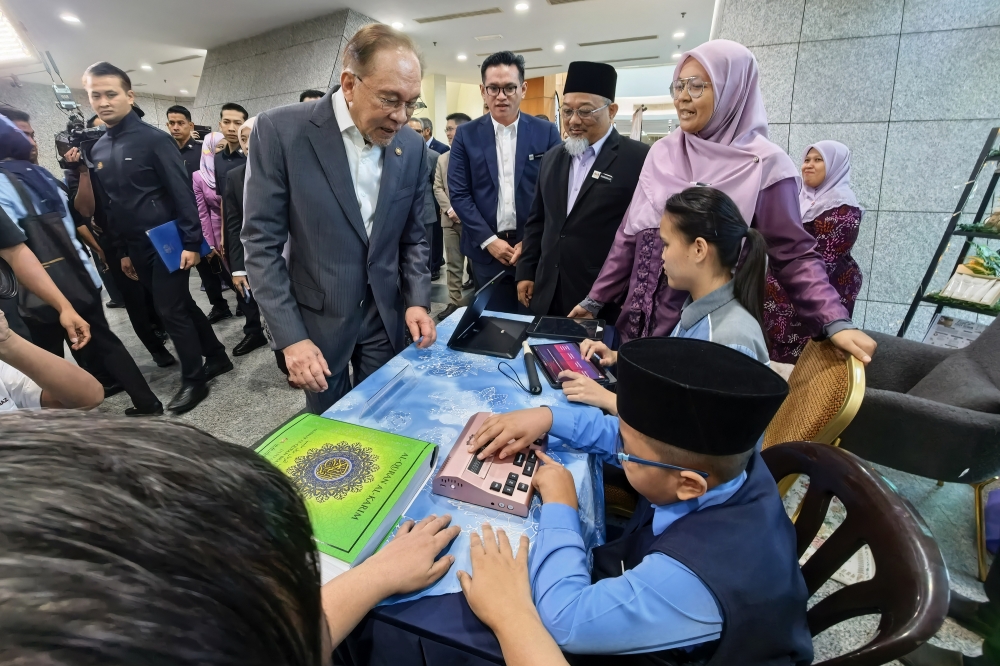
Prime Minister Datuk Seri Anwar Ibrahim moved to dispel concerns about the decline of Bahasa Melayu, insisting that citizens learning additional languages will not erode the standing of Malaysia's national tongue. Speaking in Putrajaya on July 28, Anwar reframed the debate around language acquisition, positioning multilingualism as a capability that complements rather than competes with the centrality of Bahasa Melayu in Malaysian society and governance.
The Prime Minister's remarks come against a backdrop of periodic public discourse in Malaysia regarding the place of English and other foreign languages in education and professional spheres. While some commentators have voiced apprehension that increased emphasis on international languages might diminish usage and proficiency in Bahasa Melayu among younger generations, Anwar sought to reassure Malaysians that constitutional protections and societal commitment to the national language remain intact. His statement reflects a broader push within government circles to balance nationalist sentiments with pragmatic recognition of globalisation's linguistic demands.
Anwar's position underscores a fundamental distinction between language prestige and language utility. Bahasa Melayu derives its status not merely from the number of people who speak it, but from its formal role as enshrined in the Federal Constitution, its use in parliament, the courts, and public administration. The Prime Minister appears to be arguing that this institutional foundation cannot be shaken by individuals acquiring competency in Mandarin, French, German, or other languages. Instead, bilingualism and multilingualism represent economic and educational assets in an increasingly connected world.
The timing of Anwar's remarks is significant given Malaysia's positioning as a regional economic hub and its aspirations to compete in global markets. Many employers, particularly in technology, finance, and international trade, increasingly seek workers who can operate fluently across multiple languages. This practical reality has created subtle tensions between national language policy and labour market requirements. By legitimising language diversity as compatible with national identity, Anwar signals that the government recognises these tensions and seeks to navigate them without sacrificing either objective.
From a Southeast Asian perspective, Malaysia is hardly alone in confronting this challenge. Singapore has long maintained English as an official language alongside Malay, Tamil, and Mandarin, achieving both economic dynamism and social cohesion. Thailand, Vietnam, and Indonesia have similarly grappled with balancing national language pride against the utility of English for international commerce and diplomacy. Anwar's framing suggests Malaysia may be moving toward a more sophisticated middle ground that acknowledges these regional precedents.
The Prime Minister's intervention may also carry subtle political dimensions. Language nationalism has occasionally been weaponised in Malaysian politics, with some groups arguing that promotion of English represents cultural capitulation or post-colonial subservience. By speaking publicly and authoritatively on this matter, Anwar positions himself as a leader capable of transcending such binary framings. He appears to be articulating a vision wherein national pride and international competence are not mutually exclusive propositions.
Educational institutions across Malaysia will likely interpret Anwar's remarks as tacit endorsement for maintaining robust language programmes encompassing both Bahasa Melayu and English, as well as other foreign languages. Schools and universities that have occasionally faced pressure to reduce English instruction in favour of exclusively Malay-medium teaching may view his statement as validation for their multilingual approaches. This could encourage institutional leaders to resist calls for reductive language policies and instead invest in pedagogical frameworks that develop competency across linguistic domains.
The role of parents and students in shaping language learning choices cannot be overlooked either. Many Malaysian families have historically valued English proficiency as an investment in their children's future opportunities, whether for university entrance abroad or employment in multinational corporations. Anwar's explicit reassurance that such aspirations do not constitute a threat to national culture may alleviate anxieties some parents harbour about appearing unpatriotic when prioritising English alongside Bahasa Melayu.
Looking forward, the Prime Minister's statement establishes a policy direction that the government views language diversity as complementary to national unity rather than corrosive to it. This interpretation opens space for educational reform that emphasises Bahasa Melayu's irreplaceable role while simultaneously acknowledging that Malaysians operate within globalised contexts demanding linguistic flexibility. Such an approach, if consistently implemented across government agencies and educational bodies, could model how modern nations can preserve cultural heritage while equipping citizens for contemporary economic realities. The challenge now lies in translating Anwar's rhetorical positioning into concrete educational and employment policies that genuinely reflect this balanced vision of Malaysian multilingualism.

