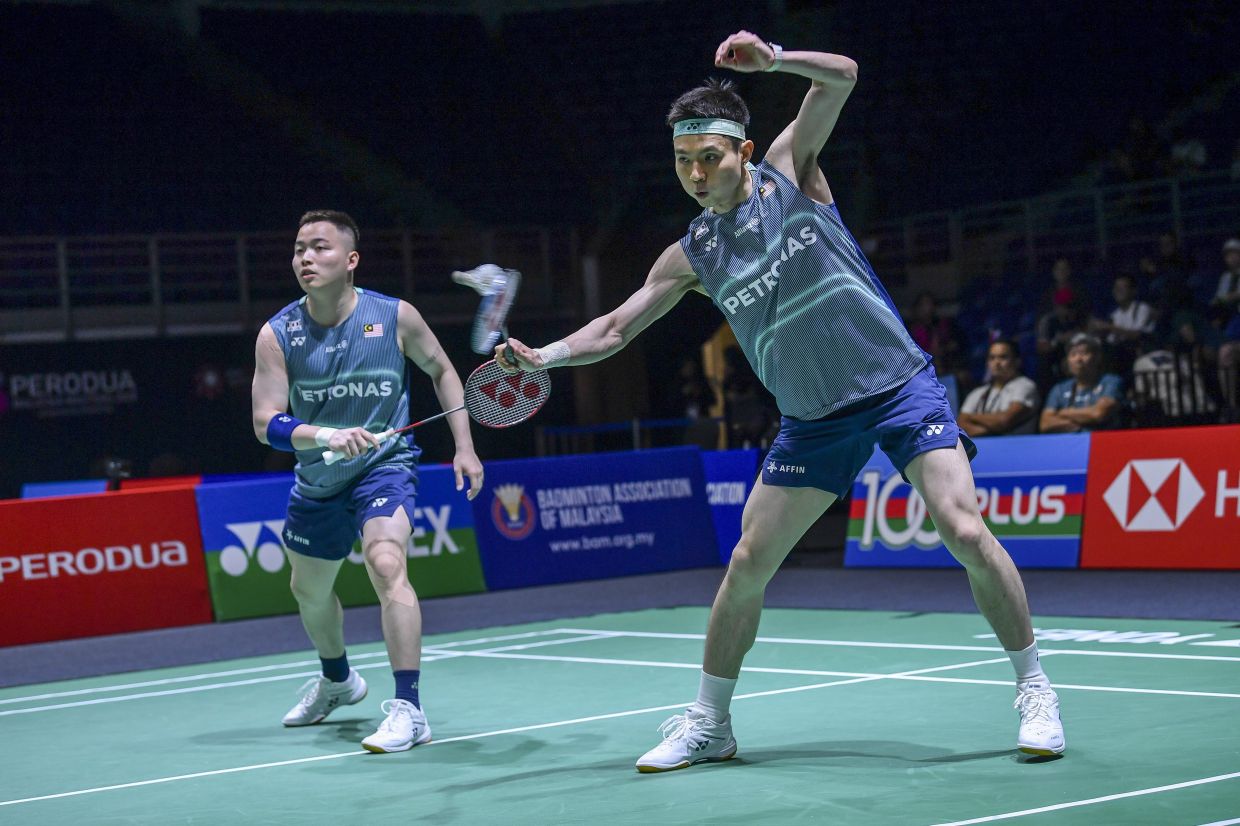
Datuk Seri Lee Chong Wei, the performance committee chairman of the Badminton Association of Malaysia, has delivered a firm message to national team players: no individual athlete should consider themselves above the collective interests of the squad. Speaking from Petaling Jaya, the badminton legend made clear that while BAM welcomes dialogue with its athletes, the organisation will not tolerate ultimatums disguised as negotiations, particularly when players invoke the possibility of departing to advance their personal agendas.
Lee's statement directly addressed recent remarks from men's doubles shuttler Soh Wooi Yik, who indicated that he and partner Aaron Chia are evaluating all available pathways to remain paired together through the 2028 Los Angeles Olympics. The partnership has demonstrated its credentials at the highest level, claiming the silver medal at last week's World Championships in New Delhi. However, BAM's coaching apparatus continues to experiment with alternative combinations, recognising the need to build depth and resilience into Malaysia's Olympic preparations across the competitive men's doubles category.
The association chief emphasised that while BAM's management structure remains open to meaningful discussions with athletes about their career objectives and partnership preferences, such conversations must occur within a framework of mutual respect rather than coercion. Lee articulated a philosophy rooted in institutional memory and loyalty, reminding players that their development as elite athletes has been nurtured by BAM's systems, coaching expertise, and financial investment from their formative years through to international prominence. This foundation, he suggested, should inform how players approach negotiations with the national body.
Lee's tone signalled a departure from what he characterised as previous administrative approaches. The current BAM leadership, he indicated, possesses both the resolve and the courage to make unpopular decisions when circumstances warrant such action. This posturing serves notice that threats of departure, whether explicit or implied, will not automatically reverse BAM's strategic choices regarding player pairings, coaching assignments, or competition schedules. The implicit warning is clear: players who test this resolve may discover that BAM's management is prepared to call their bluff.
The backdrop to this standoff involves legitimate sporting questions about optimal pairing strategies heading into an Olympic cycle. Aaron Chia has recently been paired with Aaron Tai, a combination that produced a runner-up finish at the Taiwan Open. Soh Wooi Yik, who initially encountered challenges partnering with Man Wei Chong, subsequently advanced to the final of the Korean Masters. These results suggest that BAM's coaching team believes merit-based experimentation could yield stronger combinations than maintaining the current Aaron Chia-Soh Wooi Yik pairing, notwithstanding their World Championships silver.
Further reshuffling is scheduled for the China Masters commencing September 1, when Aaron Chia is slated to partner with Wei Chong, while Soh Wooi Yik will team with Aaron Tai. This rotation strategy reflects BAM's conviction that the Olympic cycle demands flexibility in team composition rather than loyalty to established pairings, even successful ones. For Malaysian badminton's competitive trajectory, the question of whether to prioritise immediate results against long-term squad development carries profound implications.
Understanding the contractual reality illuminates why Lee's warning carries genuine weight. Both Aaron Chia and Soh Wooi Yik remain bound to BAM through contractual obligations that extend until 2028, aligning with the Los Angeles Olympics cycle. Should either player attempt to circumvent BAM's authority by seeking independent status or competing outside the national framework, they would face not only substantial financial penalties tied to contractual breach but also potential exclusion from international tournament participation governed by Malaysian federation certification.
The competitive consequences of such restrictions would prove severe. Absent capacity to compete in international tournaments sanctioned by BAM, accumulating the ranking points necessary for Olympic qualification becomes virtually impossible under current world badminton governance structures. A player who departs the national setup would essentially forfeit realistic pathways to 2028 representation, transforming any exit threat from negotiating tactic into career-limiting decision. Lee's implicit message is that BAM holds the institutional leverage in any confrontation.
This situation reflects broader tensions within elite sport programmes across Southeast Asia, where individual athlete aspirations increasingly clash with organisational strategic planning. Malaysian badminton has historically depended on strong centralised control and a collaborative relationship between administration and athletes. The emergence of players willing to challenge BAM's decisions represents a shift in power dynamics, perhaps reflecting international exposure to alternative models of athlete management or simply the natural evolution of increasingly affluent sports professionals.
For regional badminton observers, the dispute carries significance beyond Malaysia's borders. How BAM navigates this challenge will influence whether other Southeast Asian athletes in partner-dependent sports—particularly doubles and mixed doubles specialists—begin testing boundaries with their own national federations. The precedent being established here could reshape labour relations between athletes and sports organisations throughout the region.
Lee's position ultimately reflects a calculated defence of organisational prerogative. By publicly rejecting negotiation under duress, BAM signals that it will neither be bullied into strategic decisions nor held hostage by athletes threatening departure. Whether this hardline stance proves optimal for badminton performance remains uncertain, but the association has clearly decided that accepting ultimatums poses greater institutional risk than weathering short-term controversy over unpopular pairings and player assignments.
The coming weeks will reveal whether Aaron Chia and Soh Wooi Yik interpret Lee's warning as a definitive closure of discussion or merely a negotiating posture. Their response will likely determine not only the trajectory of men's doubles badminton in Malaysia but also establish expectations for how BAM engages with other elite athletes contemplating comparable challenges to federation authority.

