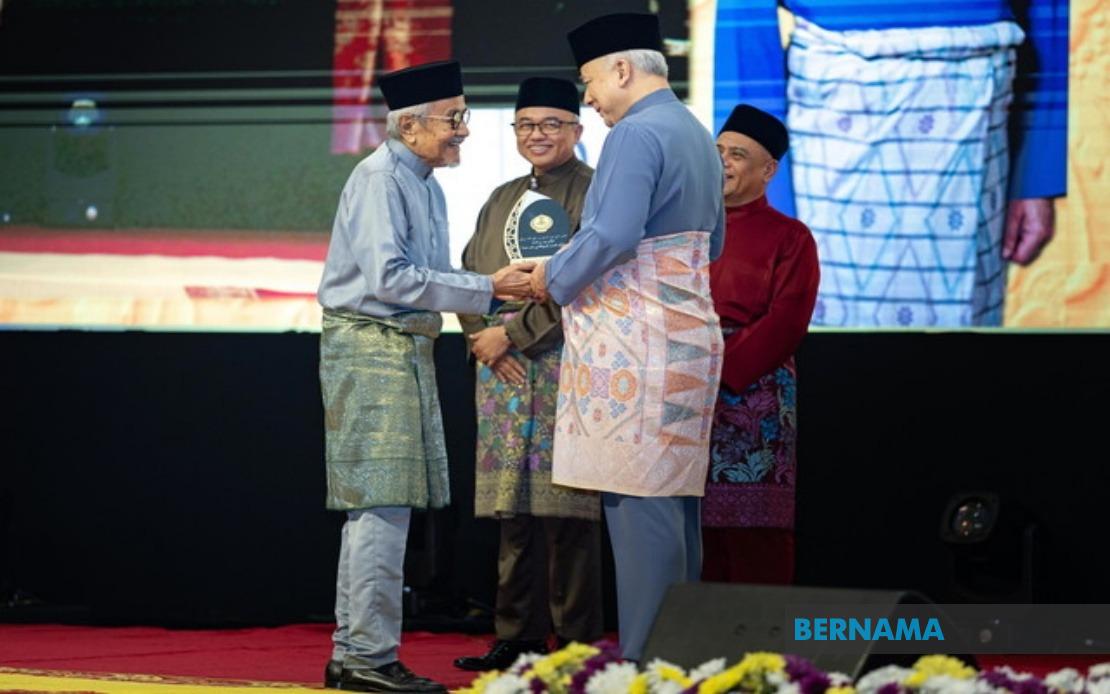
Datuk Rahim Razali, one of Malaysia's most prolific and respected creative figures, received the prestigious Tokoh Zaid Bin Thabit Media and Communications Practitioner Icon Award during ceremonies marking the Maulidur Rasul celebration in Ipoh on August 25. The recognition caps a remarkable seven-decade career that has fundamentally shaped the trajectory of Malaysian entertainment and broadcasting, with the Sultan of Perak, Sultan Nazrin Shah, presenting the award to the 87-year-old filmmaker alongside a monetary gift of RM5,000 and a commemorative plaque.
Abdul Rahim Mohd Razali, whose professional name has become synonymous with artistic excellence in Malaysia, hails from Batu Gajah in Perak, a state whose cultural landscape he has significantly influenced through his extensive body of work. His journey into the media industry began in earnest during Malaysia's formative years as an independent nation, when he served initially as a broadcasting assistant at Radio Television Malaysia, the national broadcasting authority that was then establishing itself as a cornerstone of Malaysian cultural expression. This foundational experience within RTM's institutional framework provided Razali with crucial insights into production methodologies and audience engagement strategies that would inform his later entrepreneurial ventures.
The establishment of Angkatan Seniman Abad XX Sdn Bhd in 1981 marked a turning point in Razali's career, allowing him to transition from institutional employment to independent production. This venture, whose name translates to "Artists of the Twentieth Century," reflected both his artistic ambitions and his determination to foster a more dynamic creative ecosystem within Malaysia. Through this company, Razali orchestrated the production of an impressive portfolio comprising fifty dramas commissioned by RTM and fifteen feature films, demonstrating an extraordinary capacity to work across multiple genres and formats while maintaining consistent artistic standards.
Razali's cinematic achievements have garnered international recognition, particularly through the Tokyo Film Festival, where eight of his feature films have been selected for screening. This international validation is particularly significant for Malaysian cinema, as it provided concrete evidence during the 1980s and 1990s that local productions could compete with established Asian film industries and appeal to sophisticated international audiences. His most celebrated works, including the iconic films Abang and Abang 92, have become touchstones in Malaysian cinema history, frequently referenced in discussions of the nation's cultural development and artistic heritage.
Beyond his work in drama and film, Razali built an equally impressive reputation as a sports commentator, bringing his distinctive voice and analytical perspective to the coverage of athletic events. This diversification of his professional interests underscores the breadth of his talents and his ability to excel across distinctly different media formats. His commentary work introduced audiences to sports through a distinctly Malaysian lens, helping to localize international sporting narratives for domestic audiences while maintaining the technical and linguistic standards expected of professional broadcasting.
The Maulidur Rasul awards ceremony in Perak recognised accomplishment beyond the media sector, reflecting the state government's commitment to honouring excellence across multiple domains of public service and community contribution. Yang Walat, an 82-year-old single mother from Kuala Kurau who has raised fifteen children independently, received the Exemplary Family Icon Award, along with RM10,000, an Umrah pilgrimage package, and a plaque. This recognition highlights how Malaysian authorities increasingly acknowledge the sacrifices of individuals who navigate extraordinary personal circumstances while maintaining strong family structures and values.
The awards ceremony distributed recognition among religious and community leaders whose contributions sustain institutional and social frameworks throughout Perak. Radhi Kamarul Hailan, aged 56, received the Ibnu Abbas Preacher Icon Award, acknowledging his contributions to religious education and spiritual guidance within his community. Saharuddin Hassim and Yahya Man, respectively aged 74 and 83, were honoured as Mosque Officials through the Tokoh Siak award, representing the elder statesmen of institutional religious administration in the state. Mohd Hanafiah Idris, at 56, received recognition as an Imam, while Pertubuhan Wanita Prihatin Perak was acknowledged for its non-governmental work in advancing social welfare.
For Malaysian audiences and cultural observers, Razali's award represents broader validation of the creative sector's contributions to national identity and cultural diplomacy. His recognition by the Sultan of Perak specifically endorses the notion that artistic achievement and media innovation constitute legitimate domains of state-level honour, comparable to religious leadership or community service. This positioning reflects a maturing appreciation within Malaysian governance structures that soft power, cultural production, and artistic excellence merit formal recognition alongside more traditional measures of social contribution.
Razali's career trajectory also illuminates how individual entrepreneurial initiative can flourish within Malaysia's creative industries when combined with institutional support and market opportunity. His transition from RTM employment to independent production ownership in the early 1980s occurred during a period of significant economic growth and expanding consumer demand for entertainment content. The timing of his venture's establishment, coinciding with Malaysia's deeper integration into regional and global media markets, allowed Angkatan Seniman Abad XX to position itself as a bridge between international production standards and distinctly Malaysian artistic sensibilities.
The recognition of Razali occurs within a broader regional context where Southeast Asian film industries have increasingly gained international prominence and cultural influence. Malaysian cinema, though historically overshadowed by Thai and Filipino productions in certain genres, has developed distinctive aesthetic and narrative characteristics largely attributable to pioneering figures like Razali. His films, particularly those selected for Tokyo Film Festival screenings, contributed to establishing Malaysia as a credible voice within Asian cinema discussions during decades when regional film discourse remained dominated by more established industries.
As Razali enters his late eighties, the Perak Maulidur Rasul award functions as both recognition of past accomplishments and acknowledgment of his enduring influence on contemporary Malaysian film and broadcasting. His protégés and successors in the industry continue to reference his methodologies, aesthetic choices, and professional standards when discussing the evolution of Malaysian cinema. The award thus celebrates not only an individual career but also the broader project of building and sustaining Malaysian cultural institutions capable of international-standard production and local artistic authenticity.
The presentation of this award by Sultan Nazrin Shah carries particular weight given the Sultan's documented interest in cultural matters and artistic patronage. Royal endorsement of Razali's achievements provides institutional legitimacy to the creative sector more broadly, signalling to younger filmmakers and producers that artistic excellence represents a valid and honourable path within Malaysian society. For Perak specifically, the recognition affirms the state's claim as a significant cultural contributor to the Malaysian federation, a positioning that extends beyond cinema into broader narratives of regional identity and cultural distinctiveness.

