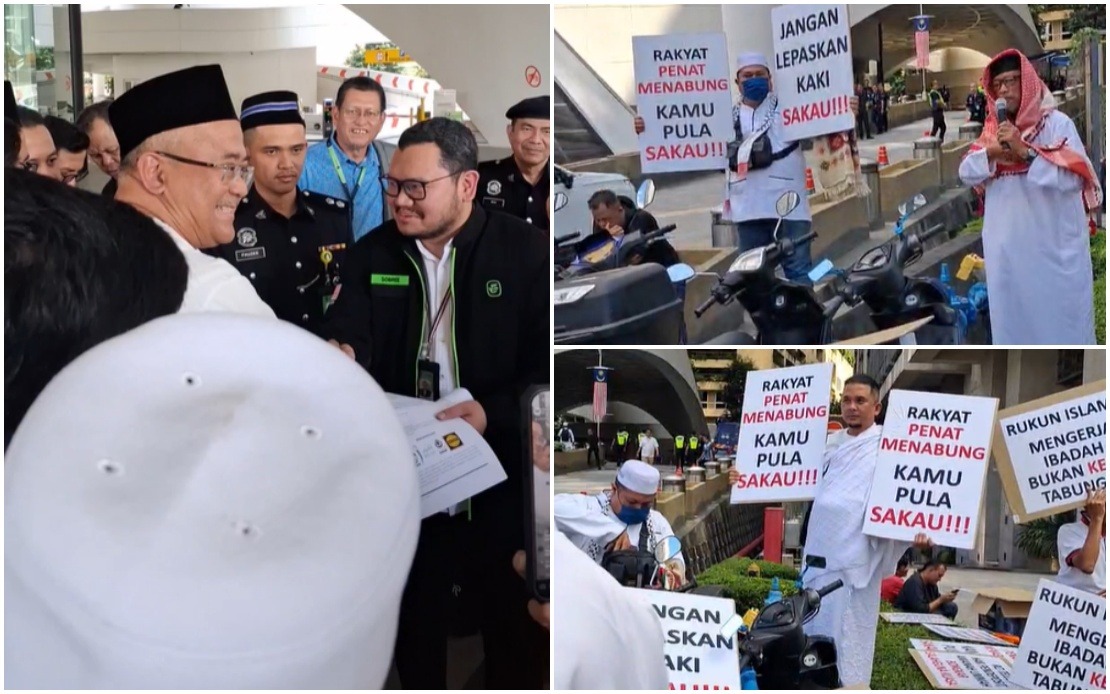
The MADANI coalition has issued a strong call for the authorities to conduct investigations into the Royal Commission of Inquiry's findings on Lembaga Tabung Haji management without succumbing to political pressure or external interference. Speaking at a solidarity gathering in Kuala Lumpur on August 7, Amir Zuhair Abdull Khalid, chairman of Daie MADANI, stressed that the RCI report covering the 2014-2020 period must lead to proper legal proceedings determined by the courts, not political actors. His comments underscore mounting concerns among civil society groups and political factions about ensuring institutional independence throughout the investigation and prosecution phases.
The RCI's comprehensive examination of TH governance has surfaced serious allegations that demand urgent attention, yet must be handled through established legal channels rather than political expedience. Amir Zuhair emphasized that the scale and sensitivity of the matter transcends ordinary political debate, as it directly affects the financial security and trust of millions of Muslim depositors whose savings were placed under TH's stewardship. The funds involved represent not merely financial assets but also religious and community trust, making the integrity of any investigation paramount. This framing elevates the discussion beyond partisan concerns and positions it as a matter of national institutional credibility.
The RCI's scope revealed troubling patterns within TH's operations during the seven-year period studied, including documented instances of what investigators characterized as political interference in governance structures and board member appointments. These structural weaknesses appear to have created an environment where proper checks and balances may have been compromised. The commission's findings thus raise fundamental questions about how statutory bodies managing public funds can be insulated from undue political influence—a challenge not unique to Malaysia but particularly acute in a system where political transitions can significantly alter institutional direction.
Amir Zuhair's statement that guilt or innocence must be determined exclusively through court proceedings reflects a deliberate effort to prevent premature judgments or politically motivated prosecutions that could undermine public confidence in the legal process. His assertion that individuals facing allegations will naturally deny wrongdoing is a realistic acknowledgment that legal determination requires evidence-based adjudication rather than political rhetoric. This measured approach aims to ensure that whoever is ultimately found responsible faces consequences through proper legal mechanisms, thereby establishing precedent and accountability throughout the system.
The coalition has resisted calls to allow political considerations to shape the investigation's trajectory. By explicitly urging all parties to refrain from pressuring investigators or attempting to influence the Malaysian Anti-Corruption Commission's work, the MADANI coalition is articulating a principle fundamental to democratic governance: that institutions designed to combat corruption must operate free from the very political interference they are meant to constrain. This principle becomes especially critical when investigations touch on matters involving previous administrations or politically connected figures.
A coalition of Islamic civil society organizations, including HIKAM (Malaysian Islamic Movement Coalition) and affiliated groups such as WADAH, IKRAM, HALUAN, and ABIM, have formulated ten specific demands stemming from the RCI report. Beyond general calls for transparency, these organizations are seeking concrete outcomes: immediate legal action against those found culpable, recovery of financial losses and misappropriated assets, full implementation of the RCI's recommendations for structural reform, and sustained governance improvements under the current MADANI administration. This multifaceted approach recognizes that investigation and prosecution alone are insufficient without accompanying institutional reforms.
The focus on governance reform reflects broader recognition that the TH situation represents not an isolated scandal but rather evidence of systemic vulnerabilities. Previous boards and management structures failed to maintain adequate separation between political actors and professional administrators responsible for fund management. Addressing this requires not only holding individuals accountable but also restructuring how such bodies operate, how board members are selected, and how conflicts of interest are managed. The MADANI government's stated commitment to implementing the RCI's recommendations thus carries significant weight in determining whether this episode becomes a catalyst for genuine institutional strengthening.
For Malaysian Muslim depositors and the broader public, the investigation's credibility depends entirely on its independence from political pressure. TH's portfolio includes substantial real estate holdings and investment positions worth billions of ringgit, making questions about governance not merely matters of historical accountability but of present and future financial performance. Depositors need assurance that whoever takes responsibility for institutional management going forward will do so based on professional competence and fiduciary duty rather than political favor. The investigation process itself therefore serves an important signaling function regarding the government's commitment to such principles.
The MADANI coalition's emphasis on court-based determination rather than political resolution also addresses a persistent challenge in Malaysian governance: the tendency for serious institutional failures to be managed through political negotiation rather than legal accountability. By insisting that culpability be established through legal proceedings, the coalition is arguing for institutional mechanisms that can survive political transitions and maintain legitimacy across different administrations. This approach benefits the long-term credibility of both the legal system and the government's anti-corruption credentials.
The timing of these statements, approximately six months after the RCI report's likely submission, suggests that investigating authorities are progressing with preliminary inquiries that will determine whether charges are warranted. The coalition's interventions appear designed to create a political environment where investigators feel empowered to pursue evidence wherever it leads without fear of backlash or pressure to conclude proceedings prematurely. Such interventions by civil society organizations can serve as important counterweights to political forces that might otherwise seek to constrain or redirect investigations toward predetermined outcomes.
The broader implications of the TH case extend beyond Lembaga Tabung Haji itself. Statutory bodies managing public funds across Malaysia—including pension schemes, development banks, and other trust-based organizations—require assurance that they operate within governance frameworks resistant to political manipulation. The RCI's findings and subsequent legal proceedings will establish important precedent regarding how Malaysian institutions handle discoveries of misconduct and whether systemic reforms can accompany individual accountability. These lessons will inform governance approaches across the public sector.
For Malaysia's international standing and investor confidence, transparent handling of the TH investigation demonstrates institutional maturity and commitment to rule of law. Foreign observers and rating agencies evaluating Malaysia's governance environment will pay close attention to whether investigations proceed independently and whether judicial processes reach transparent conclusions. The coalition's emphasis on proper legal procedures thus serves not only domestic accountability needs but also contributes to Malaysia's reputation as a jurisdiction where institutional credibility matters and financial impropriety faces genuine consequences.

