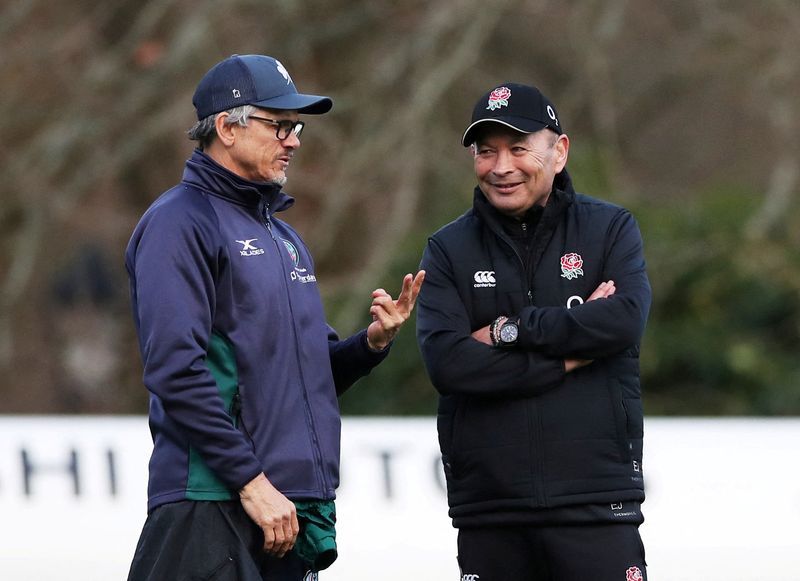
Australia's incoming rugby coach Les Kiss has signalled a marked departure from his predecessor's cautious philosophy, declaring he will cast a wide net internationally in pursuit of the players capable of returning the struggling Wallabies to competitive form. At his first official press conference in Sydney on Thursday, Kiss made clear that Rugby Australia's traditional preference for home-based talent will not prevent him from tapping overseas resources if strategic advantage demands it—a pragmatic shift that underscores the urgency surrounding the national team's World Cup preparation.
The 61-year-old former Queensland Reds administrator assumes control of a programme in modest crisis. Australia has won just two of its last eleven tests and currently languishes in eighth place on the world rankings, figures that demand creative solutions rather than adherence to convention. Kiss's inaugural squad announcement for August's two-test matches against Japan largely retained the core group utilised by Joe Schmidt during the recent Nations Championship, a campaign that yielded mixed results including narrow defeat to Ireland, heavy loss to France, and victory over Italy. Yet the selection of this squad signals strategic continuity rather than revolutionary change; the genuine innovation lies in Kiss's stated openness to recruitment beyond Australia's borders.
Rugby Australia's institutional policy has traditionally discouraged the selection of overseas-based players, operating under the assumption that such restraint preserves domestic competition standards and motivates elite talent to remain within the local competition. Schmidt, Kiss's immediate predecessor, respected this boundary throughout his two-year tenure, deploying his discretionary selections sparingly and conservatively. Kiss, by contrast, indicated he has already initiated contact with several internationally-based prospects, including Japan-based utility back Jordan Petaia, who is managing a recovery from injury. This outreach suggests a coach willing to navigate institutional constraints in service of on-field performance, an important distinction from his predecessor's interpretive approach.
When articulating his vision for the Wallabies' playing identity, Kiss invoked the familiar rhetoric of Australian rugby tradition—the emphasis on speed, creativity, and ball-in-hand excellence that defined the nation's World Cup victories in the 1990s. Yet he was notably circumspect about implementing this philosophy, acknowledging that such an approach has proven inconsistently effective since Michael Cheika's side reached the 2015 World Cup final in England. Rather than promising a complete tactical overhaul, Kiss instead framed his challenge as unlocking the Wallabies' distinctive competitive spirit, a formulation that steers clear of grandiose pledges while maintaining credibility with supporters weary of coaching transitions.
The management of Joseph Suaalii represents an early test of Kiss's judgment and strategic direction. Rugby Australia invested A$5 million to recruit the 22-year-old from the National Rugby League, a sum that generated considerable domestic debate about resource allocation and recruitment strategy. Suaalii produced encouraging performances during Australia's 2024 Northern Hemisphere tour but has subsequently delivered only sporadic glimpses of his potential in the gold jersey, simultaneously provoking discussion about his optimal positional placement. Kiss confirmed he would maintain Schmidt's positioning of Suaalii at outside centre (position 13) despite the player's versatility at fullback, suggesting continuity in tactical thinking while telegraphing confidence in the player's gradual development at international level.
For Malaysian and Southeast Asian observers, Kiss's appointment carries broader significance within regional rugby dynamics. Australia remains the dominant force in the Asia-Pacific rugby landscape, and the Wallabies' trajectory influences investment, player movement, and competitive intensity across the region. A resurgent Australian programme strengthens the entire regional ecosystem, creating more competitive opportunities for emerging nations and established players alike. Conversely, sustained weakness invites investment and talent migration toward alternative rugby destinations, potentially fragmenting regional development pathways.
The willingness to recruit internationally signals Kiss's recognition that institutional orthodoxy cannot override performance imperatives. Rugby Australia's traditional policy preference for home-based talent reflects values about domestic competition sustainability, yet those values become secondary if they prevent the national team from achieving competitive outcomes. This tension between systemic health and national-team performance represents an enduring challenge for rugby administrations globally, and Kiss's pragmatism suggests a leadership approach grounded in results-focused thinking rather than ideological adherence.
Kiss's comments about respecting existing players while remaining open to overseas recruitment attempt to navigate potentially fractious terrain carefully. Domestic-based players might interpret the coach's openness to international recruitment as implicit criticism of their quality or commitment, yet Kiss's framing emphasizes addition rather than replacement—seeking supplementary talent that elevates the squad without diminishing current contributors. This rhetorical balance becomes crucial as the coach builds relationships with an established playing group while simultaneously signalling flexibility and ambition to potential recruits abroad.
The broader strategic challenge confronting Kiss extends beyond squad selection mechanics to encompass sustainable competitive culture. The Wallabies have endured sufficient period of underperformance that confidence erosion has become measurable, evident in the ranking decline and results streak. Kiss's tenure will ultimately be evaluated not by his openness to policy flexibility but by whether his coaching actually translates squad potential into consistent test victories. The overseas recruitment philosophy represents merely one lever among many required to reverse institutional trajectory—player development, tactical sophistication, injury management, and cultural cohesion demand equal attention.
As Australia navigates World Cup preparation with renewed leadership, the international rugby community watches with interest whether Les Kiss can deliver the performance trajectory required to justify both his appointment and the substantial investment Rugby Australia has committed to recent recruitment initiatives. His willingness to challenge conventional wisdom about overseas player selection suggests a coach prepared to make difficult decisions in pursuit of organizational objectives—a quality that might prove decisive in restoring Australian rugby to its historical standing.

