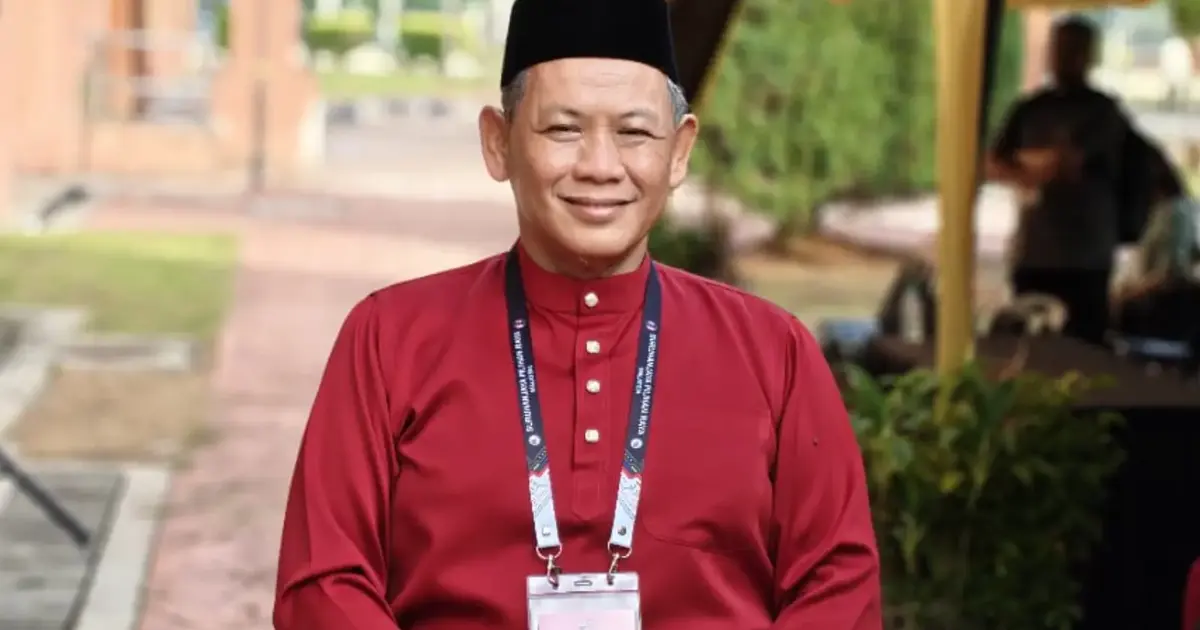
The political landscape in Linggi, a strategically significant Malay-majority constituency in Negeri Sembilan, is intensifying as Negeri Sembilan Menteri Besar Aminuddin Larki enters the race to reclaim the seat from its current holder. The three-cornered contest, which also features a Bersatu candidate, promises to reshape the political dynamics in one of Barisan Nasional's historically dependable strongholds and signals the fragmentation of support that has increasingly characterized Malaysian electoral contests in recent election cycles.
Faizal Ramli, who secured victory in the 2023 general election, represents the incumbent Barisan Nasional establishment that has long maintained dominance in Linggi. His previous triumph consolidated the coalition's grip on a constituency where Malay and Islamic sentiment traditionally favour the traditional political structures. However, the emergence of competing candidates from different political formations now threatens to splinter the vote that once flowed monolithically toward the BN banner, reflecting broader realignments occurring within Malaysia's Malay-majority constituencies where voter allegiances have become considerably more fluid.
Aminuddin Larki's entry into the Linggi contest carries particular significance given his position as the chief administrator of Negeri Sembilan. His decision to contest the seat demonstrates the calculation that he can leverage both his executive authority and whatever political capital he has accumulated through state-level governance to dislodge Faizal. This represents a vertical integration of electoral strategy, where state-level politicians increasingly involve themselves directly in federal-level contests rather than delegating such efforts to party machinery. The Menteri Besar's personal involvement also signals confidence within his political coalition that meaningful gains remain possible in constituencies where they previously lost ground.
The Bersatu candidate's participation in this three-way race introduces an additional complication for Barisan Nasional's hold on the constituency. Bersatu, as a significant player within Malaysian political formations, commands a dedicated supporter base particularly among Bumiputera communities and those with strong Islamic orientations. The presence of a Bersatu contender effectively means that anti-establishment votes in Linggi will be divided between two main challengers to the incumbent, potentially working to Faizal's advantage despite the challenge he faces from Aminuddin's higher profile and administrative position. Vote splitting under such circumstances has historically benefited the incumbent when the opposition remains fragmented.
The Linggi contest exemplifies the broader phenomenon of Malaysia's transition from two-bloc politics toward a more fragmented electoral environment where constituencies increasingly feature three, four, or more serious contenders. This atomization of the political space has profound implications for how campaigns are conducted and how candidates must now construct winning coalitions at the constituency level. Rather than appealing to a binary choice between government and opposition, candidates must now fight for market share among multiple competitors, each with distinct appeals and organizational strengths.
From a regional Southeast Asian perspective, Linggi's three-way race reflects patterns observed throughout the region where established political parties face challenges from both opposition forces and insurgent movements from within their own ideological families. Bersatu's challenge to Barisan Nasional partners represents the kind of internal coalition stress that has affected ruling parties from Thailand to Indonesia, where erstwhile partners become competitors. This pattern threatens the cohesion that long provided Barisan Nasional with significant electoral advantages, as traditional constituencies see their vote shares eroded by candidates claiming similar ideological and religious credentials.
The question of whether Aminuddin can mobilize sufficient support to overcome Faizal's incumbency advantage and the fragmentation caused by the Bersatu candidate remains uncertain. Incumbency typically provides substantial advantages, including name recognition, existing constituency infrastructure, and demonstrated ability to direct resources and government patronage toward supporters. Faizal's previous victory margin and the mechanisms through which an incumbent can consolidate support between elections suggest he begins this contest in a relatively strong position despite facing competition from multiple directions.
Nevertheless, Aminuddin's state-level profile and his ability to utilize bureaucratic resources within Negeri Sembilan cannot be dismissed. State-level politicians in Malaysian politics frequently possess advantages that transcend party machinery alone, including their capacity to direct development spending, affect bureaucratic decisions, and cultivate goodwill through performance of constituency services. Whether these advantages prove sufficient to overcome the structural benefits of incumbency remains to be seen.
The Bersatu participation also raises questions about whether the Malay-majority constituency's electorate might be particularly susceptible to appeals regarding Islamic governance, Bumiputera protections, and cultural nationalism—precisely the terrain on which Bersatu has positioned itself. If Bersatu can mobilize such voters effectively, the three-way split might prevent any candidate from securing the decisive majority needed to win cleanly, although Malaysian electoral rules ensure the candidate with the most votes triumphs regardless of the margin.
Linggi's contest encapsulates the contemporary Malaysian political economy where power remains fragmented across multiple institutions and coalitions, no single formation commands overwhelming support, and ambitious politicians at both state and federal levels must navigate increasingly complex electoral terrain. The outcome in this constituency will offer insights into how traditional strongholds respond to modernizing electoral dynamics and whether established power structures can maintain their grasp when challenged simultaneously from incumbent advantage, administrative authority, and ideological competition.

