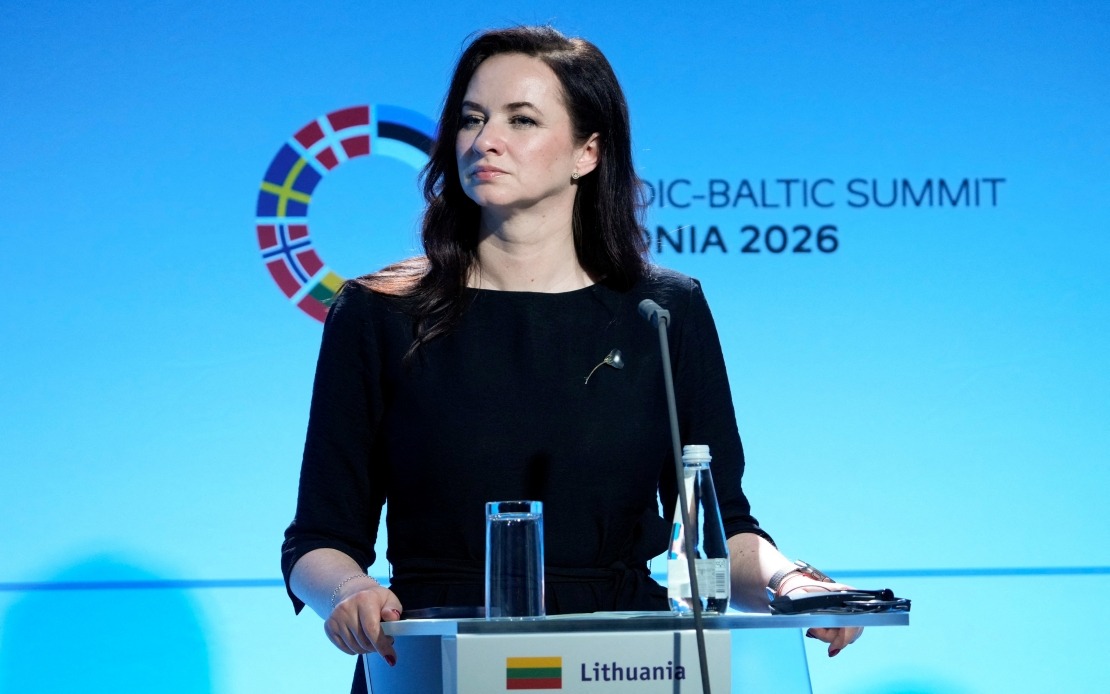
Lithuanian Prime Minister Inga Ruginiene tendered the resignation of her government on Tuesday, setting in motion constitutional processes that will result in the formation of the country's third governing coalition since parliamentary elections concluded in late 2024. The move marks another significant shift within Lithuania's political landscape following the Social Democrats' electoral victory last year and reflects ongoing realignments within the ruling coalition structure that has governed the Baltic nation since August.
Under Lithuania's constitutional framework, President Gitanas Nauseda now possesses a fortnight to nominate a candidate for the premiership, a designation that requires subsequent parliamentary approval from the Seimas. The presidential selection process carries considerable weight in determining the government's policy direction and composition during the subsequent administration period. Once nominated, the candidate faces scrutiny from lawmakers before advancing to the next phase of government formation.
Mindaugas Sinkevicius, who leads the Lithuanian Social Democratic Party that controls the governing coalition, stands as the frontrunner for the prime ministerial position according to widely circulated political assessments. Should the Seimas endorse his nomination, Sinkevicius would inherit responsibility for assembling a functioning Cabinet and articulating a comprehensive policy agenda. The timeline for these actions is compressed, with the incoming premier afforded fifteen days to construct the ministerial team and outline governmental priorities, followed by an additional fifteen-day window to present the complete Cabinet composition for parliamentary ratification.
The resignation of Ruginiene's administration represents the second change in executive leadership since the Social Democrats' victory at the polls. The previous government, headed by Gintautas Paluckas, dissolved following his resignation last August, providing Ruginiene's cabinet with its operational mandate. This cyclical pattern of governmental transitions within a single parliamentary cycle underscores the fragile coalition dynamics that characterise Lithuanian politics in the current era, where maintaining parliamentary majorities requires careful navigation of competing interests among coalition partners.
President Nauseda formally acknowledged the Cabinet's resignation and directed the outgoing government to continue executing essential administrative functions in a caretaker capacity. This procedural step ensures governmental continuity during the transition period and prevents a power vacuum that could disrupt public services or policy implementation. The caretaker arrangement permits the current administration to maintain institutional operations while formal negotiations over cabinet appointments and coalition terms proceed among political actors.
During its final assembly on Tuesday, the outgoing Cabinet unanimously approved a resolution formalising its resignation, underscoring the orderly nature of the transition despite underlying political pressures that prompted the departure. Ruginiene addressed her colleagues during the concluding session, emphasising accomplishments achieved by her administration despite confronting substantial obstacles throughout its tenure. This emphasis on constructive legacy reflects an attempt to maintain governmental prestige and provide narrative coherence around the cabinet's record as it exits the executive sphere.
The succession of coalition governments within Lithuania's current parliamentary term reflects broader patterns evident across Central and Eastern European democracies, where coalition governance frequently produces intricate negotiations and shifting alignments. The Social Democrats' formation of successive coalitions demonstrates their centrality within the political system whilst simultaneously revealing the challenges of sustaining durable governing arrangements when multiple parties possess veto power over executive decision-making. Each iteration of coalition construction requires fresh negotiations over ministerial portfolios, budgetary allocations, and policy priorities.
For Malaysia and other Southeast Asian observers, Lithuania's governance transitions illustrate the operational complexities of coalition-based political systems where no single party commands parliamentary majorities. The requirement for formal presidential nomination and subsequent parliamentary ratification of executive leadership mirrors mechanisms present in certain regional democracies, particularly those with constitutional frameworks establishing separate executive and legislative branches. The compressed timelines for government formation—spanning just one month from resignation through full Cabinet approval—demonstrate institutional provisions designed to prevent prolonged political uncertainty.
The upcoming Cabinet formation will likely reflect efforts by Sinkevicius to balance competing demands from coalition partners whilst establishing clear policy priorities. Key considerations probably include economic management, regional security within the NATO framework given Lithuania's geopolitical position bordering Russia, and European Union integration matters. The composition of the new Cabinet will signal which coalition members gained enhanced influence and which policy domains receive enhanced governmental attention during the subsequent administration's operational period.