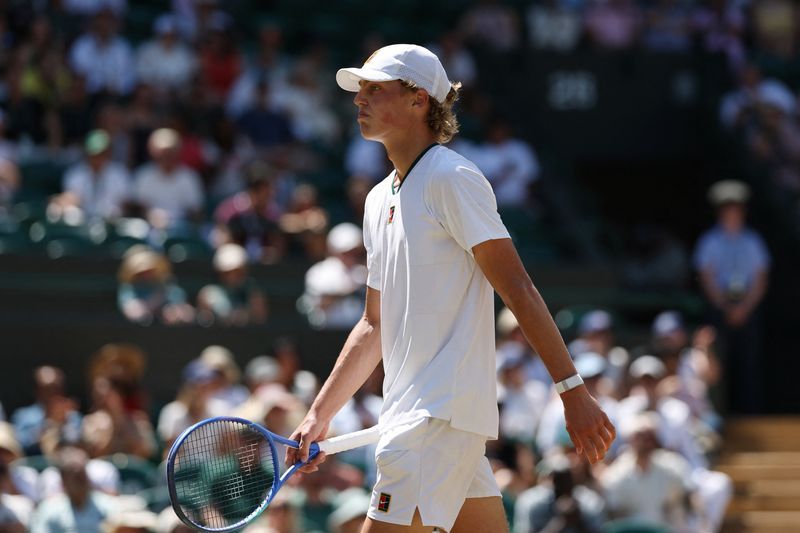
At just 17 years old, Cruz Hewitt has announced his arrival on professional tennis's biggest stage with a commanding first-round victory at the Washington Open. The Australian teenager, son of former world number one Lleyton Hewitt, dispatched American Marcos Giron 6-3 6-4 to secure his maiden ATP Tour-level triumph on Tuesday, capping off an extraordinary month that has already included a runners-up finish at Wimbledon's boys' championship.
The moment carried particular resonance for the young player, who earned his breakthrough win at a venue steeped in family history. His father captured the Washington Open title in 2004, meaning Cruz's victory comes at the same tournament where Lleyton enjoyed notable success. Competing as a qualifier ranked 612th in the world at an ATP 500 event is no minor feat for a teenager still finding his feet in professional competition, yet Cruz navigated the challenge with composure beyond his years.
Cruz's ascent through the junior ranks and into senior competition has been meteoric. Reaching the Wimbledon boys' final represented a watershed moment, though the American Jordan Lee ultimately prevailed in that encounter. However, rather than derailing his momentum, the setback appears to have sharpened his hunger. The timing of his Washington triumph, arriving just weeks after the All England Club, suggests a player rapidly maturing mentally and tactically as his physical talents mature alongside his opponents.
The statistical achievement further underscores the significance of his breakthrough. By capturing this victory, Cruz became the youngest player to win a match at Washington since Japan's Kei Nishikori managed the feat in 2007—a span of 16 years during which numerous talented juniors have attempted the same feat. He also joined an exclusive cohort of players born in 2008 or later who have registered ATP-level victories, following Diego Dedura, Thijs Boogaard and Moise Kouame into this rarefied group. For a qualifier at just 17, competing against established professionals, such company represents validation of his emerging status.
In the immediate aftermath of his triumph, Cruz reflected on the emotional weight of winning at a venue so intertwined with his father's legacy. "It's pretty surreal to win here," he remarked, acknowledging both the venue's significance and the dream-like quality of achieving a senior professional victory so early in his career. His presence at Washington as a spectator in childhood, watching Lleyton compete, had clearly remained etched in his memory. Those formative experiences now formed the backdrop to his own professional breakthrough, creating a full-circle narrative that few tennis families experience.
The youngster's mental resilience proved particularly noteworthy, especially when considering the inherent pressures of competing at an elite level whilst carrying a legendary surname. Cruz credited advice from his father, who emphasized enjoying the occasion and approaching each point individually rather than becoming overwhelmed by the occasion. This counsel appears to have resonated; despite describing the experience of his first tour main-draw match as somewhat pressurised, Cruz demonstrated the capacity to transform nervousness into positive energy. Such psychological maturity often takes years for young professionals to develop, yet Cruz appears to possess it instinctively.
Having cleared the first hurdle at Washington, Cruz now faces a second-round encounter with either Stefanos Tsitsipas or fellow Australian Alex de Minaur. The prospect of confronting de Minaur particularly intrigues the teenager, as the two players share a deep personal bond that extends beyond mere professional acquaintance. De Minaur has functioned as a mentor figure throughout Cruz's development, with the two families maintaining close ties. De Minaur has spent time with the Hewitt household and shares family occasions with them—a relationship that speaks to the interconnectedness of Australia's tennis community. Should the draw align such that Cruz faces de Minaur in the next round, the encounter would transcend typical professional tennis, offering a unique opportunity for two players from the same nation to share the court in competition whilst maintaining genuine affection.
Cruz's emergence at the senior level carries particular significance for Australian tennis, which continues searching for the next generation to maintain the nation's strong heritage in the sport. Lleyton Hewitt's achievements, including reaching the Australian Open final and ascending to world number one, set an exceptionally high bar. Yet Cruz's early performances suggest he possesses not merely the raw talent inherited from his father but also the temperament and work ethic required to compete at the highest echelons of professional tennis. His trajectory from qualifier to ATP Tour winner in a single tournament represents precisely the kind of breakthrough moment that typically heralds the arrival of a significant prospect.
Looking ahead, the immediate focus remains Washington. Regardless of whether Cruz encounters Tsitsipas or de Minaur in the next round, his performance against Giron has already achieved its essential objective: announcing his readiness to compete against experienced professionals. The combination of technical ability, mental fortitude, and family support structures positions him to continue gathering valuable experience throughout the remainder of the season. For Malaysian and Southeast Asian observers of professional tennis, the emergence of young players like Cruz across different sporting nations underscores how generational talent often clusters within families and within geographic regions, creating dynasties and traditions that sustain competition at the highest levels across decades.

