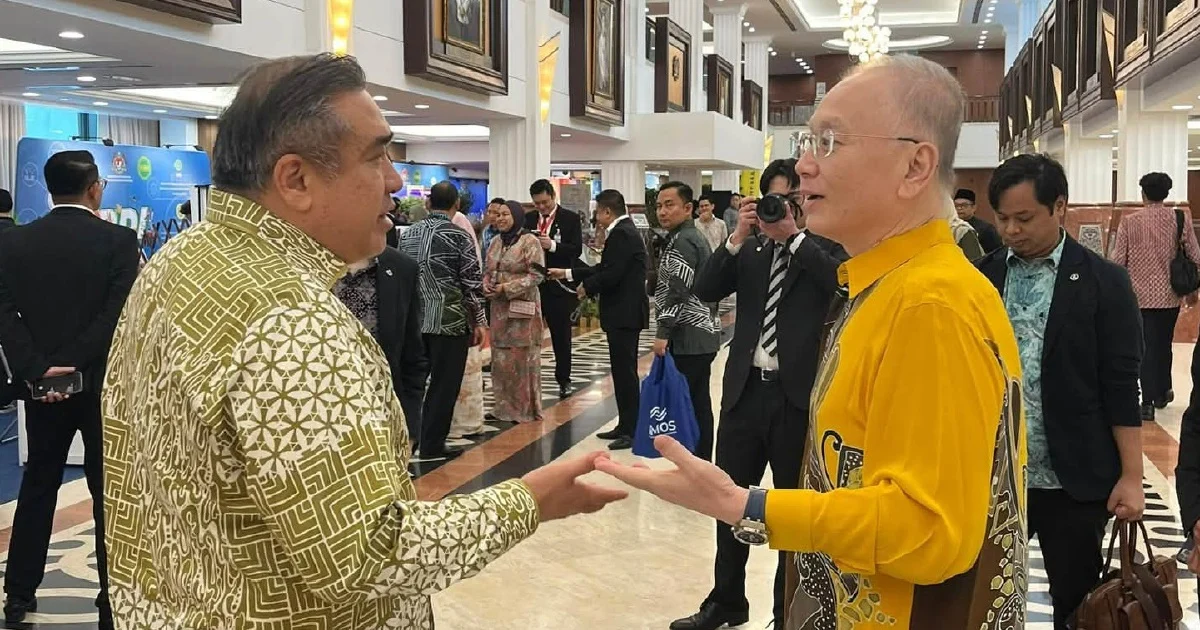
The corridors of parliament are expected to stay civil and orderly even as Malaysia's political landscape heats up with the approaching Johor state election, according to DAP secretary-general Anthony Loke. In remarks that underscored a commitment to institutional norms, Loke signalled that governing coalitions and opposition figures should compartmentalise their aggressive campaign rhetoric from their conduct in the legislative chamber.
The appeal comes as political parties intensify their ground strategies in Johor, a state that has long been a barometer of national sentiment and a proving ground for both Barisan Nasional and Pakatan Harapan. Elections at the state level frequently inject partisan energy into federal parliamentary debates, as politicians seize opportunities to score points with their home constituencies. This dynamic is particularly pronounced in Johor, where electoral outcomes carry symbolic weight beyond the state itself.
Loke's position reflects broader concerns within the DAP and allied partners about maintaining institutional credibility during periods of heightened political competition. The party leadership recognises that while electoral contests demand vigorous advocacy and mobilisation, parliament itself must function as a space where disagreements are aired through established procedures and where the business of governance continues uninterrupted. This distinction between campaign fervour and parliamentary decorum represents a maturation of Malaysian political culture, even if individual incidents sometimes test this principle.
The timing of Loke's remarks is significant given the intensity of Johor campaigning. State elections in Malaysia have historically witnessed escalating rhetoric, personal attacks, and the weaponisation of minor parliamentary incidents by competing camps. When votes are near and regional pride is at stake, the temptation to exploit every parliamentary misstep for campaign advantage grows. By articulating a commitment to restraint before such pressures fully materialise, Loke appears to be establishing a baseline of expected behaviour.
Wee Ka Siong, the Malaysian Chinese Association president and transport minister, has similarly endorsed this approach, suggesting cross-party agreement on maintaining parliamentary standards. The involvement of MCA in this messaging is telling, as it indicates that both government and opposition benches understand the reputational costs of allowing partisan campaigns to degrade the dignity of the legislative process. When senior figures from different coalitions publicly align on institutional norms, they create political space for colleagues to follow suit, even when electoral incentives pull in the opposite direction.
Johor's particular significance in Malaysian politics stems from its size, economic importance, and historical role in determining government majorities. The state has nearly 1.7 million eligible voters and traditionally commands attention from both major coalitions. Recent Johor elections have shown substantial swings in voter sentiment, making the state a potential bellwether for broader political realignment. This volatility means that both sides view state elections there as high-stakes contests with implications extending beyond state boundaries.
The challenge facing Malaysian politicians is reconciling two legitimate imperatives: the obligation to campaign vigorously for their parties and constituents, and the responsibility to uphold institutional norms that allow parliament to function effectively. These tensions are not unique to Malaysia, but they are particularly acute in systems where electoral competition is closely matched and where regional elections are frequently read as referenda on national leadership. The solution that Loke and Wee appear to be advocating is a form of compartmentalisation, where campaigners can remain fierce competitors outside parliament whilst maintaining professionalism within it.
Historically, Malaysian parliament has experienced periods where this balance broke down, with memorable instances of heated exchanges, walkouts, and procedural disputes that reflected underlying electoral competition. More recently, however, there has been greater emphasis on maintaining order and decorum, partly through stricter enforcement of parliamentary standing orders and partly through self-regulation by party leadership. The Loke-Wee alignment on this issue suggests continued commitment to that trajectory.
For Malaysian voters and observers, the significance of these statements extends beyond mere politesse. A parliament that functions professionally even during election campaigns provides continuity in government, allows for genuine legislative scrutiny, and maintains public confidence in democratic institutions. Conversely, when campaigns bleed into parliamentary proceedings, they tend to erode the distinction between electoral competition and governance, ultimately damaging both. The Johor election provides an immediate test case for whether Malaysian political leadership can sustain commitments to institutional professionalism under real electoral pressure.
The broader regional implications are also worth noting. Southeast Asian democracies often face scrutiny regarding the health of institutions and the respect afforded to constitutional frameworks. Malaysia's ability to manage intense electoral competition whilst preserving parliamentary dignity contributes to regional perceptions of democratic maturity. By contrast, instances where elections destabilise parliamentary functions provide ammunition to critics who question the robustness of democratic norms in the region.
Loke's and Wee's public statements on parliamentary civility also reflect awareness that younger voters and civil society organisations increasingly demand higher standards of political behaviour. Campaigns that rely primarily on personal attacks and institutional disruption risk alienating voters who expect substantive engagement with policy issues. This generational shift creates additional incentives for maintaining civility, as parties recognise that crude partisan theatre may actually repel rather than attract support.
As the Johor election campaign unfolds, the actual test will come in observing whether parliamentary proceedings remain orderly or whether competitive pressures override these public commitments. Opposition parties will scrutinise government actions in parliament for signs of abuse of power, whilst government members will seek to counter opposition narratives about state governance. If both sides can conduct this scrutiny within established procedures and without resorting to disruption, then Loke and Wee's call for professionalism will have proven more than rhetorical. If parliamentary conduct deteriorates significantly, it will signal that electoral pressures have overwhelmed institutional norms, with broader implications for Malaysian democracy's functioning.

