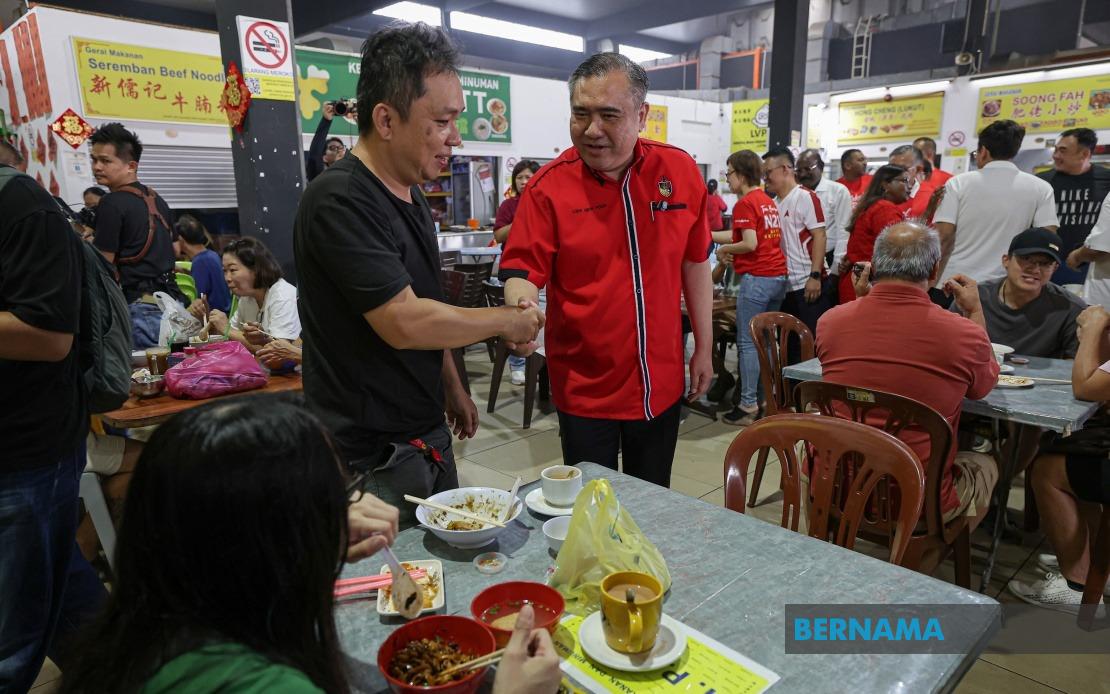
Transport Minister Anthony Loke has issued a firm directive requiring all political parties and campaign participants to observe strict traffic compliance throughout the ongoing 16th Negeri Sembilan state election campaign. Speaking to reporters in Seremban on July 19 following a walkabout with Pakatan Harapan candidates, Loke emphasised that road safety measures are non-negotiable prerequisites for conducting an election campaign that remains free from accidents and disorder.
The DAP secretary-general has taken a hands-on approach to enforcing these standards, personally instructing his party's campaign teams to wear helmets without exception when riding motorcycles during the campaign period. His commitment extends beyond mere directives—during nomination day proceedings, Loke personally supervised a convoy from Pekan Titi to Kuala Klawang where he made clear that participation required helmet compliance as a baseline expectation. This practical demonstration signals that safety requirements are not aspirational guidelines but operational necessities that supersede the competitive pressures of campaigning.
Loke's intervention reflects a broader concern about campaign-related safety risks that have plagued previous elections across Malaysia. Political campaigns, by their nature, generate intense activity with candidates and supporters engaging in mobile motorcades, public appearances, and door-to-door engagement across constituencies. The physical demands and time pressures inherent in campaign schedules can create environments where safety protocols are inadvertently compromised in pursuit of visibility and voter contact. Loke's explicit messaging seeks to prevent this common pattern by establishing that winning elections does not justify circumventing traffic regulations.
The minister singled out one particularly dangerous practice for special warning: supporters riding on the tailgates of moving four-wheel-drive vehicles. This activity, prevalent during spirited campaign events, poses severe injury risks and violates traffic safety standards. By naming this specific hazard, Loke addresses a visible campaign culture element that has drawn negative public attention in previous elections and potentially exposed parties to criticism about negligence and recklessness.
Loke's statement carries additional weight because he holds the portfolio responsibility for road safety as Transport Minister. His dual authority as both a senior political figure within Pakatan Harapan and the government official accountable for traffic enforcement gives his pronouncements credibility and institutional backing. This positioning allows him to frame safety compliance not as partisan preference but as a matter of governmental responsibility and public welfare.
The 16th Negeri Sembilan state election represents a significant electoral exercise involving substantial voter participation. The state assembly dissolution on June 5 set in motion a campaign period culminating in polling day on August 1, with early voting scheduled for July 28. Approximately 889,490 registered voters are eligible to participate, comprising 867,151 ordinary voters alongside 16,884 military personnel and their spouses, plus 5,455 police officers who will vote early. This substantial electorate means campaign activities will be geographically dispersed across multiple constituencies, potentially involving thousands of campaign participants across various parties.
Loke's emphasis on leadership by example addresses a critical gap in campaign culture. Political parties often expect supporters to comply with rules while leaders themselves engage in or tolerate unsafe practices. By publicly committing his own teams to helmet use and explicitly rejecting tailgate riding, Loke establishes that safety standards apply equally across party hierarchies. This approach potentially influences other political leaders to adopt similar positions, creating broader compliance across the campaign landscape.
The timing of Loke's directive—coming before the nomination period concludes and well ahead of polling day—allows maximum opportunity for all stakeholders to adjust campaign procedures and establish new safety protocols. Early intervention typically proves more effective than attempting to enforce changes during peak campaign intensity. By establishing these expectations now, Loke provides candidates and campaign managers sufficient time to reorganise motorcades, brief supporters, and integrate safety measures into their campaign planning.
For Malaysian voters and the broader public, Loke's intervention sends a message that election campaigns need not compromise community safety. Road accidents involving campaign participants generate wider ripple effects, potentially causing injury to bystanders and creating negative perceptions about political processes generally. Campaigns that maintain safety standards demonstrate that political competition and public responsibility can coexist successfully.
The directive also carries implications for Southeast Asian campaign norms more broadly. While Malaysia has increasingly sophisticated election management frameworks, neighbouring countries often struggle with campaign-related safety incidents. The explicit articulation of safety requirements by a senior government minister could establish a precedent worth emulating in the region, where rapid campaign expansion sometimes outpaces safety considerations.
Loke's message ultimately frames traffic compliance not as bureaucratic obstruction but as foundational to democratic participation. Effective campaigns require public trust, which includes confidence that political parties conduct themselves responsibly. Candidates who visibly prioritise safety demonstrate respect for community welfare beyond rhetorical campaign promises. This practical demonstration of values often resonates more powerfully with voters than policy statements alone.
The Transport Minister's intervention represents proactive governance, addressing potential problems before they escalate into public incidents that could undermine confidence in the electoral process. By establishing clear expectations early and providing personal leadership examples, Loke establishes a template for election campaigns that balance competitive intensity with community responsibility—a standard that could benefit Malaysian democracy across future electoral cycles.

