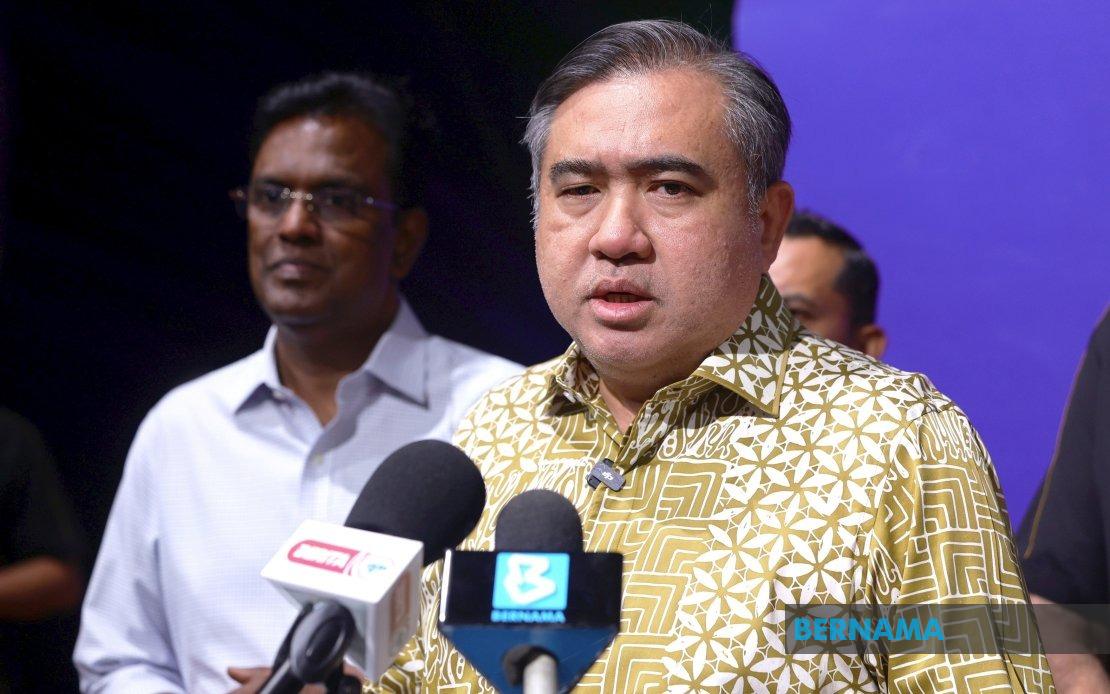
Anthony Loke, the incumbent assemblyman for Chennah and secretary-general of the Democratic Action Party, has made clear he will welcome competition from any prospective candidates seeking to challenge him in the forthcoming 16th Negeri Sembilan state election. Speaking in Seremban after launching a driving licence awareness programme, Loke adopted a relaxed stance towards reports that businessman Albert Tei had indicated interest in contesting the seat following an approach from a political party, emphasising that electoral competition forms a natural and healthy part of democratic governance.
Loke's measured response reflects the DAP's broader positioning in Negeri Sembilan, where the party holds significant influence following strong performances in recent electoral cycles. His willingness to face potential opponents head-on suggests confidence in his political standing within the Chennah constituency, where he has secured victory across three consecutive terms. The Chennah seat, located in Seremban district, has emerged as a key battleground in Negeri Sembilan politics, with various parties viewing it as a potential opportunity in the state-level contest.
The DAP leader articulated a principled defence of Malaysia's democratic framework, asserting that any citizen meeting the prescribed eligibility criteria should have the freedom to contest state seats without impediment. His emphasis on democratic principles carries particular resonance given ongoing discussions about political participation and representation in Malaysian politics. Loke's positioning himself as someone comfortable with electoral contestation aligns with broader DAP messaging around competitive democracy and fair play, contrasting with narratives sometimes present in Malaysian political discourse.
Critically, Loke did inject a note of caution for potential challengers, reminding them of the formal requirements necessary to contest a state assembly seat. Prospective candidates must ensure their registered addresses align with the constituency they intend to represent, a procedural requirement that has occasionally tripped up candidates in previous elections. This reminder serves as both a practical heads-up and a subtle acknowledgement that while competition is welcome, it must operate within established legal and administrative frameworks.
Loke's strategic choice to focus his energies on constituent services rather than anticipating opposition tactics demonstrates political seasoning. By redirecting attention towards his track record of delivering for Chennah voters, he effectively neutralises potential criticism that might emerge from challengers. The three-term track record he references provides tangible evidence of electoral durability and suggests a connection with the local electorate that may prove difficult to dislodge, particularly if the opposition remains fragmented or comprises untested candidates.
The broader context of the Negeri Sembilan state election has begun crystallising following the Election Commission's announcement of key dates. With nomination day set for July 18, polling scheduled for August 1, and early voting on July 28, the campaign period represents a compressed timeframe for political parties to mobilise support and for candidates to establish their presence. This abbreviated schedule may favour incumbents with existing ground networks and voter recognition, advantages Loke would naturally possess.
Albert Tei's potential entry into the Chennah contest would represent a significant development, introducing a businessman with independent financial resources and possibly wider business networks into what might otherwise be a conventional inter-party competition. The prospect of a independent or cross-party challenger adds unpredictability to the electoral equation and suggests that traditional party politics in Negeri Sembilan may be evolving. If Tei does eventually file his nomination, it would mark a noteworthy instance of non-traditional candidates testing the political establishment.
Negeri Sembilan has historically been a competitive political arena, with power oscillating between different coalitions in successive electoral cycles. The state's relatively small size and intimate political networks mean that candidate selection and grassroots campaigning retain outsized importance compared to larger Malaysian states. Loke's entrenched position as both a state representative and a senior figure in the national DAP leadership structure underscores the party's significance within Negeri Sembilan politics.
Look ahead, Loke's approach of welcoming challengers while focusing on constituent delivery reflects mature political calculation. By appearing magnanimous about electoral competition, he positions himself as confident and secure in his mandate, an image that can resonate positively with voters who may view such confidence as a reflection of genuine support. Simultaneously, his reminder about eligibility requirements serves as a subtle deflation of any challenger's presumptions, suggesting that merely receiving a party offer does not automatically translate into electoral viability.
The Negeri Sembilan state election will provide important insights into evolving voter preferences in the state and the relative appeal of different political coalitions following national political shifts. Loke's seat, as a DAP stronghold and a site of potential contestation, will likely attract significant attention from political analysts monitoring whether opposition parties can make meaningful inroads against the ruling coalition's representation in the state assembly.

