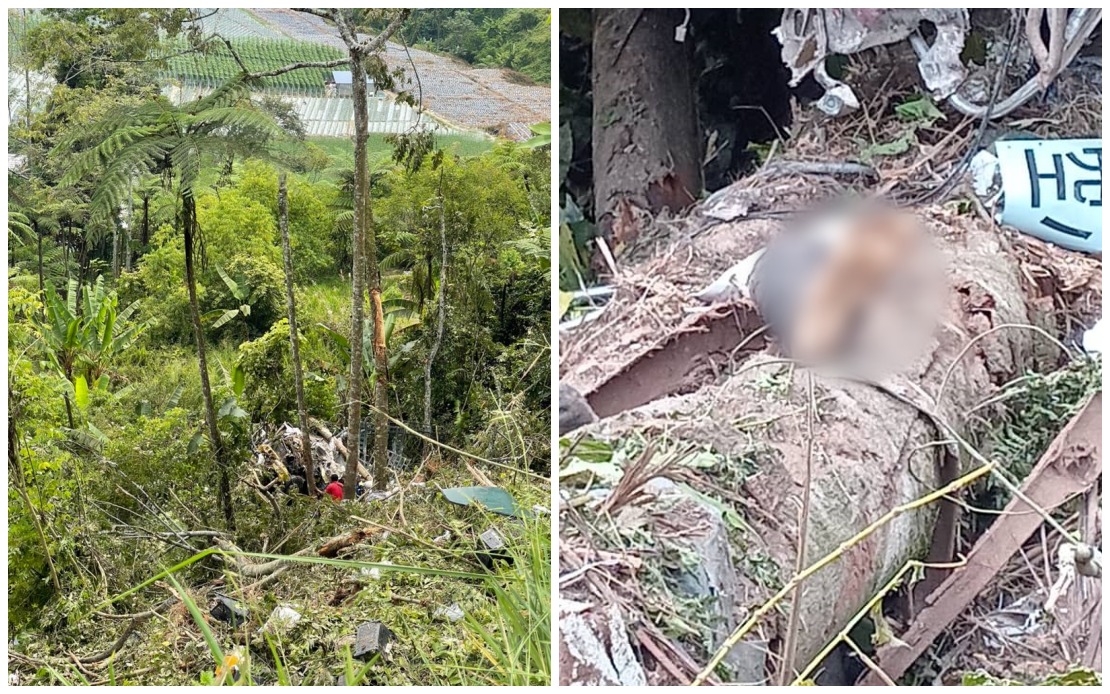
A man in his 40s lost his life after the 10-tonne lorry he was operating crashed into a deep ravine situated near the Pos Blau-Lojing Bridge in Gua Musang on Thursday. The incident occurred in the early afternoon, triggering an emergency response that would take several hours to bring the victim to safety.
The Gua Musang Fire and Rescue Station received word of the accident at 11:58 am and mobilised a firefighting team to address the crisis. Given the remote location—nearly 98 kilometres from the station—rescue personnel did not arrive at the scene until 1:59 pm, a delay of roughly two hours that would ultimately prove critical. Upon reaching the wreckage site, rescuers discovered the vehicle had careened into the ravine adjacent to an orchard, creating a challenging retrieval situation.
According to Asst Senior Fire Supt Muhammad Azrul Izzham Zulkifli, the chief of Gua Musang Fire and Rescue Station, initial information provided by law enforcement indicated the driver had become trapped underneath a substantial tree trunk after the impact. The spatial constraints and structural obstacles presented by the natural environment demanded careful and deliberate extraction work. Firefighters had to successfully dislodge the tree before they could reach and remove the casualty from beneath its weight.
The recovery operation, while ultimately unsuccessful in saving the driver's life, was completed with the assistance of professional rescue protocols. The driver was pronounced dead at the scene, signifying that injuries sustained during the fall were catastrophic. The body was subsequently transferred to police custody for processing and further investigative procedures, as is standard procedure in fatal traffic incidents.
Gua Musang district police chief Supt Sik Choon Foo confirmed the occurrence and acknowledged that law enforcement officials had initiated a comprehensive investigation to determine the underlying circumstances that led to the crash. However, at the time of initial reporting, authorities had not yet released specific details regarding what caused the lorry to leave the roadway and descend into the ravine. Factors being considered could range from mechanical failure to driver error, road conditions, or weather-related hazards.
The Pos Blau-Lojing Bridge area, situated in the heart of Kelantan's interior, serves as a crucial transport corridor linking communities across challenging terrain. Ravines and steep gradients characterise much of the road network in this region, making it inherently hazardous for large vehicles navigating mountain passes. The remote nature of this location also complicates rescue efforts, as demonstrated by the significant time lag between the initial distress call and arrival of emergency services.
Fatalities involving commercial lorries in Malaysia's interior regions remain a persistent public safety concern. The combination of challenging geographical features, distance from urban medical facilities, and the time required to mobilise rescue teams creates a perfect storm for poor outcomes in accident situations. The Gua Musang district has experienced multiple such incidents in recent years, reflecting the broader challenges faced by road users in Kelantan's less populated areas.
This tragedy underscores the critical importance of improved emergency response infrastructure in remote regions and the necessity for enhanced vehicle safety measures on challenging routes. Professional drivers operating heavy commercial vehicles on mountain roads face inherent risks that extend beyond their direct control. Equally significant are the investments required in modern rescue equipment and training for personnel stationed in isolated areas where access and response times directly influence survival prospects.
The incident also highlights ongoing questions about road maintenance, safety signage, and infrastructure development in Kelantan's interior districts. As Malaysia continues to expand its transportation networks and increase commercial traffic through previously remote areas, ensuring adequate safety provisions becomes progressively more important. The investigation into this particular accident will likely inform discussions about preventative measures and response capabilities across similar challenging terrain throughout the peninsula.

