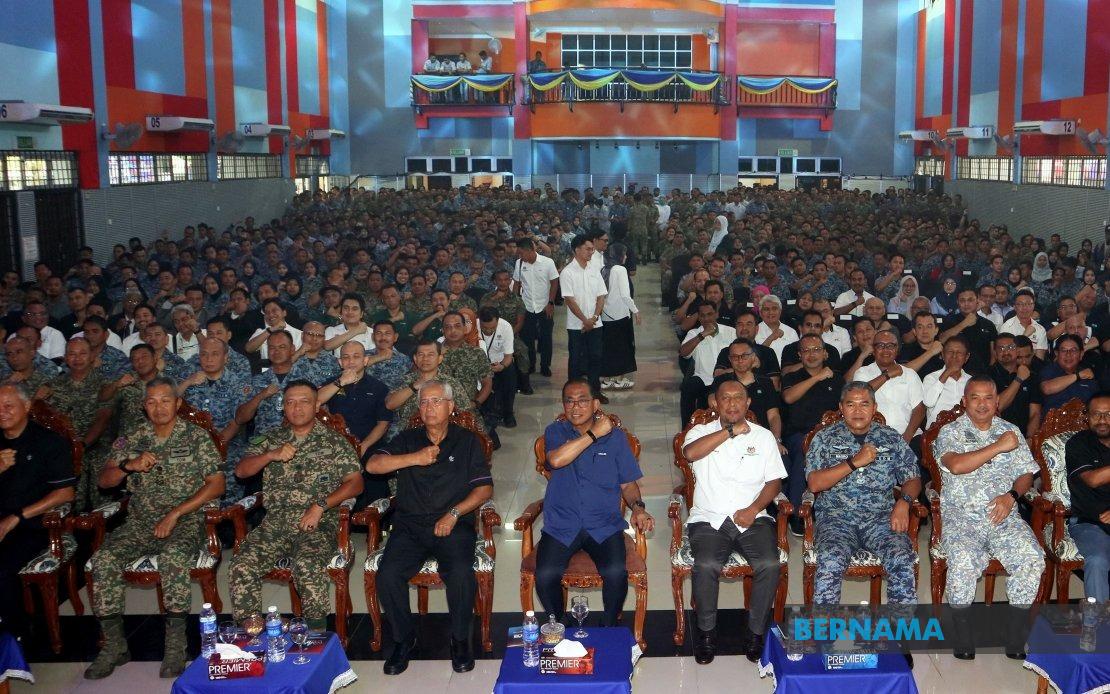
The Armed Forces Fund Board (LTAT) has expanded its outreach significantly through the Jelajah Wira initiative, successfully engaging 28,500 Malaysian Armed Forces personnel across the country's east coast region. The multi-phase tour, which touched down in Kuantan, represents a strategic effort to deepen relationships between the fund's management and the military contributors who form the backbone of its scheme.
Mohammad Ashraf Md Radzi, Chief Executive of LTAT, framed the tour as a cornerstone of the organisation's commitment to fostering meaningful dialogue with service members from all ranks. He emphasised that the initiative transcends simple information dissemination, instead creating a platform where military personnel can interact directly with fund administrators and understand how their monthly 10 per cent salary contributions are managed and invested. This direct engagement model acknowledges a fundamental shift in how pension and welfare schemes communicate value to their member base—moving beyond brochures and annual statements to face-to-face interaction at military installations.
A notable highlight of the tour was the launch of the LTAT-Affin Debit Card, unveiled as a tangible expression of gratitude for the military's unwavering service to the nation. This card carries symbolic weight beyond its practical banking utility, representing formal recognition of armed forces personnel's dedication and sacrifice. By associating financial services with military identity, LTAT signals that serviceability and appreciation are integral to the fund's operational philosophy. The debit card initiative also potentially streamlines access to accumulated savings and dividend payouts, creating friction-free financial management for contributors.
The Jelajah Wira tour's geographic scope demonstrates LTAT's systematic approach to national coverage. The programme has scheduled stops at Kem Desa Pahlawan in Kelantan, Kuantan Air Force Base, Kem Seri Pantai (home to the 16th Royal Malay Regiment) in Terengganu, Kem Sungai Udang in Melaka, KD Sultan Ismail in Johor, and Kem Mahkota Kluang, also in Johor. This carefully planned itinerary ensures that both strategic military installations and personnel stationed across diverse regional commands receive equivalent attention and resources. The multi-phase structure allows LTAT to tailor messaging to specific unit cultures while maintaining consistent brand messaging across the armed forces ecosystem.
Mohammad Ashraf articulated LTAT's welfare philosophy as holistic and expansive, extending beyond individual contributors to encompass their families and the broader communities connected to the armed forces system. This ecosystem perspective acknowledges that military personnel do not exist in isolation—their financial security directly impacts household stability, children's educational opportunities, and long-term community resilience. By positioning LTAT's services within this broader social context, the fund board elevates itself from a mere pension administrator to an institution invested in the comprehensive wellbeing of military families and their dependents.
Feedback from serving military personnel provides valuable insight into how LTAT's value proposition resonates at ground level. Airman I Muhammad Syahmi Mohd Shobri, 23, highlighted the scheme's appeal as a long-term savings mechanism, specifically praising the annual dividend structure that has demonstrated consistent year-on-year growth. His assessment—that LTAT dividends outpace competing savings schemes—suggests the fund's investment performance has remained competitive even in volatile economic conditions. This dividend trajectory carries particular importance for younger service members who have decades of contribution ahead and stand to accumulate substantial retirement savings through compound returns.
Retirement-focused perspectives emerged from Airman I Muhammad Izzuddin Mohd Hanapi, 25, who underscored LTAT's value in transitioning military personnel toward civilian life. The combination of accumulated contributions and ongoing dividend income creates a financial cushion at a critical life juncture when service members exit the structured military environment and must navigate independent economic decision-making. For personnel contemplating post-service careers or entrepreneurial ventures, LTAT's retirement packages provide essential stability and planning foundations. This lifecycle approach—recognising that LTAT's primary value materialises upon retirement rather than during active service—represents sophisticated financial literacy that distinguishes informed contributors from those viewing the fund as merely a mandatory payroll deduction.
The tour's festive elements, including a lucky draw that awarded an electric motorcycle to Royal Malaysian Air Force Air Sergeant Haidil Jafar, 39, inject moments of celebration into what could otherwise be routine administrative engagement. Such incentives serve multiple functions: they generate word-of-mouth enthusiasm among participants, create shareable moments that enhance public relations value, and acknowledge that LTAT operates within a culture where recognition and reward hold psychological significance. Haidil's expressed surprise and pleasure suggest that unexpected recognition resonates particularly powerfully within hierarchical military contexts where acknowledgement often flows downward rather than emerging from institutional partners.
The presence of senior Defence and LTAT leadership—including Defence Ministry Secretary-General Datuk Lokman Hakim Ali, LTAT Chairman General Tan Sri Azizan Ariffin, and Investment Panel Chairman Datuk Khairol Anuar Mohamad Tawi—underscores the initiative's institutional significance. This high-level participation signals that LTAT recognises member engagement as strategically important rather than merely operational. The visible commitment of senior leadership legitimises the tour and communicates that fund management regards direct dialogue with contributors as sufficiently important to warrant executive-level attention.
For Malaysian military personnel, the Jelajah Wira initiative arrives at a moment when financial security concerns extend beyond individual soldiers to encompass broader questions about pension adequacy in an era of rising living costs and economic uncertainty. LTAT's proactive outreach acknowledges these anxieties while simultaneously reinforcing the fund's investment in military welfare as a national priority. As the armed forces navigate recruitment and retention challenges in competitive labour markets, LTAT's visible engagement and tangible offerings—from enhanced debit card services to competitive dividend returns—contribute to a broader narrative that the state values military service through substantive financial commitment rather than rhetoric alone.

