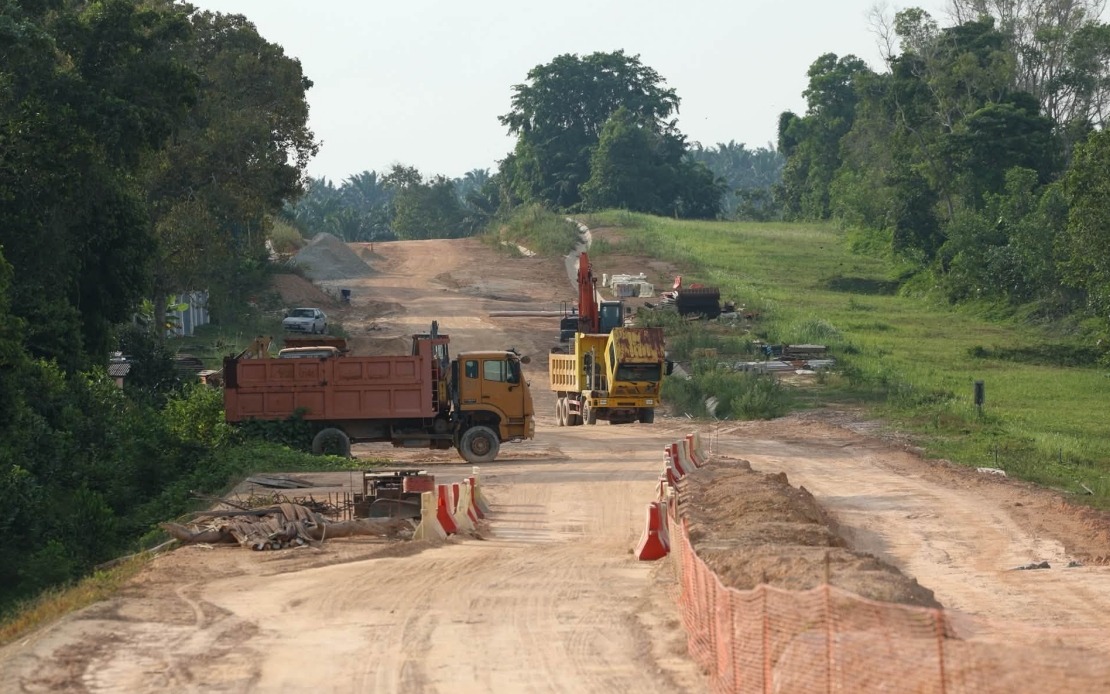
A major infrastructure initiative connecting Lukut to Kampung Sirusa via intermediate settlements in Port Dickson is tracking significantly ahead of schedule, with the Works Ministry reporting 60.57 per cent physical completion as of mid-July. The RM81.92 million undertaking, which carries a target finish date of August 10, 2027, has already demonstrated its capacity to absorb work cycles more swiftly than originally anticipated, according to ministry statements released after a site inspection by Deputy Works Minister Datuk Seri Dr Ahmad Maslan.
The 10-kilometre road corridor passes through Kampung Paya and Kampung Bagan Pinang, threading through communities in Port Dickson's hinterland. The project encompasses comprehensive infrastructure specifications aligned with Public Works Department R2 standards, encompassing earthworks, stormwater management, sewerage networks, structural elements, and utility installations. This holistic approach to road construction reflects contemporary best practices in Malaysian infrastructure development, where transportation links are designed to serve as anchors for broader community development rather than isolated transport arteries.
Port Dickson, located in Negeri Sembilan's coastal belt, has historically faced limitations in its internal road network connectivity. The fragmentation of settlements across the district has constrained economic integration and created inefficiencies in service delivery to outlying communities. This particular project directly addresses such constraints by establishing a modern thoroughfare that will integrate previously isolated or poorly connected residential and commercial clusters. The timing of this acceleration is particularly significant for stakeholders who have awaited improved access to the district's interior zones.
The infrastructure investment carries explicit objectives beyond transportation mechanics. Officials from the Works Ministry have outlined anticipated benefits encompassing reduced travel duration, enhanced traffic fluidity, and safer passage for residents navigating between settlements. From a services perspective, the improved road is expected to facilitate access to educational and healthcare facilities, including schools and medical clinics serving the broader Port Dickson community. Additionally, the route will improve visitor connectivity to established tourist destinations, positioning the district for enhanced leisure and hospitality sector activity.
The project's advancement ahead of schedule raises important considerations regarding construction management competency and resource allocation across Malaysia's infrastructure programme. When major public works projects demonstrate accelerated completion rates, such performance metrics indicate effective coordination between contractors, supervision agencies, and regulatory bodies. The 43-day advance, while appearing modest in absolute terms against a multi-year timeline, signals consistent workflow optimization and problem-solving throughout construction phases. Such efficiency gains become particularly valuable in crowded infrastructure pipelines where schedule compression can unlock resources for subsequent projects.
From an economic development perspective, the Port Dickson district stands to benefit substantially from enhanced internal accessibility. The Works Ministry has explicitly framed the road as a catalyst for local economic expansion, with expected contributions to trading activities, tourism sector development, employment generation, and investment attraction in surrounding precincts. Malaysian districts frequently experience underdeveloped interior zones due to limited transportation infrastructure, creating a circular constraint on commercial and residential development. Breaking such patterns through strategic road investments can unlock latent economic potential in communities positioned between established commercial centres.
The governance structure for this initiative reflects Malaysia's multi-tiered development framework. The project emerged through the Ministry of Rural and Regional Development's allocation channels, drawing from federal government development budgets designed to support infrastructural advancement beyond metropolitan cores. The State Public Works Department assumes implementation responsibilities, localizing project execution while maintaining alignment with federal standards and timelines. This approach distributes accountability while respecting state-level infrastructure management prerogatives within Malaysia's federal system.
Regional implications extend beyond Port Dickson's immediate boundaries. Negeri Sembilan's position as a transitional zone between the Klang Valley and southern peninsular corridors makes internal infrastructure improvements increasingly relevant to broader connectivity patterns. Enhanced road networks within the state can facilitate commercial flows, tourism circuits, and residential patterns that support national economic objectives. The improved Lukut-Kampung Sirusa connection contributes incrementally to Negeri Sembilan's emerging role as a logistics and distribution node for southeast Selangor and northern Johor operations.
The inspection visit by the deputy minister underscores the political significance attached to infrastructure performance tracking. High-level ministerial engagement in site inspections serves multiple functions: verifying construction quality compliance, demonstrating government commitment to delivery timelines, and addressing emerging impediments before they cascade into schedule disruptions. Such oversight mechanisms have become standard practice across Malaysia's infrastructure portfolio, reflecting lessons learned from previous projects where inadequate supervision contributed to substantial delays and cost overruns.
Looking forward, the project's continued acceleration trajectory will depend on sustained construction momentum and absence of unforeseen challenges. Infrastructure projects, particularly those involving earthworks and drainage systems in diverse terrain, frequently encounter geological or climatic complications that disrupt predetermined schedules. The current 43-day advance provides a buffer against such potential disruptions, though weather patterns and supply chain considerations will remain relevant variables throughout the remaining construction phases. Maintenance of workforce and equipment continuity will prove essential to preserving the achieved schedule advantage.
For Malaysian readers monitoring infrastructure investment patterns, the Lukut-Kampung Sirusa project exemplifies the evolving emphasis on district-level connectivity improvements aimed at reducing regional inequality and supporting dispersed economic activity. Such initiatives complement larger-scale projects like highway expansions and rail developments by ensuring that intermediate communities benefit from improved transportation accessibility. The project's ahead-of-schedule progression demonstrates that systematic project management, adequate resource allocation, and political attention can generate meaningful infrastructure delivery outcomes within Malaysia's development agenda.

