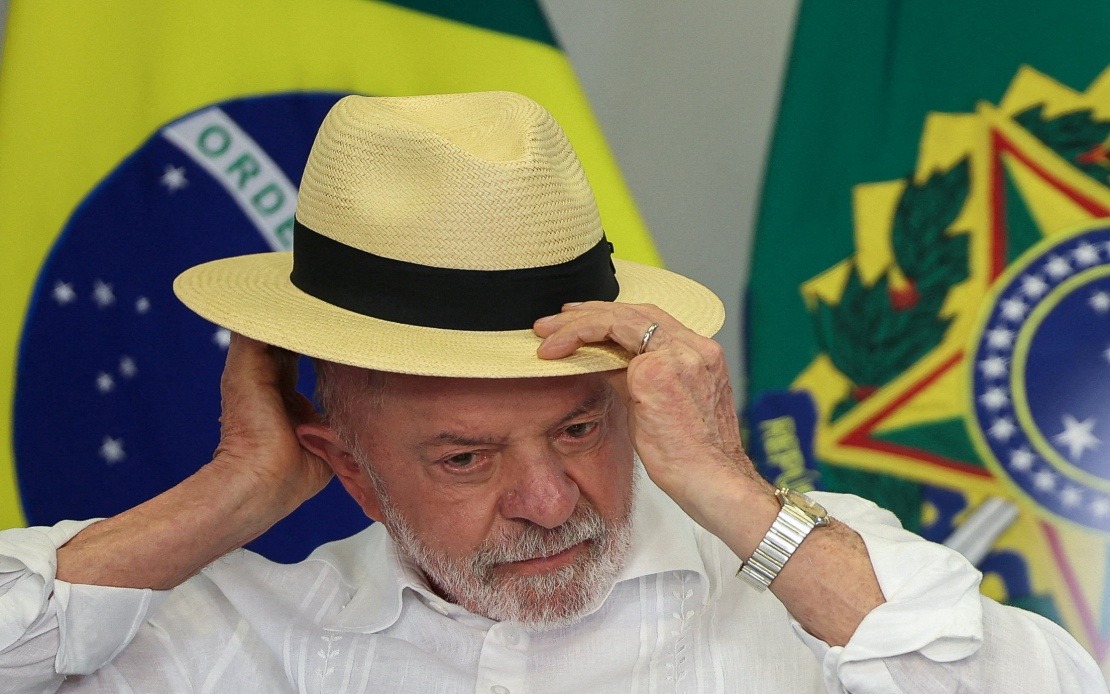
Brazilian President Luiz Inacio Lula da Silva is clinging to a slender lead over Senator Flavio Bolsonaro as the South American nation approaches its October presidential election, according to fresh polling data released this week. A Quaest survey commissioned by media conglomerate Globo reveals the incumbent claiming 43 per cent support against Bolsonaro's 40 per cent in a hypothetical runoff matchup, a margin so tight it falls within the survey's two-point error tolerance and effectively renders the race a statistical dead heat.
The poll, which interviewed 2,004 respondents between August 10 and 13, represents a marginal narrowing of Lula's advantage compared to earlier soundings. A comparable survey conducted five days previously had shown Lula commanding 44 per cent to Bolsonaro's 39 per cent, suggesting a tightening contest as the campaign intensifies. In a first-round voting scenario without a predetermined runoff, Lula's position strengthens considerably, drawing 38 per cent against Bolsonaro's 31 per cent, with other candidates including Renan Santos and Ronaldo Caiado each capturing four per cent and Romeu Zema securing two per cent.
Under Brazil's electoral framework, if no candidate secures more than half of valid votes cast, the leading two contenders advance to a second-round runoff determining the presidency. This mechanism has become increasingly relevant given that Flavio Bolsonaro, the eldest son of former president Jair Bolsonaro, has emerged as the establishment right's standard-bearer following his father's disqualification from the ballot. The senior Bolsonaro's removal from the race followed Brazil's electoral court's determination that he had abused executive powers, and he subsequently faced conviction in connection with an alleged scheme to reverse his 2022 election loss to Lula.
Flavio Bolsonaro's ascendancy represents a consolidation of right-wing opposition behind a candidate who, while lacking his father's national profile, commands significant support among conservative voters and maintains the family's political infrastructure. This succession of leadership within the Bolsonaro movement underscores the persistence of Brazil's ideological divide, with the rightist bloc struggling to identify an alternative figurehead after the patriarch's legal troubles rendered him ineligible.
Lula's re-election campaign, formally launched on August 2 at the Workers' Party convention in São Paulo, has adopted a nationalist framework emphasizing Brazil's sovereignty and economic self-determination. The incumbent has sought to position the election as a referendum on national independence, particularly regarding control of the country's substantial reserves of rare earth minerals and critical materials essential to global manufacturing chains. This strategy reflects Lula's sensitivity to international pressure, particularly regarding potential American intervention in Brazilian affairs.
During his campaign messaging, Lula has articulated explicit warnings against foreign interference, invoking broader geopolitical tensions. He cautioned China, the United States, and France against assuming unfettered access to Brazil's mineral wealth without respecting Brazilian sovereignty. "In Brazil, we do not accept anyone sticking their nose where it does not belong," Lula declared, signalling his determination to leverage resource nationalism as a political asset. He previously admonished US President Donald Trump in June, stating that Brazilian elections constitute an internal Brazilian matter, drawing a parallel to American electoral processes which he suggested should remain beyond external meddling.
The question of American engagement in Brazilian electoral politics carries particular weight given Trump's historically close relationship with the Bolsonaro family. Their documented personal and political connections have raised concerns among Lula's supporters regarding potential American backing for the opposition candidate. Lula's repeated public warnings on this issue suggest the government perceives external pressure as a genuine threat worthy of sustained rhetorical counterattack.
The polling trajectory presents a paradoxical picture for both campaigns. While Lula retains the technical advantage of leading in surveys, the shrinking margin between the candidates points toward a highly competitive final two months preceding the vote. The compression of Lula's support from 44 per cent to 43 per cent between polls, occurring alongside stable or slightly declining Bolsonaro figures, hints at potential volatility and undecided voters clustering in the middle.
For Malaysian and Southeast Asian observers, Brazil's election carries broader implications regarding resource sovereignty and resistance to external pressure from major powers. Lula's emphasis on protecting national mineral resources and maintaining autonomous decision-making resonates with concerns across the region about preserving economic independence amid great-power competition. The election outcome will substantially determine whether Brazil continues its current nationalist resource management approach or pivots toward greater openness to foreign capital and influence under different leadership.
The narrowing race also underscores how even incumbents with strong economic records and personal popularity can face genuine electoral jeopardy when political polarization reaches Brazilian levels. With roughly eight weeks remaining before voting, both candidates retain realistic paths to victory, making this among the year's most uncertain major democratic contests. Polling will likely continue tightening or shifting as the campaign approaches its climax, with the ultimate outcome potentially hinging on turnout and the behavior of the slender segment of genuinely persuadable voters still undecided between these starkly contrasting visions for Brazil's future.

