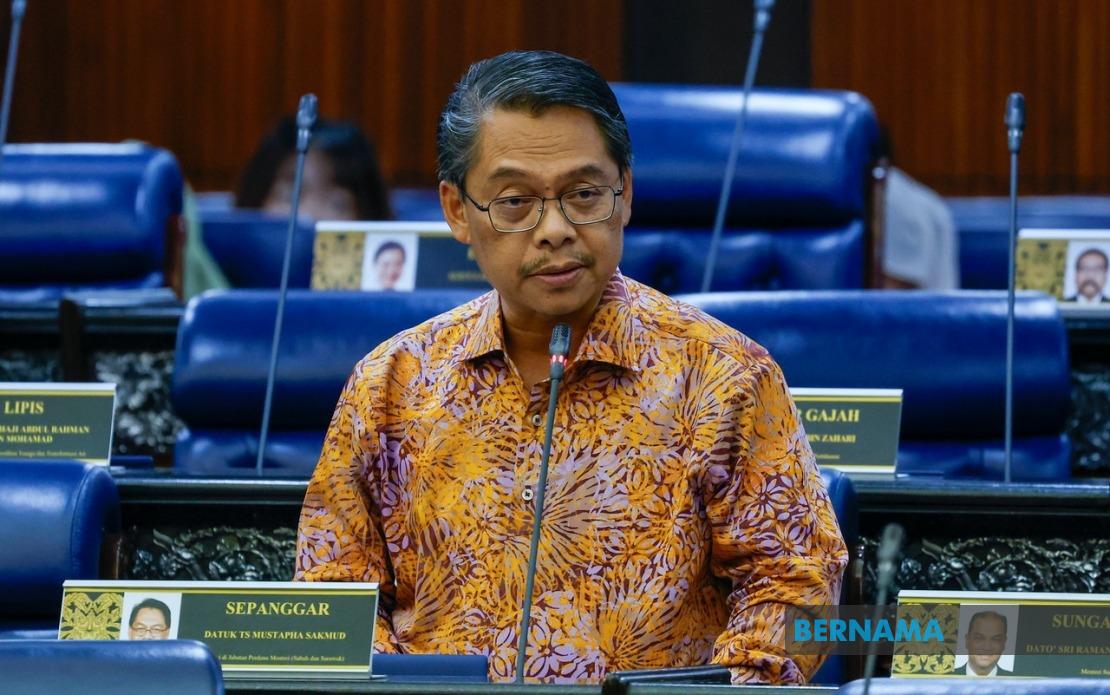
Progress on the Malaysia Agreement 1963 (MA63) has reached a meaningful milestone, with government officials confirming that slightly less than half of the major outstanding issues have now been fully addressed. Minister in the Prime Minister's Department (Sabah and Sarawak Affairs) Datuk Mustapha Sakmud revealed during parliamentary proceedings this week that 13 of the 29 matters under negotiation have achieved complete resolution, while a further five have been classified as having attained interim or partial agreements. The announcement underscores the incremental nature of resolving the constitutional and administrative matters that have defined the long-standing dialogue between the federal government and the two East Malaysian states.
The interim resolutions, according to Mustapha, cover several substantive areas that touch directly on the autonomy and governance structures promised to Sabah and Sarawak under the original 1963 agreement. Four of these provisionally resolved issues relate to the expansion of state public service positions under Article 112 of the Federal Constitution, a matter of considerable importance to both states seeking greater control over employment in their civil services. Additionally, interim agreements have been reached on health and education matters, which represent core areas of state-level service delivery. The Borneonisation of the Federal public service in Sabah and Sarawak—the principle of ensuring representation of East Malaysians in federal institutions operating within their territories—also falls within this interim category, reflecting ongoing efforts to embed local participation in federal administration.
These partial achievements carry particular weight for Malaysian federalism. The issue of public service composition directly impacts the balance of power between Kuala Lumpur and the state governments, determining how much authority Sabah and Sarawak exercise over hiring and promotion within their own borders. Similarly, sectoral negotiations on health and education signal movement toward greater state agency in designing and implementing policies suited to regional conditions and demographics. The Borneonisation principle, meanwhile, addresses historical grievances about East Malaysians being underrepresented in federal institutions positioned within their own states, a symbolic and practical issue tied to state dignity and economic opportunity.
The remaining 11 unresolved matters continue to be monitored through established institutional channels. The Sabah and Sarawak Affairs Division (BHESS), functioning as the official secretariat, maintains oversight alongside relevant federal agencies and state-level counterparts. This administrative framework reflects the structured approach the government has adopted toward MA63, treating the agreement not as a single package to be renegotiated wholesale but as a collection of discrete issues amenable to targeted discussion and resolution. The continuation of this deliberate process suggests both parties view progress as achievable through patient negotiation rather than through confrontational demands.
Yet one issue towers above all others in terms of political salience and popular expectation in the East Malaysian states: the drive to increase parliamentary representation. Sabah and Sarawak have long campaigned for an expansion of their Dewan Rakyat seats to achieve a 35 per cent quota of the total chamber, a threshold that would significantly amplify their legislative voice at the national level. Mustapha's statement that this matter remains unresolved and continues under discussion reflects the genuine complexity of the question, which touches on the foundational structure of Malaysian democracy and electoral politics. For residents of Sabah and Sarawak, this is not an abstract constitutional matter but a practical expression of whether the federation truly honours the equal partnership envisioned in 1963.
The procedural hurdles surrounding parliamentary representation are substantial and multifaceted. Under Malaysia's constitutional framework, any redelineation of electoral boundaries—the redrawing of parliamentary constituency lines that would be necessary to create additional seats for Sabah and Sarawak—can only be executed by the Election Commission (EC). Critically, the EC may only undertake such an exercise after an eight-year cycle has elapsed since the last redelineation, a safeguard designed to prevent frequent or politically motivated boundary changes. This timing constraint means that any push for expanded representation must align with the EC's periodic review schedule, introducing an element of institutional rhythm beyond the control of political negotiators.
Beyond the procedural requirement lies the constitutional amendment threshold that any increase in parliamentary seats would necessitate. Article 46 of the Federal Constitution, which establishes the composition of the Dewan Rakyat, can only be altered through an amendment command a two-thirds supermajority in the chamber. This demanding requirement reflects the framers' intent to protect the fundamental structure of Parliament against majoritarian whimsy, but it also means that even with broad consensus from East Malaysian politicians, the passage of such an amendment depends on the federal government maintaining overwhelming support in the legislature. Current political arithmetic in Parliament makes reaching two-thirds majorities an increasingly difficult proposition on contentious matters, adding another layer of complexity.
For Malaysian federalism more broadly, the MA63 negotiation process illuminates both the possibilities and limitations of constitutional engagement between the centre and the periphery. The resolution of 13 matters demonstrates that disagreements can be methodically worked through institutional channels. Yet the unresolved parliamentary representation question shows that some issues—those most fundamental to the distribution of political power—resist easy compromise. The interim classifications are themselves noteworthy, suggesting a negotiating pattern where both sides can declare partial victory while maintaining space for further discussion on points where full consensus has not yet materialised.
The implications for Sabah and Sarawak are substantial. Progress on public service and sectoral matters delivers tangible improvements in state governance and local employment opportunities. However, without movement on parliamentary representation, East Malaysian political leaders face mounting pressure from constituents who regard the 35 per cent quota as the true measure of whether their states remain equal partners in the federation. The political economy of MA63 negotiations thus remains asymmetrical: achievements on technical administrative matters gain less public attention than symbolic questions of political representation and state autonomy. This reality likely explains why, despite genuine progress on 13 substantive matters, discussion of MA63 continues to generate political tension in the East Malaysian states.

