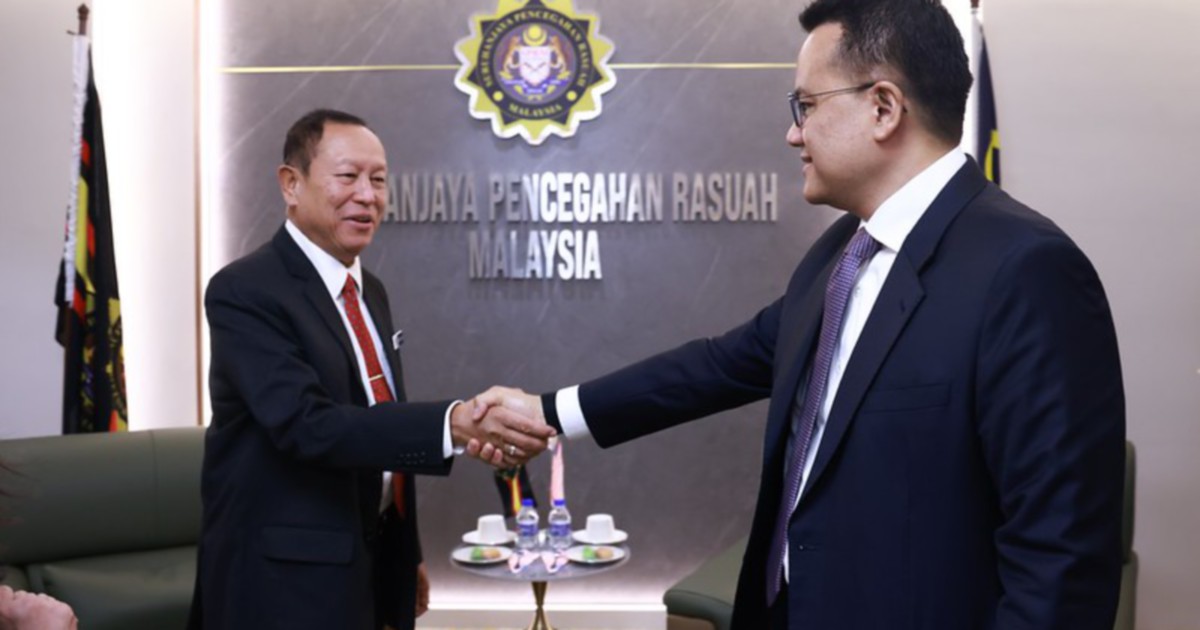
The Malaysian Anti-Corruption Commission and Permodalan Nasional Berhad have announced a reinforced strategic partnership aimed at elevating standards of corporate governance and accountability within Malaysia's vast investment ecosystem. The alliance, formalized in Putrajaya, represents a concerted effort to embed anti-corruption principles throughout the mechanisms by which national wealth is stewarded and deployed across domestic and international markets.
This partnership carries particular significance given PNB's commanding position within Malaysia's financial architecture. As custodian of one of Asia's largest sovereign wealth portfolios, PNB manages investments on behalf of millions of Malaysian unit holders, making the integrity of its operations a matter of direct national interest. The strengthened ties with MACC signal an institutional commitment to transparency that extends beyond regulatory compliance into the realm of demonstrative ethical leadership.
The collaboration addresses a critical nexus in Malaysia's governance framework: the intersection between investment decision-making and corruption prevention. Large-scale capital allocation decisions, whether directing funds toward infrastructure projects, equity holdings, or international ventures, inherently involve complex stakeholder relationships and substantial financial flows. By establishing formal protocols with MACC, PNB reinforces mechanisms designed to ensure that investment choices are driven by genuine economic merit rather than personal advantage or improper influence.
For Malaysian investors, particularly those whose retirement savings flow through PNB's vehicles, this partnership offers tangible reassurance. When a sovereign wealth manager explicitly coordinates with the nation's principal anti-graft agency, it demonstrates institutional seriousness about protecting shareholder value from erosion through corrupt practices. This is not merely symbolic; the formalization of such partnerships typically results in joint training programmes, cross-institutional auditing protocols, and shared intelligence on emerging corruption risks specific to the investment sector.
The timing of this announcement also reflects Malaysia's broader positioning within the international investment community. Foreign institutional investors increasingly conduct due diligence on the governance standards of their counterparts, and demonstrable partnerships between state-owned enterprises and anti-corruption bodies strengthen Malaysia's reputation as a jurisdiction where investment rules are enforced consistently and transparently. This reputational capital becomes particularly valuable as Malaysia competes regionally for capital inflows.
Within Southeast Asia's investment landscape, Malaysia has positioned itself as a relatively stable and regulated environment. This new MACC-PNB framework contributes to that positioning by creating visible accountability structures. The partnership likely encompasses agreed-upon reporting standards, whistle-blower protection mechanisms, and regular compliance audits—elements that distinguish jurisdictions with serious governance commitments from those where such arrangements remain aspirational.
The practical implications extend into PNB's portfolio management decisions. Fund managers operating within PNB's structure now navigate an explicitly coordinated oversight environment where investment proposals face scrutiny not only on financial grounds but also on corruption-risk criteria. This dual-assessment approach can slow certain transactions but ultimately protects the fund's reputation and long-term returns by filtering out investments tainted by corrupt practices or structural integrity weaknesses.
For MACC, the partnership broadens its institutional reach into the private-sector investment space. While MACC's core mandate involves investigating corruption in public administration, the scale of capital flowing through sovereign wealth funds justifies expanded engagement with institutional investors. This cooperation allows MACC to identify systemic vulnerabilities in how investment decisions are made and to develop sector-specific anti-corruption guidance applicable across Malaysia's financial industry.
The governance enhancement envisioned by this partnership also carries implications for Malaysia's compliance with international standards. ASEAN nations increasingly face scrutiny regarding anti-money-laundering controls and beneficial ownership transparency. Demonstrable coordination between investment managers and anti-corruption authorities signals to international regulators that Malaysia maintains credible internal controls. This matters for Malaysian institutions seeking to participate in cross-border investment and for foreign entities considering Malaysian fund managers as partners.
PNB's exposure spans multiple sectors and jurisdictions, from domestic real estate to international equities. A strengthened relationship with MACC enables the fund to conduct more rigorous due diligence on counterparties and investees, particularly in higher-risk sectors or jurisdictions where corruption concerns might otherwise remain latent. This risk-mitigation function protects not only shareholder returns but also Malaysia's international standing as a responsible investor.
The partnership also acknowledges evolving corruption methodologies. Contemporary corrupt schemes often operate across multiple institutions and jurisdictions, requiring coordinated detection capabilities. By formalizing their relationship, MACC and PNB create a more unified intelligence platform capable of identifying patterns that individual institutions might overlook. Corruption risks in investment transactions—such as inflated valuations, related-party dealings, or hidden commissions—become more visible when examined through both the financial competence lens PNB possesses and the investigative expertise MACC commands.
For Malaysian civil society, this institutional alignment offers encouraging evidence that governance mechanisms continue to mature. Whereas earlier iterations of anti-corruption work in Malaysia sometimes operated in silos, contemporary efforts increasingly reflect integrated approaches where specialized agencies coordinate to address sector-specific risks. The MACC-PNB partnership exemplifies this evolution.
Looking forward, the sustainability of this partnership depends on genuine operational integration rather than ceremonial alignment. The real measure of success will emerge in how investment decisions are modified by anti-corruption considerations, how internal controls are strengthened, and ultimately how corruption risks within PNB's operations measurably decline. For Malaysian investors and the broader economy, the hoped-for outcome is that this partnership translates into superior long-term returns on national wealth, achieved through uncompromised governance practices that reflect Malaysia's democratic values and institutional maturity.

