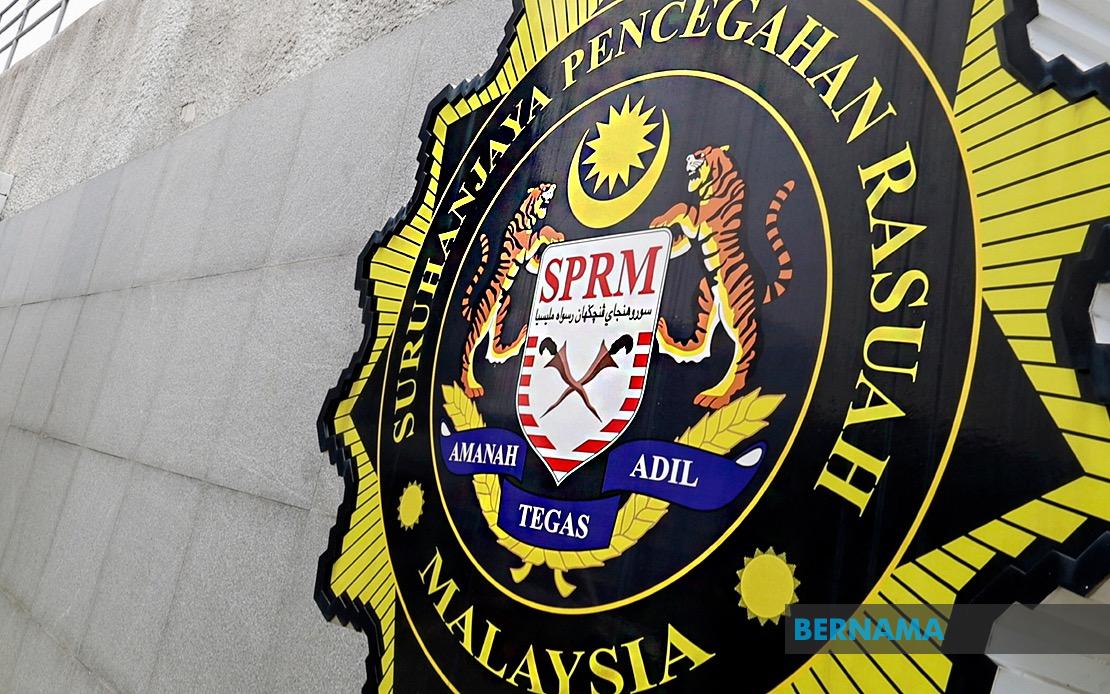
Malaysia's Anti-Corruption Commission has taken a significant step to modernise its investigative capabilities by deploying forensic specialists to an internationally accredited training programme in Trieste, Italy, designed to equip them with the latest techniques for identifying manipulated digital evidence. The move reflects growing concern within law enforcement agencies across Southeast Asia about the misuse of artificial intelligence and deepfake technology to fabricate or alter crucial evidence that could undermine court proceedings and investigations into financial crimes.
The Technology Forensic Division, which serves as the technical backbone of the MACC's digital investigations, sent four specialists to attend the four-day Amped Authenticate course between July 28 and 31. The delegation was led by BFT director Wan Zulkifli Wan Jusoh and included MACC Putrajaya director Mohd Shahril Che Saad, along with forensic officers Dr Syah Reezal Md Bashah and Muhamad Khairi Mohamad Dain. This targeted investment in human capital signals the commission's determination to keep pace with rapidly evolving technology used by those seeking to evade detection.
The specialised training encompasses a comprehensive suite of visual forensic methodologies that have become essential in modern investigations. Participants learned advanced techniques including metadata examination, camera fingerprinting analysis, and methods to detect image editing and physical inconsistencies within multimedia files. Critically, the curriculum addresses the emerging challenge of deepfake detection, a technology that has become increasingly sophisticated and poses a genuine threat to the integrity of evidence presented in Malaysian courts. As artificial intelligence tools become more accessible and user-friendly, law enforcement agencies must continually upgrade their defences against their misuse in criminal activity.
The scientific rigour underpinning these techniques provides the foundation for evidence that can withstand scrutiny in judicial proceedings. The MACC's Technology Forensic Division employs Photo Response Non-Uniformity, or PRNU, analysis—a method that identifies unique sensor fingerprints embedded in digital images that are virtually impossible to replicate or remove. Complementary techniques such as JPEG Dimples analysis, which examines compression artefacts, and sophisticated shadow and reflection geometry assessment enable forensic examiners to construct a detailed scientific narrative about whether media has been genuinely captured or artificially created or altered.
A cornerstone of this approach is the deployment of Amped Authenticate software, whose analysis reports are recognised internationally and meet the ISO/IEC 17025 standard that governs forensic laboratory accreditation. This standardisation is crucial because it ensures consistency and credibility across different jurisdictions and strengthens Malaysia's standing within regional law enforcement networks. Every examination conducted through this software is grounded in established mathematical and statistical principles, particularly the Peak-to-Correlation Energy statistics used to validate PRNU findings and JPEG quantisation analysis that reveals compression manipulation patterns.
The implications for Malaysian prosecutions are substantial. When forensic officers present findings in court, they can now do so as qualified expert witnesses employing methodologies that meet both international scientific standards and the legal requirements established under the Evidence Act 1950. This dual compliance—meeting both scientific and legal criteria—creates an evidence chain that is far more difficult for defence counsel to challenge successfully. In complex corruption cases where the stakes are high and resources available to defendants are substantial, having forensic evidence that is scientifically unassailable and legally bulletproof becomes a critical asset to prosecutors.
The upgrading of these capabilities reflects a broader shift in how financial crime and corruption investigations are conducted globally. As criminals have become more sophisticated in their use of digital manipulation tools, law enforcement has had to evolve correspondingly. The ability to conclusively prove that a document, image, or recording has been altered—or conversely, that it is genuine—can often be the determining factor in whether a prosecution succeeds or fails. For Malaysia, which has positioned itself as committed to rooting out corruption and maintaining the integrity of its institutions, demonstrating forensic capacity at this level sends an important signal both domestically and internationally.
The training initiative also addresses a growing vulnerability in digital investigations across Southeast Asia more broadly. As AI technology proliferates, the potential for malicious actors to fabricate evidence has multiplied exponentially. A deepfake video of a government official or businessman making incriminating statements could theoretically circulate as evidence before its falsity is detected. Without properly trained personnel equipped with scientifically validated detection tools, investigations could pursue false leads or dismiss genuine evidence as fabricated. The MACC's proactive investment in this capacity places it ahead of many regional counterparts in preparedness.
There is also a deterrent value to this capability enhancement that should not be overlooked. Potential wrongdoers contemplating evidence manipulation may reconsider if they understand that Malaysian investigators possess sophisticated tools and trained specialists capable of detecting their efforts. The credibility of anti-corruption enforcement depends partly on the perceived competence of its technical apparatus. When the MACC can credibly claim expertise in digital forensics validated by international standards, it strengthens public confidence in investigations and prosecutions while simultaneously complicating the calculus for those considering corrupt activities.
The framework established through this training also facilitates better cooperation with international partners. Many corruption cases involving Malaysian nationals or Malaysian entities have international dimensions, requiring coordination with law enforcement agencies in other countries. When all parties employ standardised forensic methodologies and report according to common international standards, the exchange of evidence and expertise becomes more seamless. This interoperability is increasingly important in a region where capital flows freely across borders and financial misconduct often involves multiple jurisdictions.
Looking forward, the MACC faces the challenge of sustaining and deepening this expertise as technology continues to evolve. A single four-day training course, however comprehensive, must be followed by ongoing professional development to maintain capability as new manipulation techniques emerge. The commission should consider establishing regular refresher programmes and fostering continuous learning within the Technology Forensic Division. Additionally, building local expertise through mentoring and certification programmes could ensure that the benefits of this investment extend beyond the four officers who attended the Trieste course.
The decision to invest in digital forensics capacity also underscores a broader institutional recognition that corruption in Malaysia has become increasingly sophisticated and often involves digital manipulation and technology-enabled fraud. As the country pursues high-profile corruption cases and seeks to demonstrate serious commitment to institutional integrity, having forensic capabilities that are both advanced and internationally recognised strengthens the foundation upon which prosecutions rest. For Malaysian readers and observers of governance issues, this initiative represents a tangible commitment to modernising investigative institutions and maintaining the credibility of anti-corruption efforts in an increasingly digital world.

