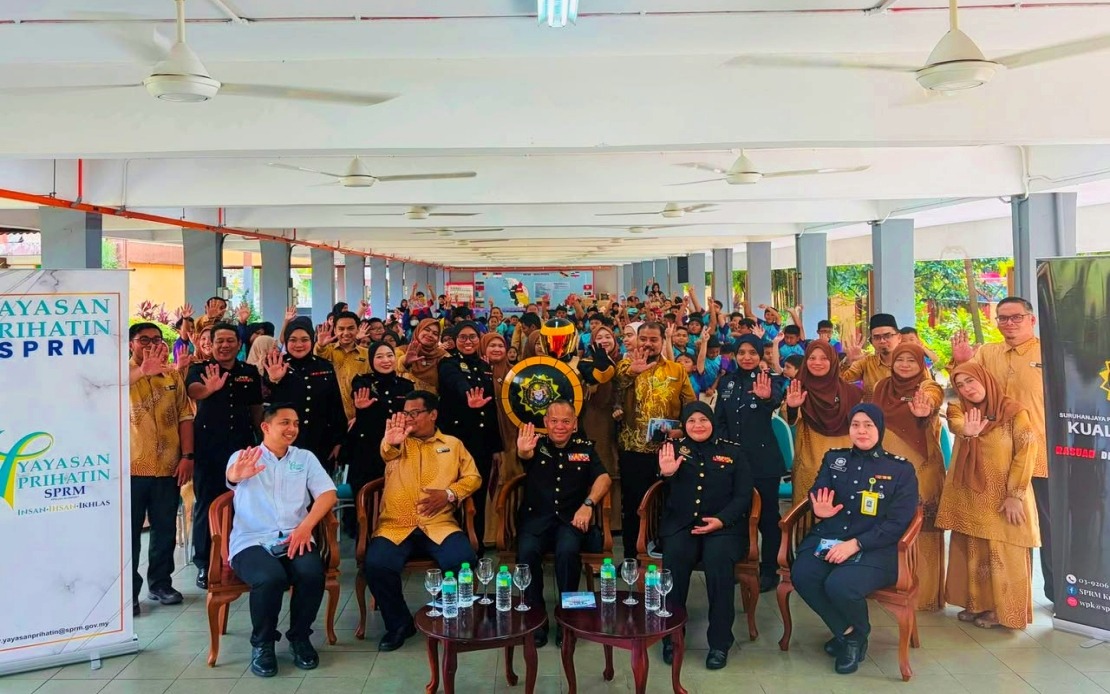
The Malaysian Anti-Corruption Commission's Kuala Lumpur office is deepening its commitment to tackling corruption at community level by introducing the Wira Antirasuah (WAR) programme, a comprehensive initiative aimed at embedding integrity into the lives of young students. Unveiled at Sekolah Kebangsaan Jalan Pasar 1 in the capital, the programme reflects a strategic shift towards preventative anti-corruption work that targets formative years when ethical foundations are established. By engaging pupils directly, MACC recognises that sustainable change requires cultivating a generation equipped with the moral confidence to resist misconduct.
According to Mohamad Zakkuan Talib, director of MACC's Kuala Lumpur office, the initiative represents a long-term investment in building a principled society. He articulated a vision of integrity that moves beyond grand gestures or exceptional circumstances, instead emphasising that ethical conduct begins with mundane daily choices. The framework he outlined—avoiding deception, respecting others' property, declining to plagiarise, honouring commitments, and maintaining the trust placed in oneself—establishes practical benchmarks for young people navigating school life and their broader communities.
The conceptual heart of the WAR programme challenges conventional notions of heroism. Rather than celebrating individuals with extraordinary powers or privileges, the initiative positions authentic courage as the willingness to act correctly even when no one is watching. This reframing is particularly significant in the Malaysian context, where public discourse often emphasises compliance and obedience to authority. By teaching pupils that integrity is demonstrated through small, consistent actions rather than spectacular defiance, MACC cultivates an internal moral compass rather than reliance on external enforcement.
The programme's design blends education with interactive engagement. MACC's Community Education Branch (PenMas) delivered briefings to pupils, providing age-appropriate information about corruption's societal costs and why integrity matters. The inclusion of Kapten MACC, the commission's mascot, transforms potentially dry material into engaging content that resonates with primary school audiences. This pedagogical approach acknowledges that younger learners absorb values more effectively through narrative, character-driven experiences rather than didactic instruction alone.
A structural innovation introduced through the WAR initiative is the Anti-Corruption Corner established at Sekolah Kebangsaan Jalan Pasar 1. This dedicated space functions as an ongoing resource hub where both staff and students can access information about integrity principles. Rather than treating anti-corruption as a one-off event, the corner embeds ethical awareness into the school's physical infrastructure, ensuring that the message remains visible and accessible throughout the academic year. This permanence signals institutional commitment and creates touchpoints for regular reinforcement.
Beyond its educational mandate, MACC paired the programme with material support that addresses immediate pupil welfare. Yayasan Prihatin SPRM donated a smart television to enhance the school's teaching capacity, while comprehensive school assistance extended to twenty-nine pupils from asnaf, or low-income, families. This dual approach—simultaneously advancing anti-corruption values while alleviating educational barriers for disadvantaged students—acknowledges that integrity education cannot succeed when foundational needs remain unmet. Pupils struggling with poverty face acute pressures toward corrupt practices; addressing these vulnerabilities directly strengthens the effectiveness of values-based instruction.
The programme's activities also incorporated symbolic gestures aligned with national campaigns. Special education pupils participated in planting hibiscus flowers, linking the WAR initiative to the Keep Malaysia Clean campaign and Independence Day commemorations. This integration serves multiple functions: it demonstrates inclusive engagement across student populations, connects anti-corruption work to broader national renewal narratives, and provides tangible, meaningful action that reinforces messaging through practical environmental stewardship.
For Malaysia's educational system, this initiative addresses a notable gap. While schools emphasize academic achievement and discipline, explicit anti-corruption instruction remains limited. The WAR programme fills this space by positioning integrity not as an ancillary value but as foundational to personal development and national progress. In a region where transparency indices consistently reveal challenges with institutional accountability, early intervention through youth programming offers preventative potential that reactive enforcement mechanisms cannot match.
The implications extend beyond individual schools. MACC's Kuala Lumpur office demonstrates a scalable model that other federal territories and states might replicate. The programme's modular design—combining briefings, mascot engagement, physical infrastructure, and community support—can be adapted across diverse school settings without requiring prohibitive resources. As anti-corruption frameworks mature across Southeast Asia, peer learning from Malaysia's grassroots initiatives offers neighbouring countries tested approaches to embedding ethical cultures within emerging generations.
Mohamad Zakkuan's articulation of integrity fundamentals also provides counterweight to cynicism pervading public discourse. When corruption appears endemic and institutional safeguards frequently fail, messaging that individuals possess agency to choose rectitude offers hope without naivety. This balanced perspective acknowledges systemic constraints while asserting personal responsibility—a crucial equilibrium for public education campaigns.
The WAR programme ultimately reflects MACC's understanding that institutional anti-corruption depends not on enforcement architecture alone but on cultivating internal ethical orientations within the population. By investing in schoolchildren's moral development, the commission plants seeds for democratic legitimacy and institutional trust that transcend immediate policy cycles. Whether sustained over years and expanded systematically will determine whether this initiative becomes transformative or remains an isolated positive gesture.

