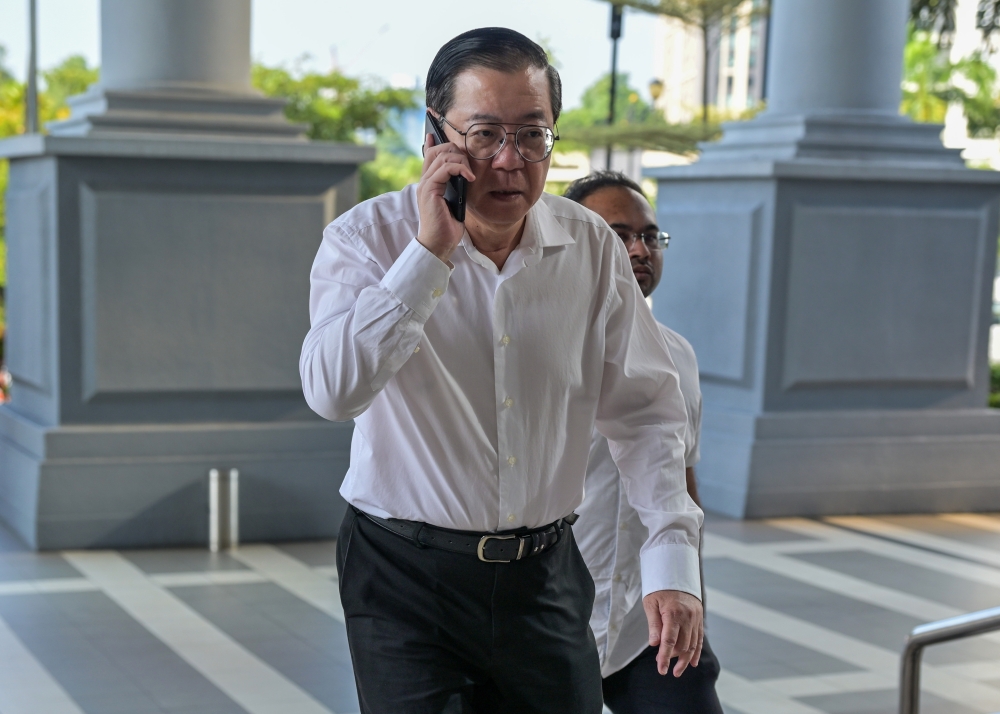
A Malaysian Anti-Corruption Commission investigating officer has firmly rejected suggestions that his handling of the undersea tunnel project inquiry involving Lim Guan Eng has been influenced by personal prejudice or external pressure. The officer's categorical denial came during proceedings in Kuala Lumpur on August 3, as scrutiny intensifies over the investigation's conduct and methodology regarding the controversial submarine tunnel linking Penang Island to the mainland.
The undersea tunnel represents one of the most ambitious infrastructure initiatives proposed for Penang, with estimates suggesting a project cost in the billions. The development has attracted considerable public attention and political controversy, particularly given Lim Guan Eng's tenure as Chief Minister when initial plans for the project were advanced. As the former chief minister of Penang and current federal opposition figure, Lim remains a prominent and sometimes polarizing political personality, making any investigation into projects from his administration inherently sensitive from a governance and public perception standpoint.
The MACC officer's defence centred on asserting that the investigation operates strictly within established protocols for anti-corruption inquiries, with each piece of evidence examined through an objective lens rather than through any political filter. The nature of the allegations driving the investigation—typically involving procurement processes, contract awards, feasibility assessments, or potential irregularities in financial approvals—requires methodical document review and witness testimony. The officer emphasized that such procedures remain consistent with agency standards regardless of the subject's political standing or public profile.
Lim Guan Eng's legal representatives had apparently raised concerns about investigative impartiality, a common defence strategy in corruption cases where the accused disputes the legitimacy of the inquiry framework itself. Such challenges often emerge when high-profile politicians face investigation, with allegations of selective prosecution or political victimization forming part of the broader discourse surrounding anti-corruption enforcement in Malaysia. The dynamic between the MACC and prominent opposition figures has periodically generated debate about whether investigations serve genuine public interest or reflect underlying political tensions.
The undersea tunnel project itself warrants examination from multiple angles beyond the specific allegations under investigation. Infrastructure megaprojects in Malaysia have historically attracted scrutiny regarding competitive bidding processes, environmental impact assessments, and financial viability. The tunnel's proposed specifications, engineering feasibility, and long-term economic justification remain subjects of legitimate public discussion. Whether the current investigation focuses narrowly on administrative procedures or extends to broader project conception and approval processes remains an important contextual detail.
For Malaysian governance observers, the case illustrates enduring tensions between accountability mechanisms and political contestation. The MACC's institutional independence remains crucial to public confidence in corruption investigations, yet perceptions of bias—regardless of whether substantiated—can undermine the agency's credibility. The officer's rebuttal suggests confidence in the investigation's methodology, but transparency regarding specific investigative steps and findings would ultimately serve to reinforce public trust more effectively than categorical denials alone.
The Penang undersea tunnel has commanded significant political and public investment in debate, with supporters emphasizing potential traffic relief and economic benefits while critics question financial prudence and environmental considerations. These broader infrastructure policy questions remain distinct from—though potentially entangled with—any anti-corruption examination. The investigation's scope and findings may ultimately inform future infrastructure project governance standards across Malaysian states and federal initiatives.
Lim Guan Eng's position as a senior opposition political figure adds another dimension to this matter. In Malaysia's competitive political environment, concerns about selective prosecution of opposition figures versus coalition-aligned counterparts surface regularly across various investigations and enforcement actions. While each case requires individual assessment, the cumulative pattern of such inquiries shapes public perception of institutional impartiality. The MACC must therefore maintain not only actual objectivity but also demonstrate procedural transparency that withstands scrutiny from multiple political perspectives.
The investigation's progression will likely continue attracting media attention and political commentary, particularly as any charges or recommendations emerge. How quickly the case concludes, whether prosecutions follow, and what specific irregularities investigators identify will collectively influence assessments of both the investigation's legitimacy and the undersea tunnel project's broader governance implications. For Southeast Asian readers monitoring Malaysian institutional developments, this case offers insights into how anti-corruption agencies navigate politically complex investigations while maintaining credibility and effectiveness in combating genuine corruption.
Moving forward, the MACC officer's denial of bias will presumably be weighed against documentary evidence, witness accounts, and the investigation's ultimate findings and recommendations. The integrity of Malaysia's anti-corruption framework depends substantially on maintaining public confidence that such investigations proceed according to evidence and established procedures rather than political considerations. The undersea tunnel inquiry thus represents more than a specific case—it constitutes a test of institutional accountability mechanisms within Malaysia's evolving political and governance landscape.

