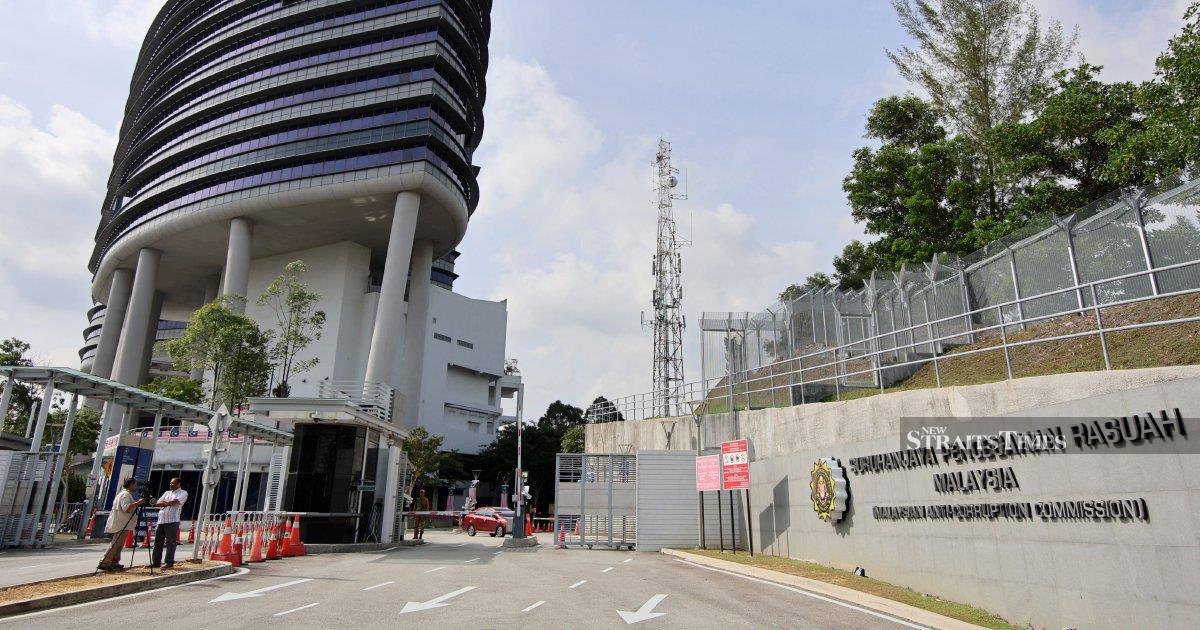
Malaysia's anti-corruption watchdog is intensifying its push to embed systematic whistleblower protection across the federal bureaucracy, framing robust safeguards for disclosure as essential infrastructure for detecting and preventing graft. The Malaysian Anti-Corruption Commission (MACC) has directed ministry secretaries-general and department directors-general to make whistleblower protection a governance priority, signalling that institutional courage to report wrongdoing directly correlates with the nation's international anti-corruption credibility rating.
The initiative reflects growing recognition that Malaysia's performance on the Corruption Perceptions Index—a closely watched annual ranking that influences foreign investor confidence and bilateral relations—hinges partly on whether public servants feel empowered to expose irregularities without fear of retaliation or career damage. By 2030, the MACC strategy aims to establish a normative environment where reporting suspected corruption becomes a routine professional responsibility rather than a career risk. This represents a significant doctrinal shift within Malaysia's sprawling civil service, where traditional hierarchies and concerns about job security have historically deterred employees from escalating concerns through formal channels.
Whistleblower protection mechanisms serve multiple functions in anti-corruption architecture. They create accessible reporting pathways that bypass potentially compromised supervisory chains, enabling frontline staff and junior officials to document questionable procurement practices, bribery attempts, or asset-stripping schemes without channelling reports through superiors who might be implicated or hostile to scrutiny. When protection frameworks are credible—backed by legal immunity from defamation suits, termination, or disciplinary action—organisations typically detect internal misconduct earlier, before losses cascade or schemes mature into institutional rot. For Malaysia, this operational benefit carries strategic weight: a government perceived by international observers as having functional internal accountability mechanisms appears less prone to systemic corruption than one perceived as captured or opaque.
The CPI measures national corruption through surveys of business executives and country analysts, aggregating perceptions into a score from zero to 100, with higher scores indicating lower perceived corruption. Malaysia's ranking, while respectable within Southeast Asia, remains below several regional peers and well below developed democracies. Improving this perception requires both substantive anti-corruption action and credible signalling that institutions are designed to surface and prosecute wrongdoing. MACC's whistleblower initiative addresses this perception gap by proposing concrete governance reforms that demonstrably reduce information asymmetries that corrupt officials exploit.
Implementing robust whistleblower protection across Malaysia's diverse agency landscape presents practical challenges. The federal public sector employs hundreds of thousands across ministries with varying institutional cultures, compliance maturity, and technical capacity. Secretaries-general and directors-general must translate MACC's policy directive into operational reality—establishing confidential reporting channels, designing investigation protocols that insulate complainants from retaliation, training supervisory staff to distinguish between legitimate workplace complaints and baseless accusations, and maintaining documentation sufficient for prosecution where wrongdoing is substantiated. Some agencies may resist dedicating resources to whistleblower infrastructure, viewing it as potential organisational destabilisation.
International precedent suggests that effective whistleblower regimes require multiple complementary elements beyond formal policy. Legal protections must extend beyond government employment to contractors and vendors with visibility into agency operations; investigative bodies like MACC require adequate funding to pursue credible allegations; and prosecutorial success rates must be sufficiently high to establish that reporting produces consequences for wrongdoers rather than merely generating bureaucratic paperwork. Countries that have substantially improved their CPI rankings—such as South Korea and Portugal—often invested heavily in transparency infrastructure and whistleblower protection as part of broader anti-corruption campaigns sustained across multiple administrations.
Malaysia's particular context amplifies the strategic importance of whistleblower systems. As a middle-income country competing for foreign direct investment and regional economic influence, its institutional reputation shapes investor calculations about regulatory stability and contract enforcement. Hong Kong and Singapore's relatively high CPI rankings reflect, in part, international confidence that their public sectors have functioning internal accountability mechanisms. Malaysia's effort to narrow this gap by 2030 requires not just statutory reform but cultural transformation within the civil service—a process measured in years rather than months.
The MACC directive also reflects diplomatic signalling. International anti-corruption bodies, bilateral donors, and international courts increasingly expect member states to demonstrate institutional commitment to detecting and prosecuting graft. By formally enlisting top civil servants to implement whistleblower protection, Malaysia communicates to external audiences that anti-corruption is not merely rhetorical but embedded in operating procedures at the highest bureaucratic levels. This visibility can influence how international observers assess Malaysia's anti-corruption trajectory, potentially affecting technical cooperation arrangements and bilateral relationships with rule-of-law-focused governments.
For Malaysian employees contemplating disclosure of suspected wrongdoing, the distinction between protected and unprotected reporting channels carries material consequences. Absent credible institutional safeguards, vulnerable individuals—particularly junior staff without alternative employment opportunities—face genuine risks: supervisory retaliation, workplace marginalisation, career stagnation, or disciplinary fabrication. MACC's initiative aims to render such risks unacceptable by establishing formal protection frameworks that government agencies must operationalise and monitor. Success requires not only policy design but enforcement; agencies must demonstrate through documented case outcomes that whistleblower protection is substantive rather than performative.
The 2030 timeline suggests MACC is calibrating ambition to administrative capacity. Systematic institutional reform across federal agencies typically requires multi-year cycles of training, systems development, and cultural reinforcement. By anchoring the whistleblower initiative to CPI improvement targets, MACC creates measurable accountability for implementation; if Malaysia's ranking stagnates despite the directive, senior officials can be asked to account for barriers and resistance. Conversely, if whistleblower protection does correlate with improved perception ratings, the mechanism becomes a model for future governance priorities.
Regionally, Malaysia's whistleblower initiative occupies a contested space. Some Southeast Asian jurisdictions view comprehensive whistleblower protection as potentially destabilising to state hierarchy; others, particularly in the Indo-Pacific liberal order, regard it as essential governance infrastructure. By embracing the latter framework, Malaysia signals alignment with international governance norms while managing domestic implementation challenges. This positioning may matter for Malaysia's engagement with multilateral institutions, regional security partnerships, and international legal frameworks that increasingly condition membership or cooperation on anti-corruption institutional criteria.

