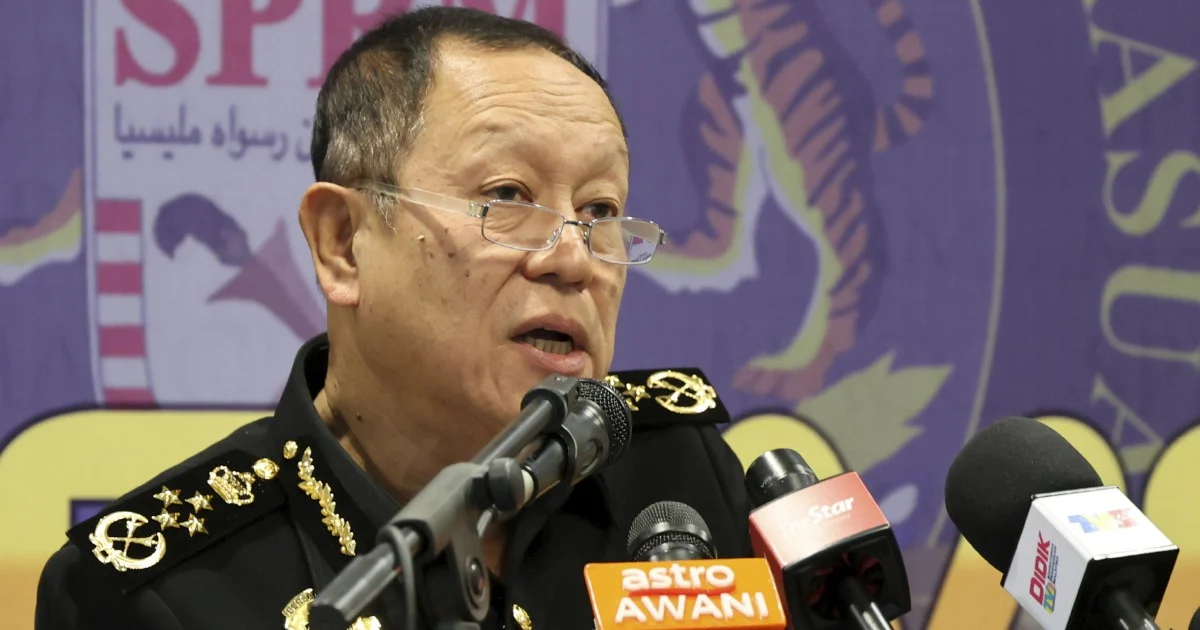
The Malaysian Anti-Corruption Commission has identified several individuals for questioning in connection with a high-value property acquisition in the United States that authorities suspect involved embezzled funds from 1Malaysia Development Bhd, the sovereign wealth fund at the centre of one of Asia's largest financial frauds. Among those expected to be interviewed is the wife of a former Malaysian prime minister, underscoring how the MACC continues to pursue leads related to the 1MDB scandal years after initial convictions.
The property in question represents one of the most tangible pieces of evidence in the ongoing effort to trace and recover funds misappropriated through 1MDB. The commission's decision to summon multiple witnesses reflects the complexity of international financial crimes, where assets are often layered across borders and held through corporate structures designed to obscure beneficial ownership. This particular line of inquiry demonstrates how Southeast Asian authorities must collaborate with overseas law enforcement to unravel transactions that span continents.
The 1MDB scandal, which erupted into public consciousness around 2015, resulted in billions of dollars flowing into private hands rather than supporting the fund's stated development objectives. While several key figures have already been prosecuted and convicted, including former Prime Minister Najib Razak who received a 12-year prison sentence in 2023, the investigation continues to unearth additional assets and individuals allegedly involved in the conspiracy. Each new angle, including this property probe, represents an opportunity to recover stolen public money and hold additional perpetrators accountable.
The involvement of a former prime minister's spouse in this inquiry marks a significant development. Family members of prominent political figures rarely find themselves directly implicated in major corruption investigations unless evidence suggests their direct knowledge or participation in transactions. The decision to call her for questioning indicates that investigators have gathered sufficient preliminary evidence to warrant her account of how funds were accessed or property ownership was arranged.
Luxury real estate in major international financial centres has long served as a preferred vehicle for hiding illicit wealth. Properties in prime locations across the United States, particularly in cities like New York, Los Angeles, and Miami, offer anonymity through corporate ownership structures and limited transparency compared to other asset classes. The MACC's focus on this particular property suggests it represents a significant allocation of 1MDB funds, potentially justifying the investigative resources being deployed.
For Malaysian taxpayers, the recovery of such assets carries profound symbolic and practical importance. The 1MDB scandal cost the nation an estimated RM42 billion in losses, with funds that should have developed the country's economy instead enriching individuals with political connections. Each successful recovery effort, however modest, represents partial restitution and acknowledgment that those responsible cannot simply relocate illicit wealth overseas and escape consequences indefinitely.
The investigation also reflects broader regional and international cooperation frameworks that have strengthened anti-corruption efforts across Southeast Asia. Malaysian authorities coordinating with American law enforcement demonstrates how countries can work together to trace assets and build cases against sophisticated financial criminals. The recovery of 1MDB assets has involved coordination with agencies in Singapore, Switzerland, the United Arab Emirates, and elsewhere, establishing precedent for tackling transnational corruption.
From a governance perspective, this ongoing probe underscores how institutional memory and investigative capacity remain crucial long after initial scandals fade from headlines. The MACC's persistence in pursuing new leads years after 2015 reflects maturation of Malaysia's anti-corruption infrastructure, contrasting with historical patterns where investigations would stall or be deprioritised as political attention shifted elsewhere. This sustainability is essential in a country working to rebuild institutional credibility after the scale of 1MDB compromised public trust.
The questioning process itself carries diplomatic sensitivity given the former prime minister's historical significance and his spouse's family connections. However, the anti-corruption commission's apparent willingness to proceed suggests political consensus that no one remains beyond investigation, at least in principle. How thoroughly these interviews are conducted and what consequences follow will signal to international observers and domestic stakeholders whether Malaysia truly has turned a corner on corruption accountability.
For Southeast Asian readers, this development carries lessons applicable across the region, where political figures and their families frequently accumulate unexplained wealth and purchase overseas property. Malaysia's experience with 1MDB and the subsequent investigative process provides a case study in both how such schemes operate and how determined agencies can pursue them despite obstacles. The involvement of international assets emphasises that geographic distance no longer provides reliable shelter for stolen funds.

