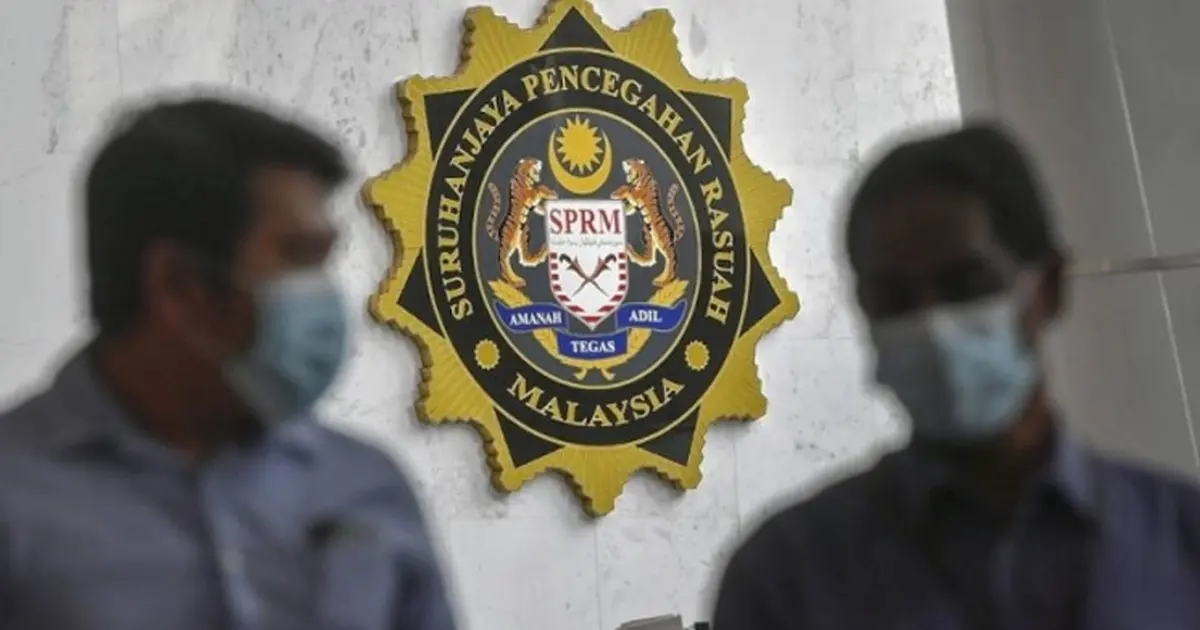
The Malaysian Anti-Corruption Commission (MACC) has completed an exhaustive round of questioning with the former chief financial officer of Tabung Haji, culminating a marathon session that extended from early morning through late evening. The anti-graft agency recorded the official's statement between 9am and 6.30pm, underscoring the depth and complexity of the inquiry into Malaysia's pilgrimage fund management.
The prolonged duration of the interrogation signals the seriousness with which the MACC is pursuing its investigation into Tabung Haji's operations. Nearly ten hours of continuous questioning suggests that investigators have substantial ground to cover, likely exploring multiple transactions, financial decisions, and governance issues spanning an extended period. The extended timeframe also indicates that the former CFO's responses may have prompted follow-up questions or that the commission required detailed clarifications on complex financial matters.
Tabung Haji, formally known as the Pilgrimage Fund Board, manages the savings and investments of Malaysian Muslims preparing for the hajj pilgrimage to Mecca. The institution holds billions of ringgit in deposits from hundreds of thousands of account holders, making it a crucial financial entity in Malaysia's Islamic financial ecosystem. Any irregularities in its management carry significant implications not only for governance standards but also for the financial security of ordinary Malaysians who have entrusted their pilgrimage savings to the fund.
The investigation into Tabung Haji has gathered momentum in recent months, with the MACC intensifying its scrutiny of the organisation's financial practices and decision-making processes. The focus on the former CFO reflects investigators' interest in understanding how financial policies were formulated, approved, and implemented at the highest levels of the institution. A chief financial officer occupies a pivotal position in any organisation, bearing responsibility for financial strategy, reporting, and oversight of the fund's investment portfolio.
For Malaysian readers and stakeholders, the progression of this probe carries several layers of significance. The millions of Malaysians who maintain accounts with Tabung Haji have a direct interest in ensuring that their deposits are managed with integrity and prudence. Any findings of financial mismanagement or impropriety could affect public confidence in the institution and raise questions about regulatory oversight of Islamic financial institutions operating in Malaysia.
The MACC's visible and methodical approach—including publicly reported interrogation sessions—demonstrates the agency's commitment to investigating white-collar crime and institutional accountability. However, the timing and intensity of questioning also reflect broader concerns about governance failures that may have accumulated over years. The compression of so many questions into a single day suggests that investigators may be working with a substantial body of documentary evidence or prior statements that they need to reconcile with the former CFO's account.
From a regional perspective, Malaysia's handling of this investigation sends signals about the country's willingness to pursue high-level financial crime. Southeast Asian economies have faced persistent challenges in combating corruption and maintaining public trust in financial institutions. How Malaysian authorities resolve complex cases involving major financial entities influences investor confidence and the regional reputation for institutional integrity.
The questioning of the former CFO does not necessarily indicate charges or guilt, but rather represents a standard investigative procedure. In Malaysian legal practice, recording statements from suspects or persons of interest is a preliminary step that allows investigators to gather evidence and assess the credibility of accounts. The information obtained during these sessions informs decisions about whether to proceed with formal charges or further investigation.
Tabung Haji's governance structure and operational procedures have come under increasing scrutiny from lawmakers, regulators, and civil society organisations. The institution operates with significant autonomy in managing its investment portfolio, which has included controversial ventures into real estate and other sectors. Understanding how investment decisions were made and approved—matters that typically fall within a CFO's remit—becomes crucial for assessing whether proper controls and governance standards were maintained.
The broader investigation appears to be examining not isolated incidents but rather systemic questions about how the institution's finances were managed. The extended questioning of a senior financial official suggests that investigators are working through complex transaction trails, investment decisions, and the approval mechanisms that governed major financial commitments. Such investigations typically require piecing together multiple perspectives, documentary evidence, and financial records to establish patterns or irregularities.
Stakeholders including Tabung Haji depositors, pension funds, government agencies, and civil society organisations will be watching developments closely. The credibility of Malaysia's anti-corruption efforts depends on thorough, impartial investigations that follow evidence wherever it leads. The completion of this particular interrogation session represents progress in the investigative timeline, though the full scope and ultimate conclusions of the probe remain to be seen.
Going forward, the findings from this investigation may prompt broader reforms in how Islamic financial institutions are supervised and how their governance structures are designed. Enhanced transparency, stronger internal controls, and clearer accountability mechanisms could emerge as recommended improvements. For now, the MACC's completion of the former CFO's questioning marks a significant milestone in an investigation that carries implications far beyond the institution itself.

