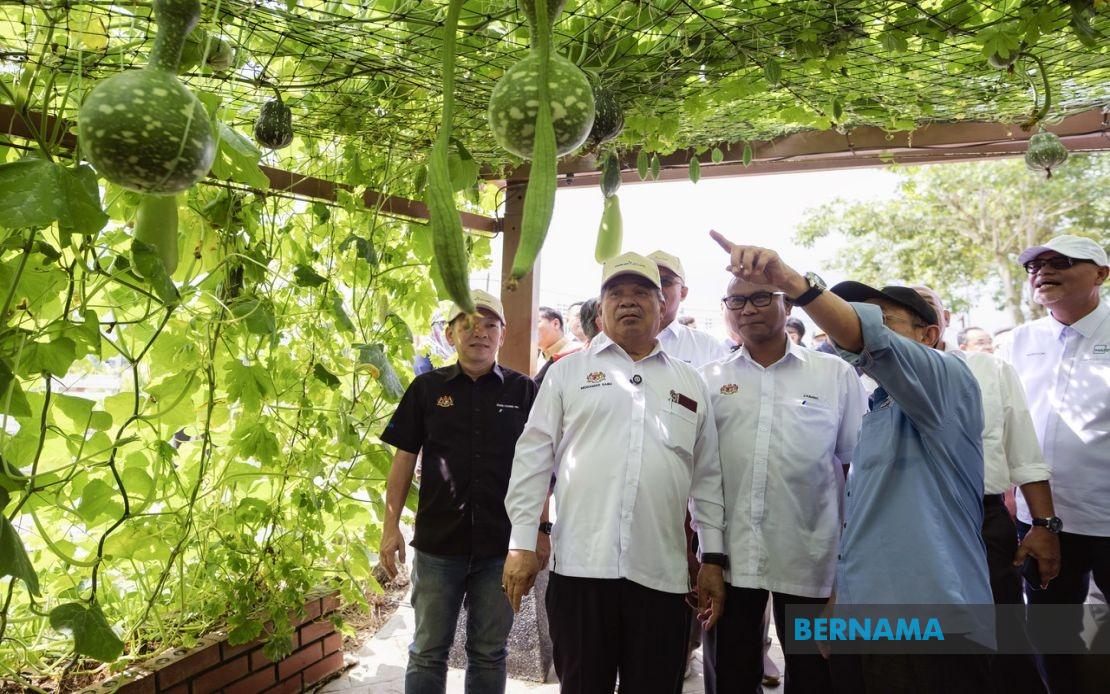
The Malaysia Agriculture, Horticulture and Agrotourism Exhibition (MAHA) 2026 will officially welcome visitors on August 28 after organisers complete final preparations at the Malaysia Agro Exposition Park Serdang (MAEPS), according to Agriculture and Food Security Minister Datuk Seri Mohamad Sabu. Speaking during an inspection of the venue on August 19, Mohamad indicated that substantial groundwork has already been completed, with an estimated 80 percent of all preparations now finished and expectations to achieve full readiness just a day before the public opening.
The remaining work at the sprawling MAEPS site focuses primarily on the finer details of exhibition spaces and the installation of display materials across various pavilions. Core infrastructure development has already concluded, allowing organisers to concentrate on the aesthetic and functional elements that will define the visitor experience. This timeline suggests confidence among planners that the 10-day event, running through September 6, will launch without significant delays or operational complications.
Central to MAHA 2026's messaging is the promotion of agricultural modernisation across Malaysia's farming sector. Mohamad emphasised that the exhibition carries the theme 'Penciptaan Nilai Demi Keterjaminan Makanan'—roughly translating to value creation for food security—and will prominently feature cutting-edge farming technologies already prevalent in advanced agricultural economies. Visitors can expect displays of automated vehicles, modern mechanised equipment, and increasingly sophisticated drone applications in cultivation of paddy, pineapple, and melon crops. These demonstrations aim to illustrate how farmers in countries such as China and the Netherlands have transformed their industries through technological adoption, offering a competitive benchmark for Malaysian agricultural practitioners considering similar investments.
Beyond showcasing hardware and machinery, the exhibition deliberately structures learning around the agricultural value chain—a critical concept for Southeast Asian farmers seeking to elevate income beyond commodity production. Mohamad highlighted how primary products like milk, pineapple, and cassava can undergo downstream processing into diverse finished goods, multiplying their commercial value. This positioning encourages local entrepreneurs and smallholders to consider vertical integration opportunities rather than remaining confined to raw material production. The approach reflects broader regional economic policy recognising that Malaysia's agricultural competitiveness hinges not merely on production volume but on value-added processing and product diversification.
Cultural programming will balance the technology-focused content, with dedicated space allocated for Perkampungan Abang Mat—a dedicated village showcase featuring traditional rewang communal cooking activities, heritage cuisine preparation, and folk games. Rather than relegating these elements to nostalgic periphery, organisers have integrated them throughout the 10-day period with daily programme variations, positioning heritage farming knowledge as complementary to modernisation rather than obsolete. This reflects Malaysia's growing recognition that sustainable agricultural development incorporates both technological advancement and preservation of traditional ecological knowledge.
Family-oriented attractions and prize mechanisms underscore efforts to broaden appeal beyond professional farmers and agricultural sector representatives. Daily lucky draws offer motorcycles—two vehicles daily for a total of 20 across the exhibition—and electrical appliances as consolation prizes, creating incentives for repeated visits and extended stays. Concurrent traditional game stations featuring activities such as congkak deliberately target senior citizens, positioning the exhibition as intergenerational community gathering rather than purely technical conference. This strategic inclusion recognises that agricultural policy resonates most effectively when families perceive direct personal benefit beyond abstract development messaging.
Projected attendance figures underscore MAHA's significance as a major national event and economic stimulus mechanism. Organisers anticipate attracting more than four million visitors over the 10-day span, with particular emphasis on recruiting approximately 800,000 youth participants. This younger demographic focus reflects strategic positioning of agricultural careers as technology-enabled and innovation-centred rather than labour-intensive and economically marginal—a critical perception shift required to attract talent to farming sectors across Malaysia and Southeast Asia experiencing generational workforce decline. Mohamad's ministry is actively pursuing collaboration with the Education Ministry to embed MAHA participation within school co-curricular programmes, effectively institutionalising agricultural career exposure within formal education systems.
International participation extends MAHA's reach beyond domestic agricultural concerns, with approximately 2,000 exhibitors registered from Malaysia and abroad representing 14 countries. Kenya's inaugural pavilion presence signals expanding South-South agricultural cooperation and technology exchange possibilities. These international components create bilateral learning opportunities for participating nations while simultaneously offering Malaysian farmers and entrepreneurs exposure to diverse growing conditions, pest management practices, and market strategies relevant to tropical and subtropical environments. Such cross-border agricultural knowledge transfer has particular relevance for Southeast Asian nations pursuing regional agricultural integration and supply chain cooperation.
The exhibition's economic implications extend to trade and investment facilitation. International participants gain opportunities to explore formal cooperation arrangements with Malaysian agricultural entities, potentially establishing joint ventures, licensing agreements, or technology transfer partnerships. For Malaysia, the platform enables domestic agribusinesses to benchmark their innovation levels against global competitors and identify partnership opportunities addressing identified competitive gaps. This trade promotion function, though implicit rather than explicitly foregrounded in ministerial messaging, represents a substantial component of MAHA's national development strategy within broader agricultural modernisation objectives.

