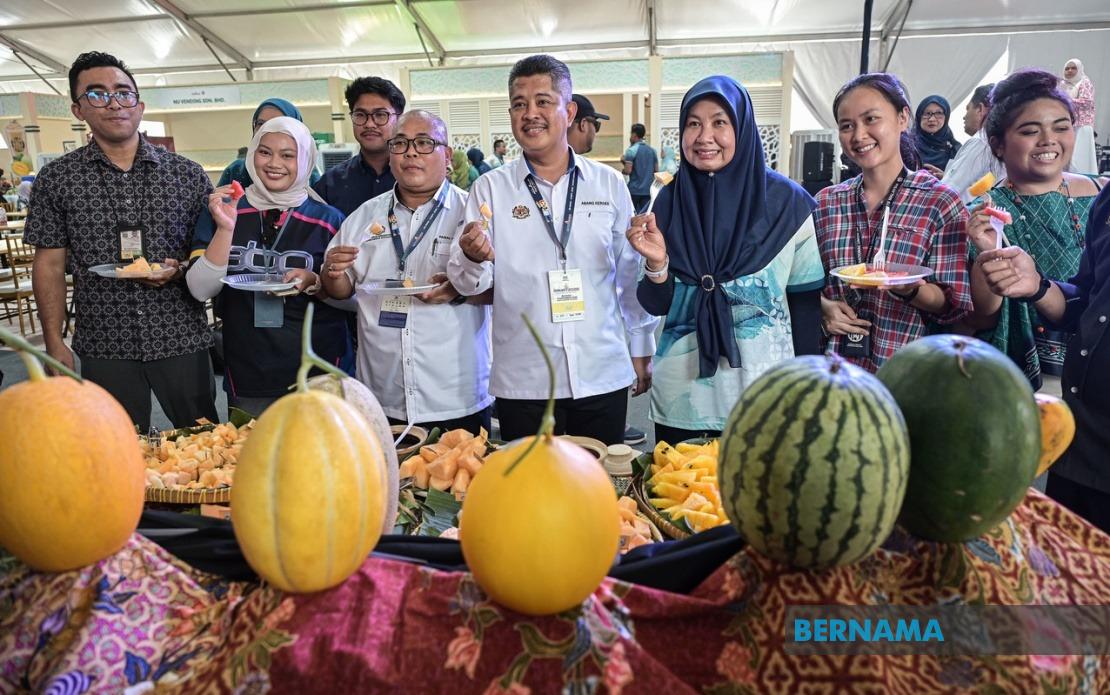
Malaysia's horticultural sector is poised to enter a new chapter with the official unveiling of a locally-developed melon variety tomorrow at the Malaysia Agriculture, Horticulture and Agrotourism Exhibition (MAHA) 2026. The distinctive fruit, which has been chosen as the festival's symbolic offering for this edition, represents the culmination of three years of intensive research and development undertaken by the Federal Agricultural Marketing Authority (FAMA) working alongside domestic agricultural entrepreneurs. The formal introduction will take place during the opening ceremony, with Agriculture and Food Security Minister Datuk Seri Mohamad Sabu presiding over the announcement of the variety's official name.
FAMA chairman Abang Ahmad Kerdee Abang Masagus emphasized the significance of establishing a recognizable icon for this biennial showcase, noting that the melon serves a symbolic function beyond its commercial value. "The presence of a distinctive fruit as the central emblem strengthens the identity and visibility of MAHA itself," he explained to media representatives during a tasting session at Serdang. "This new variety accomplishes multiple objectives simultaneously—it revitalizes the domestic melon cultivation sector while offering consumers an innovative product that embodies both quality and affordability."
The newly developed melon has been engineered specifically to align with contemporary Malaysian consumer preferences and market dynamics. At approximately 1.3 kilograms per fruit, the compact size represents a significant departure from conventional melons, offering households a convenient single-serving option that reduces waste and storage challenges. The variety achieves a Brix sweetness concentration level of 18—a measurement indicating superior sugar content compared to varieties presently available in retail markets—while simultaneously delivering a substantially crunchier flesh texture that enhances eating experience and consumer satisfaction.
Visually distinctive features include a characteristic netting pattern adorning the skin, which serves as both an aesthetic element and a marker of the fruit's authenticity. The retail price point has been strategically positioned at approximately RM15 per unit, positioning the product as an accessible premium offering that balances quality attributes with affordability considerations for middle-income Malaysian households. This pricing strategy reflects deliberate market analysis conducted throughout the development phase, ensuring the fruit occupies a competitive position without undermining producer profitability or farmer viability.
FAMA director-general Faisal Sulaiman underscored how shifting consumer behaviour patterns directly influenced the breeding program's trajectory. "Our market research identified a clear consumer trend towards smaller, portion-controlled products suitable for modern household dynamics," Sulaiman stated. "Contemporary families increasingly prefer convenience, practicality, and reduced spoilage risk—attributes this mini-melon directly addresses through its engineering and design specifications."
The three-year development timeline enabled FAMA researchers and collaborating entrepreneurs to move beyond theoretical cultivation concepts toward practical market deployment. The extended research phase allowed comprehensive testing of growing conditions, harvest protocols, post-harvest handling procedures, and quality assurance mechanisms necessary for consistent consumer delivery. This methodical approach contrasts sharply with rushed product introduction strategies that frequently result in quality inconsistencies and market disappointment.
Beyond its immediate commercial application, the melon launch carries broader implications for Malaysia's agricultural innovation ecosystem and farmer livelihoods. The initiative demonstrates capacity within domestic institutions to generate competitive horticultural products without reliance upon imported genetics or foreign expertise—a significant capability for a nation increasingly emphasizing agricultural self-sufficiency. For farming communities, the variety's introduction creates new revenue streams and market opportunities, particularly for smallholder producers operating within FAMA's cooperative network structures.
The exhibition itself reflects the melon's broader context within Malaysia's agri-food infrastructure. Operating at the Malaysia Agricultural Expo Park in Serdang through August 10, MAHA 2026 spans ten days of intensive agricultural promotion, featuring agrotech demonstrations, state-level pavilions, direct-from-farm sales operations, and participation from approximately 100 domestic and international agricultural enterprises. FAMA intends to supply over 150,000 melon units—encompassing the new variety alongside nearly 100 established international and local cultivars—for both showcase purposes and direct visitor purchase transactions.
This supply commitment reflects FAMA's strategic marketing approach designed to generate tangible economic benefits throughout agricultural value chains. By facilitating direct market access between primary producers and consumers, the exhibition model empowers farmers and entrepreneurs to capture greater profit margins than traditional wholesale distribution models typically provide. The concentrated consumer foot traffic characteristic of MAHA creates temporary market conditions permitting premium pricing strategies justified by freshness, local provenance, and quality differentiation markers.
The melon's development narrative also illustrates how government agricultural agencies and private sector entrepreneurs can generate synergistic outcomes through structured collaboration frameworks. FAMA's regulatory authority, research capabilities, and market distribution networks complement private entrepreneurs' innovation incentives, operational flexibility, and customer-responsiveness mechanisms. This collaborative model potentially provides a template for future horticultural product development initiatives requiring sustained investment and technical expertise beyond typical individual enterprise capacity.
For Malaysian consumers, the melon's introduction represents expanded product choice within a traditionally limited domestic selection, particularly at the premium consumer segment. The variety's superior sweetness levels and textural characteristics position it advantageously against imported alternatives, supporting local agricultural competitiveness while offering quality attributes previously requiring international sourcing. The modest 1.3-kilogram format aligns with contemporary household structures and consumption patterns, reducing the purchasing friction associated with conventional melon sizes that frequently exceed practical family consumption requirements.

