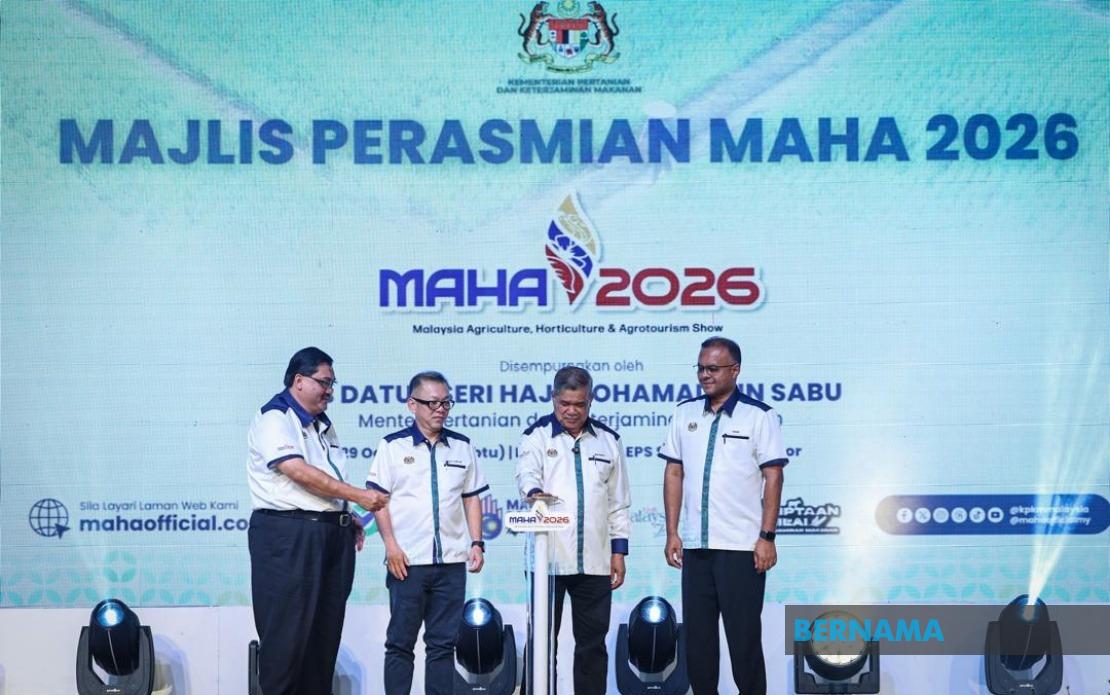
Agriculture Minister Datuk Seri Mohamad Sabu has positioned MAHA 2026 as a pivotal turning point for Malaysia's farming and food systems, signalling the government's determination to embed sustainability at the heart of the nation's agrifood strategy. Speaking at the opening of the Malaysia Agriculture, Horticulture and Agrotourism Show at the Malaysia Agro Exposition Park Serdang on August 29, Mohamad underscored that the biennial event represents far more than a commercial showcase—it embodies a philosophical shift toward responsible, environmentally conscious agricultural production that can simultaneously tackle climate change and bolster domestic food security.
The minister's emphasis on sustainability speaks to growing pressures facing Malaysia's agricultural sector. As a country that imports significant quantities of food staples, Malaysia remains vulnerable to global supply chain disruptions and price volatility. By championing sustainable farming practices, the government aims to reduce carbon emissions from agricultural operations while gradually tilting the balance toward greater self-reliance in food production. This dual objective aligns with international commitments to net-zero emissions while addressing the persistent challenge of rising living costs for ordinary Malaysians—a concern that has featured prominently in public discourse across the region.
Modern MAHA 2026 will showcase a spectrum of environmentally responsible practices that reflect contemporary agricultural innovation. These encompass optimised electricity consumption through renewable energy integration, sophisticated waste management systems that minimise landfill contributions, strategic reduction of single-use plastics across farm operations, regenerative agriculture techniques that restore soil health, and comprehensive recycling protocols. Such measures represent a departure from conventional high-input, extractive farming models toward circular systems that maintain long-term productivity while reducing environmental burden—an approach increasingly demanded by consumers and required by export markets in developed economies.
Significantly, Mohamad invoked Malaysia's Green Book Policy, a framework established in 1974 under the late Tun Abdul Razak, to remind stakeholders of historical precedent for prioritising domestic food production over reliance on imports. That decades-old policy sought to insulate the nation from external food price shocks and strengthen economic sovereignty. By reviving this conceptual framework within a contemporary sustainability context, the minister is positioning food security not merely as an economic issue but as a matter of national resilience—a message resonating across Southeast Asia as regional governments grapple with climate adaptation and supply chain stability.
The government's commitment extends beyond rhetoric into concrete sectoral investment. Mohamad outlined plans to modernise Malaysia's fisheries and livestock industries through vessel upgrades, facility improvements, high-value aquaculture development, technological adoption in animal feed production, and reinforced disease control biosecurity measures. These interventions signal recognition that productivity gains must be decoupled from environmental degradation—a recalibration necessary for Malaysian agriculture to remain competitive while meeting stricter environmental standards imposed by major trading partners, particularly within the European Union and other developed markets increasingly scrutinising supply chain sustainability.
International collaboration has emerged as a cornerstone of MAHA 2026's strategic value. The event attracts delegations from fourteen countries, creating diplomatic and commercial space for finalising bilateral and multilateral cooperation agreements on agricultural trade, technology transfer, and best-practice sharing. However, Mohamad expressed clear frustration with the tendency for such engagements to culminate in ceremonial memoranda of understanding that generate minimal tangible outcomes. His call for translating agreements into substantive results—expanded export opportunities, capital inflows for agritech enterprises, and concrete market access—reflects a pragmatic understanding that declarations alone do not strengthen farmer incomes or build competitive advantage.
The minister's explicit focus on enabling agritech start-ups and emerging agricultural enterprises to access investment capital addresses a critical bottleneck in Malaysia's agricultural innovation ecosystem. Venture capital flows into agritech remain limited relative to other sectors, constraining the emergence of homegrown solutions to productivity, sustainability, and traceability challenges. By leveraging MAHA 2026 as a networking platform connecting entrepreneurs with local and international investors, the government creates pathways for capital mobilisation while building Malaysia's reputation as a hub for agricultural innovation within Southeast Asia—an ambition that could attract talent and investment from across the region.
The scale of MAHA 2026 underscores its significance within Malaysia's agricultural calendar. The event runs from August 28 to September 6 at MAEPS, attracting approximately two thousand exhibitors and targeting visitor numbers exceeding four million. This magnitude provides unprecedented opportunity to communicate sustainability messaging to farmers, agribusinesses, policymakers, and consumers simultaneously. For smallholder farmers constituting much of Malaysia's agricultural base, MAHA exposure offers access to information on resource-efficient techniques, market intelligence, and technology demonstrations that might otherwise remain inaccessible—potentially catalysing adoption of sustainable practices across dispersed rural communities.
The ministerial emphasis on sustainability intersects with Malaysia's broader positioning within global agrifood markets. Major importers in developed economies increasingly mandate compliance with environmental and social standards, incorporating sustainability criteria into procurement decisions. By pivoting toward sustainable agricultural systems now, Malaysia can strengthen its competitive position in premium market segments while reducing future compliance risks. This strategic orientation proves particularly relevant for high-value export categories including organic produce, certified sustainable palm oil, and specialty agricultural products where Malaysian producers can command price premiums reflecting environmental credentials.
Mohamad's framing of sustainability as non-negotiable rather than optional represents a significant rhetorical reorientation within Malaysian agricultural policy discourse. Historically, productivity and profitability have dominated policymaking conversations, with environmental considerations treated as secondary concerns or regulatory constraints. By elevating sustainability to central importance, the minister signals that the agriculture ministry recognises interdependencies between environmental health, production resilience, and long-term sector viability. This reframing carries implications beyond Malaysia's borders, potentially influencing agricultural policy trajectories across Southeast Asia where similar pressures around climate adaptation, food security, and export market access converge.
The participation of Deputy Minister Datuk Chan Foong Hin and Ministry Secretary-General Datuk Seri Isham Ishak at MAHA's opening underscores bureaucratic commitment to the event's importance within government priorities. Such high-level representation signals that sustainability is not merely a marketing narrative but an institutionalised policy direction with resource allocation and departmental accountability implications. This institutional embedding matters because it suggests stakeholders can expect consistent messaging, coordinated support mechanisms, and follow-through implementation—critical factors determining whether MAHA 2026 catalyses genuine sectoral transformation or remains a one-off promotional event.
Looking forward, MAHA 2026's success will be measured not merely by attendance figures or exhibitor participation but by subsequent adoption of sustainable practices among Malaysian farmers and agribusinesses, successful capital mobilisation for agritech ventures, formalisation of international cooperation agreements into commercial relationships, and measurable improvements in domestic food production capacity. The event thus functions simultaneously as celebration of agricultural innovation, policy communication platform, business networking venue, and bellwether of whether Malaysia's agriculture sector can authentically pivot toward sustainability or merely performatively gesture in that direction. For regional observers watching Malaysia's agricultural trajectory, MAHA 2026 will provide crucial signals about the government's commitment to transforming production systems in ways that balance productivity, profitability, and environmental stewardship.

