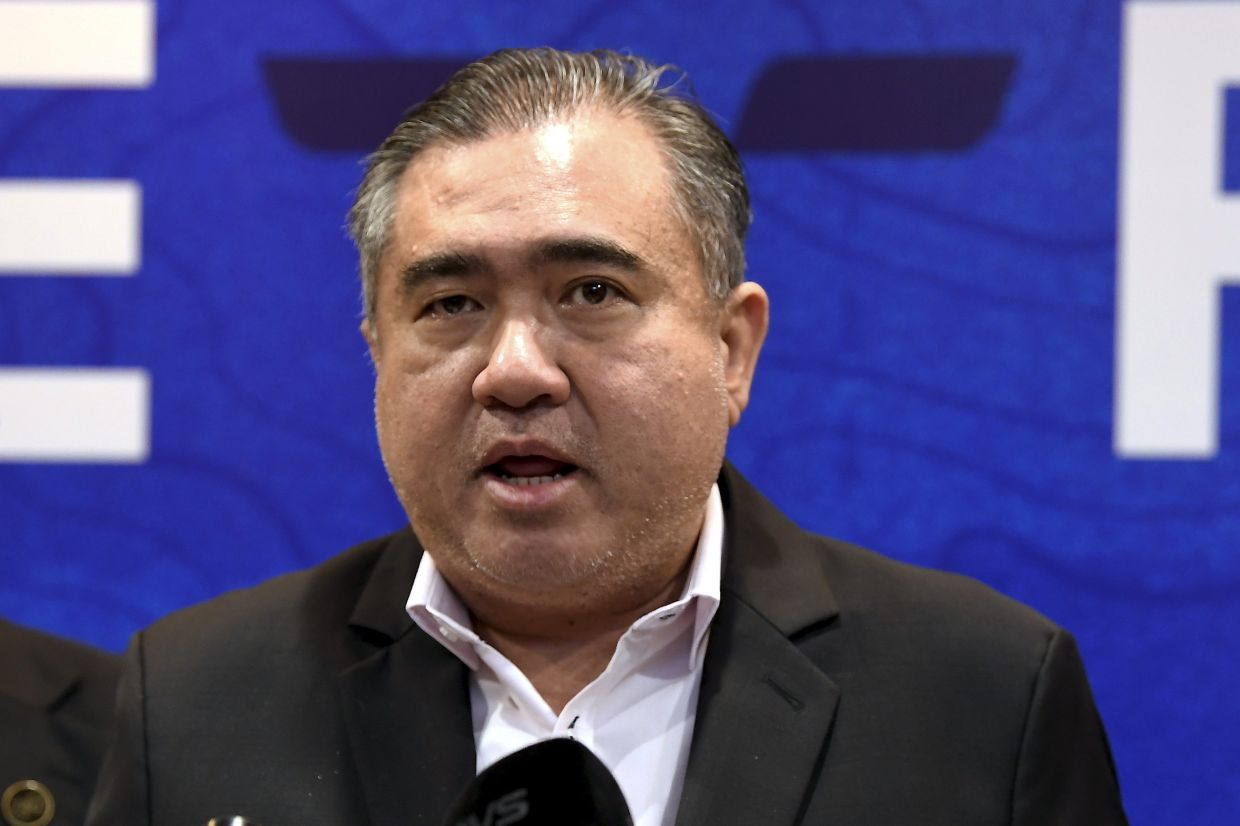
Malaysia Airports Holdings Bhd and Mitsui Fudosan (Asia) Malaysia have launched a strategic joint venture to construct an RM80 million logistics complex dedicated to aircraft maintenance, repair and overhaul operations at Subang Airport, signalling the government's broader push to elevate the country's aviation infrastructure. Transport Minister Anthony Loke Siew Fook unveiled the groundbreaking ceremony on Thursday, emphasising that the partnership exemplifies a deliberate approach to monetising MAHB's substantial land portfolio by pairing it with international expertise in logistics development and management.
The collaboration directly benefits from Mitsui Fudosan's proven track record in Japan, where the conglomerate has successfully constructed and operated complex logistics facilities at Haneda Airport, one of Asia's busiest aviation hubs. Loke highlighted this technical foundation as instrumental in reducing execution and operational risks for Malaysia Airports, allowing the national airport operator to leverage foreign know-how while retaining ownership and control of critical infrastructure. This model of public-private partnership reflects an emerging Malaysian strategy to attract capital and operational excellence from established international players whilst maintaining strategic asset ownership.
The new facility, developed through MFMA Industrial Sdn Bhd—the joint venture entity—will occupy 1.78 hectares within Subang Aerotech Park and deliver approximately 254,420 square feet of gross floor area upon completion. The complex is designed with flexibility in mind, offering multiple tenancy options to accommodate diverse operational needs across the aviation and aerospace sectors. This adaptive approach acknowledges the reality that logistics operators require customised spaces, whether for component storage, assembly, testing, or administrative functions.
Subang's location within the Klang Valley provides immediate advantages for the facility's future tenants. The proximity to established aerospace, aviation and logistics operators already clustered around the airport creates network effects that should drive demand for modern, purpose-built logistics space. Many smaller and medium-sized aviation support businesses currently operate from older facilities scattered across the region; a new, professionally managed complex could consolidate operations and improve efficiency for the entire sector.
The project underscores a national imperative to diversify Malaysia's air cargo capabilities beyond Penang, which currently dominates the sector with approximately 75 per cent of total throughput. Penang's concentration of semiconductor manufacturing has naturally positioned it as a logistics hub, but this dependency creates vulnerability. The government is pursuing a multi-nodal strategy, positioning Kuala Lumpur International Airport as ASEAN's regional air cargo hub through collaboration with China, whilst simultaneously developing Kota Kinabalu International Airport as a secondary node by repurposing Terminal 2. Subang's new logistics complex complements this architecture by strengthening the Klang Valley's supporting infrastructure for maintenance and repair services.
The facility is scheduled for completion in the third quarter of 2027, with operations commencing by the fourth quarter of the same year. This timeline aligns with broader regional infrastructure development cycles and allows existing operators time to plan their transition to the new facility. For businesses currently spread across ageing properties or constrained spaces, the complex represents a modernisation opportunity that could improve productivity and operational margins.
The involvement of senior Japanese officials, including Embassy of Japan Minister Daisuke Nihei, alongside MAHB Managing Director Datuk Mohd Izani Ghani and Mitsui Fudosan Managing Director Masayoshi Saito, underscores the project's significance as part of deepening Malaysia-Japan economic ties. Japan has consistently invested in Malaysian aviation and transportation infrastructure, reflecting strategic interest in the region's logistical potential as global supply chains reconfigure.
For Malaysia's aerospace sector, the project arrives at a pivotal moment. The regional expansion of aircraft maintenance and repair services is intensifying as airlines seek alternative capacity beyond traditional hubs. A modern, well-located facility with access to skilled labour and modern equipment could capture work currently performed overseas, retaining value creation within the country. The Subang location is particularly advantageous given proximity to existing MRO operators and the availability of technical expertise in the broader Klang Valley region.
The broader context reveals how MAHB is evolving beyond airport operations management into asset development and logistics provision. By deploying its extensive land holdings in partnership with capable international operators, MAHB can generate additional revenue streams whilst contributing to sector growth. This model may serve as a template for other major airport operators in Southeast Asia facing similar pressures to diversify revenue and improve infrastructure utilisation. The Subang project demonstrates that even mature airport locations can attract significant new investment when paired with credible international partners and government support.
For Malaysia's position within ASEAN's logistics hierarchy, the Subang complex fills an important gap in the Klang Valley's aviation support infrastructure. As the region's economies become increasingly integrated and supply chains more sophisticated, the availability of high-quality logistics facilities becomes a competitive advantage in attracting and retaining aviation-related businesses. The project signals that Malaysia is serious about consolidating its role as a regional aviation and logistics hub, with tangible investment backing that ambition.

