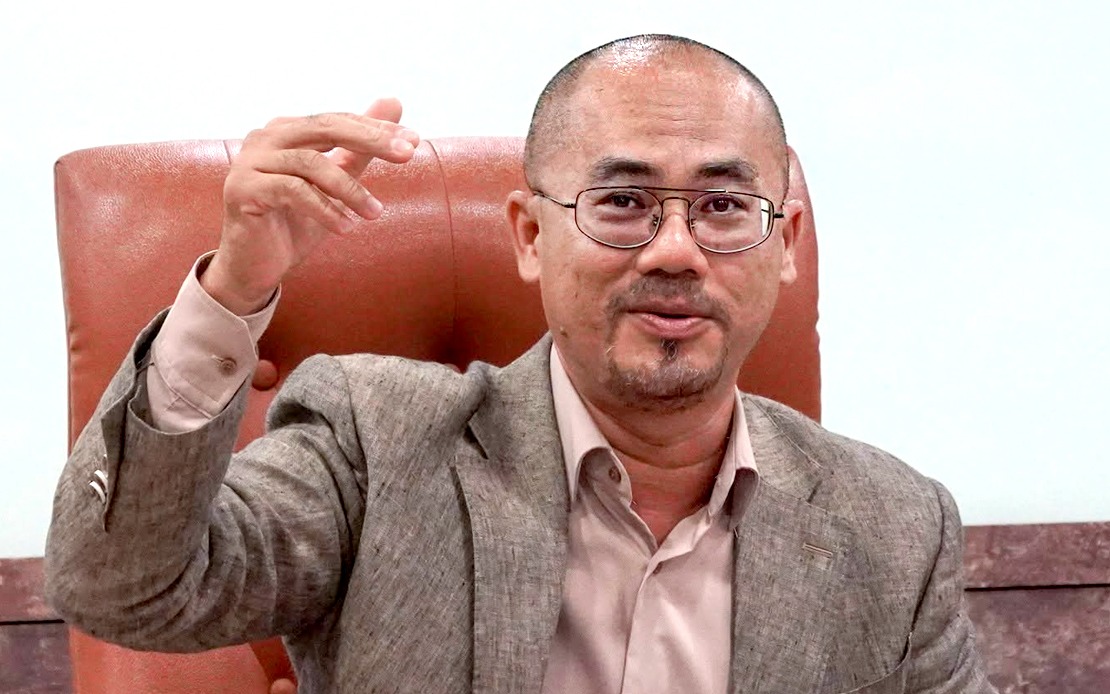
The Perak Islamic Religious and Malay Customs Council (MAIPk) has moved to quash widespread social media speculation that it forcibly ejected traders from premises along Jalan Panglima Bukit Gantang Wahab in Ipoh, characterising the disruption instead as a necessary technical matter tied to deteriorating water infrastructure and substantial financial arrears. Speaking on August 15 following the conclusion of the 2026 Perak State Mosque Committee Convention, chief executive Syamsul Hazeman Md Salleh emphasised that no eviction directive had been issued, and that notices distributed to traders were solely intended to communicate the council's position and shield the institution from unfounded liability claims.
The crux of the difficulty stems from a persistently leaking main water pipeline and accumulated unpaid bills totalling approximately RM100,000—liabilities that MAIPk inherited rather than incurred directly. When the council formally assumed ownership of the land in 2024, these infrastructure challenges and financial obligations were already deeply embedded in the site's history. Rather than representing negligence on MAIPk's part, the situation underscores the complications that religious and charitable institutions frequently encounter when acquiring properties with concealed liabilities, a reality often overlooked in public discourse surrounding such organisations.
During a structured engagement session with affected traders on July 14, MAIPk leadership detailed both the technical necessity for temporarily suspending water supply to enable repair operations and the broader financial context necessitating resolution of outstanding arrears. Syamsul Hazeman emphasised that the water charges themselves did not result from excessive consumption by traders—each business entity had been billed proportionally according to measured usage. Rather, the extraordinary arrears accumulated due to systemic pipeline malfunctions that allowed water to escape the system before reaching consumer outlets, representing a classic infrastructure failure rather than commercial-scale waste or mismanagement by end users.
This distinction carries significant implications for how such disputes should be understood. In many Southeast Asian jurisdictions, including Malaysia, aging water distribution networks frequently suffer from non-revenue water losses—a technical term describing water lost through leaks before delivery. For institutional landlords inheriting problematic infrastructure, these losses create acute financial burdens; zakat funds and waqf resources, which operate under Islamic jurisprudential constraints, cannot legally subsidise such arrears, leaving councils in positions of genuine operational constraint rather than deliberate hardship. MAIPk's public acknowledgment of this limitation demonstrates transparency about the boundaries of religious funding mechanisms.
The council has pivoted toward collaborative problem-solving, engaging directly with the Perak Water Board to develop remedial strategies appropriate to the scale and nature of the infrastructure failure. This represents a measured administrative approach, though Syamsul Hazeman candidly acknowledged that resolution would require extended timeframes given the complexity and the financial magnitude involved. Simultaneously, MAIPk has sought technical and policy guidance from the state government, recognising that interventions of this scope often demand coordination between multiple governmental tiers and statutory bodies responsible for water services regulation and oversight.
Once financial resolution occurs and repair work concludes, MAIPk intends to establish fresh commercial rental arrangements with traders through updated contractual frameworks. This staged approach—addressing infrastructure first, then establishing new commercial terms—provides traders with a clearer pathway forward than the ambiguity that preceded public clarification. For traders themselves, the distinction between temporary operational suspension necessitated by infrastructure work and permanent displacement carries material weight, affecting business continuity planning and investment decisions.
A complicating factor emerges regarding proposed development of a Perak Islamic Religious Department Complex at the site. Syamsul Hazeman indicated that if state government approval materialises and construction commences, traders would necessarily need to relocate to accommodate the project. However, the timeline for such development remains entirely within state government purview, creating uncertainty that extends beyond MAIPk's direct control. This uncertainty itself poses challenges for traders attempting to plan medium-term operations; government development projects frequently experience extended delays or modifications, yet traders must operate under the assumption of potential displacement.
The incident illustrates broader tensions between asset management, infrastructure maintenance, and commercial relationships within Malaysia's Islamic institutional landscape. Religious councils holding substantial property portfolios frequently navigate complex ownership situations where documented infrastructure deficiencies, financial arrears, and regulatory obligations predate their formal acquisition. Public communication becomes critical in such scenarios, as social media can rapidly amplify partial information into narratives of institutional overreach or callousness, regardless of underlying technical realities.
For Malaysian traders and small business operators, the episode reinforces the importance of understanding precise contractual terms regarding property infrastructure maintenance, utility payment responsibilities, and termination conditions. When leasing from institutional landlords, clarity regarding how pre-existing maintenance obligations and arrears are allocated between lessor and lessee can mean the difference between manageable operational challenges and catastrophic business disruption. The engagement session MAIPk conducted on July 14 represented standard administrative practice, yet its relative opacity before public clarification demonstrates how institutional communication strategies materially influence business confidence.
The water arrears situation also touches on broader infrastructure governance questions facing Perak and other Malaysian states. Non-revenue water losses in Malaysian distribution systems frequently exceed tolerable levels, and when these losses accumulate against institutional property owners rather than utility companies themselves, financial incentives for remediation become misaligned. Perak Water Board's responsiveness to MAIPk's engagement will partly determine whether this situation catalyses systemic improvements or remains a localised problem requiring individual institutional intervention.
Moving forward, MAIPk's commitment to transparent dialogue with affected traders, demonstrated through the July engagement and subsequent public clarification, establishes a foundation for managed transition. However, traders require detailed timelines and explicit contractual protections regarding potential development-related displacement, particularly given the project's status within state government planning processes. The council's acknowledgment that resolution will require substantial time provides realistic expectations, though leaves considerable uncertainty regarding operational continuity and investment viability for commercial tenants dependent on the Jalan Panglima Bukit Gantang Wahab location.

