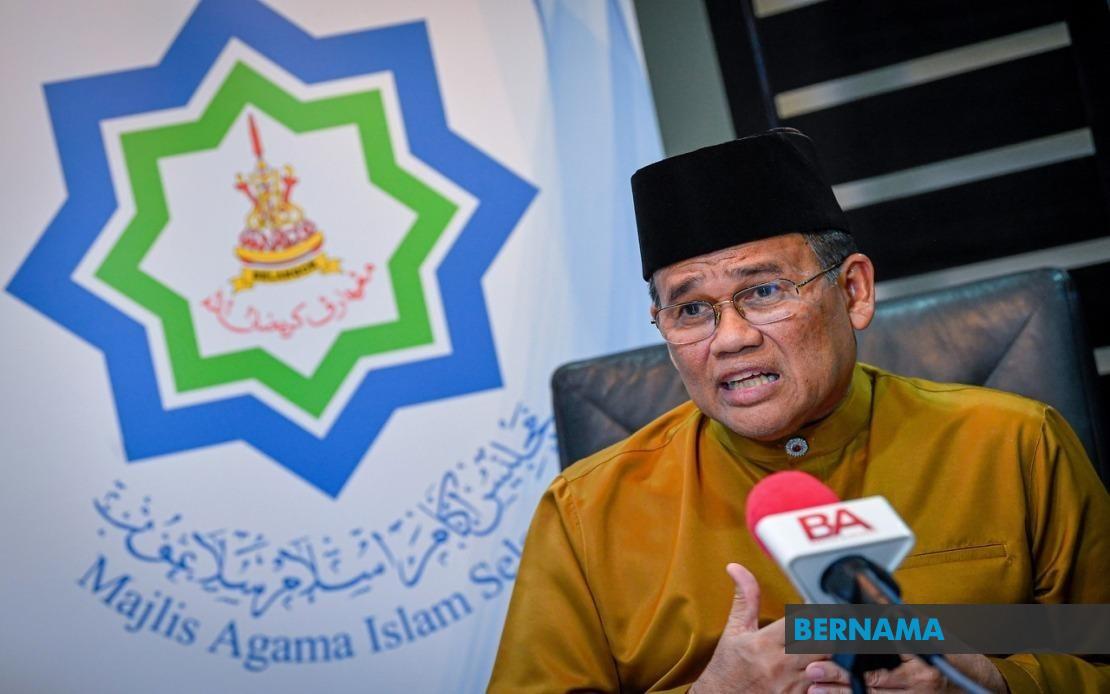
The Selangor Islamic Religious Council (MAIS) has initiated urgent consultations involving all stakeholders in a disputed burial case at Ukay Perdana Muslim Cemetery in Hulu Kelang, signalling the seriousness with which Malaysia's Islamic authorities are treating allegations of procedural failures during funeral arrangements. The emergency gathering will bring together the bereaved family, leadership at Masjid Nurul Hidayah in Kampung Pandan Dalam, the Salatulrahim Welfare Organisation, and officers from the Selangor Islamic Religious Department to examine circumstances surrounding the alleged delay and chart a path toward resolution.
Chairman Datuk Salehuddin Saidin framed the meeting as an opportunity to identify mutually acceptable solutions while preventing recurrence of similar incidents. His statement reflects mounting public concern about the administration of Islamic funeral services in Selangor, where breakdowns in coordination between religious institutions, burial ground operators, and community organisations can compound families' anguish during their most vulnerable moments. The involvement of MAIS—the apex body overseeing Islamic affairs in the state—underscores recognition that systemic improvements may be necessary across how Muslim burial protocols are implemented.
The incident has generated multiple police reports filed by the mosque management, the deceased's family, and the welfare organisation, suggesting fundamental disagreements about responsibility for the delay. This fragmentation of accountability highlights an underlying governance challenge in Malaysia's Islamic funeral sector, where clearer chains of command and responsibility assignments remain underdeveloped. When a family is grieving, confusion over who holds decision-making authority or who bears responsibility for administrative steps can transform what might be routine delays into sources of profound distress.
Salehuddin's acknowledgement of preliminary findings released by JAIS Director Datuk Mohd Shahzihan Ahmad the previous Saturday indicates that initial investigations have already begun assigning preliminary responsibility. However, the chairman's call for police investigation to proceed independently and transparently suggests that MAIS wishes to avoid premature conclusions that could undermine the legitimacy of ultimate findings. In Malaysia's religiously-sensitive environment, how authorities handle such investigations carries weight beyond the immediate case, affecting public confidence in Islamic institution governance more broadly.
The council's commitment to comprehensive review of funeral and burial management procedures across Selangor's mosques addresses a systemic vulnerability. Many Muslim communities may assume that because funeral rites carry profound religious significance, the operational details surrounding them would be equally well-managed. Yet in practice, cemetery operations, scheduling coordination, and communication protocols often operate without the rigorous frameworks that secular institutional contexts increasingly employ. MAIS's undertaking to strengthen these areas reflects a maturing recognition that religious duty and organisational competence must advance together.
For Malaysian bereaved families, the immediate stakes are deeply personal. Islamic law stipulates specific requirements for funeral rites and burial timing, and adherents naturally expect that institutions claiming religious authority will manage these obligations flawlessly. When delays occur—whether from miscommunication, negligence, or resource constraints—they create not only logistical problems but also spiritual distress for families who worry whether Islamic obligations are being properly fulfilled. This case has evidently exposed such concerns to public view.
Salehuddin's statement also emphasised that MAIS will pursue appropriate sanctions against any party found culpable, whether the breach involves criminal wrongdoing, professional negligence, or simple communication failures. This graduated approach acknowledges that not all institutional failures carry criminal intent, yet all merit corrective action. Such language may reflect MAIS's effort to maintain institutional relationships with mosque managements and welfare bodies while simultaneously demonstrating resolve to address genuine problems.
The reference to police investigation's independence carries particular weight in Malaysia, where Islamic authority structures sometimes overlap with civil governance in ways that can create ambiguity about investigative objectivity. By explicitly calling for transparent, impartial police examination, MAIS appears to be signalling that institutional prestige will not shield any party from accountability—a reassurance that grieving families and the broader Muslim community likely needed to hear.
Beyond the immediate case, Selangor's Muslim population should watch whether MAIS's review produces substantive reforms. Many contemporary Malaysian Muslim communities operate with funeral procedures established decades ago, before email, mobile phones, or systematic record-keeping became standard. Updating these systems to incorporate modern administrative safeguards—clear written protocols, communication logs, scheduled confirmation checkpoints—could transform how the state's Islamic institutions handle burial affairs. Such modernisation need not compromise Islamic values; rather, it reflects the principle that religious obligations deserve professional execution.
Salehuddin's final appeal for Muslim unity and against letting disagreements breed hostility addresses another dimension of the controversy. In Malaysian society, religious disputes can rapidly acquire political or communal dimensions if not carefully managed. By framing the incident as an isolated operational failure rather than as evidence of systemic religious corruption, MAIS appears to be attempting to prevent this case from becoming a flashpoint for broader tensions around Islamic institutional credibility.
The practical challenge now lies in execution. Emergency meetings can generate good intentions and formal commitments, yet translating these into sustained procedural improvements requires investment, training, and follow-up. Selangor's mosque networks involve hundreds of institutions with varying resource levels and administrative sophistication. Whether MAIS can develop coherent standards that apply consistently across this diversity remains to be seen. For bereaved families awaiting closure and for a Muslim community concerned about institutional accountability, the coming weeks will prove whether this emergency response catalyses genuine reform or represents a temporary gesture.

