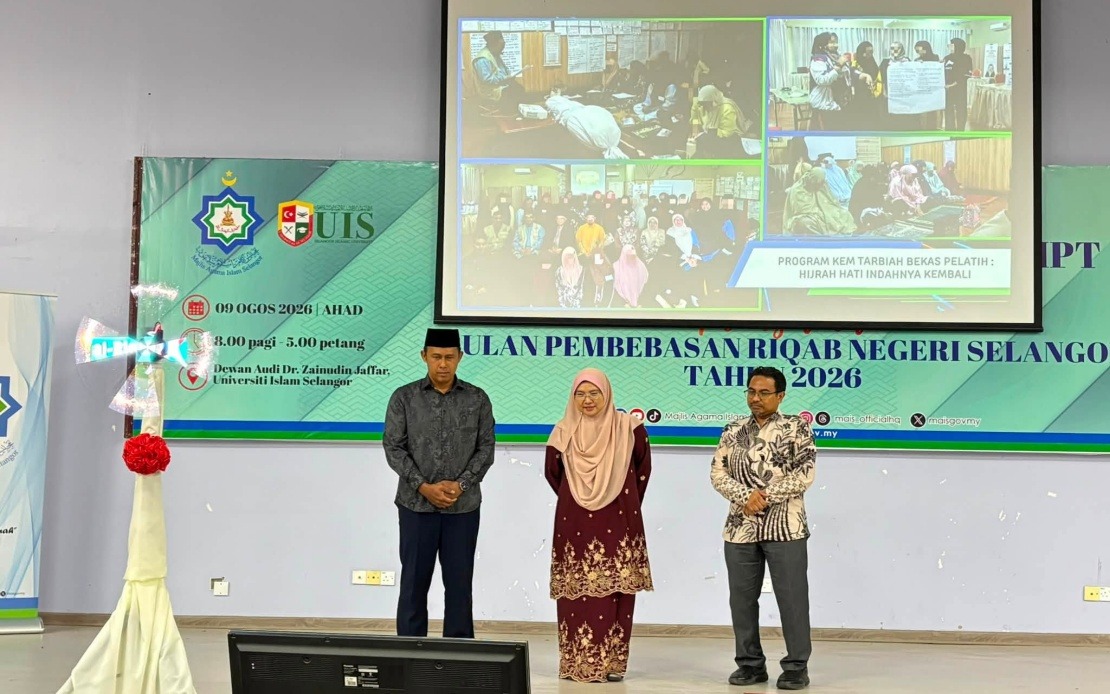
The Selangor Islamic Religious Council (MAIS) has invested substantially in addressing complex social vulnerabilities within the Muslim community, channelling over RM17 million in zakat allocations during the preceding financial year to reach 13,945 individuals classified as asnaf riqab who require multifaceted intervention and support. This significant deployment of religious charitable funds demonstrates a structured institutional response to addressing marginalised populations facing intersecting challenges that span addiction, mental health, social reintegration, and faith-based counselling needs.
The financial commitment reflects MAIS's recognition that social rehabilitation demands sustained investment across multiple service delivery mechanisms. Rather than concentrating resources on emergency relief, the council has constructed a layered ecosystem comprising dedicated residential treatment facilities, specialised training programmes, professional counselling infrastructure, and comprehensive welfare services. This architectural approach acknowledges that individuals requiring asnaf riqab support typically need sequenced interventions combining immediate protection with medium-term skills development and long-term reintegration pathways.
During the first half of this year alone, MAIS extended assistance to 1,656 individuals from this vulnerable cohort using RM4.1 million in zakat resources, suggesting the programme's scale and reach continue accelerating. The annualised trajectory implied by this six-month performance indicates the council remains on course to sustain or potentially exceed previous years' outreach. This consistency matters significantly for individuals dependent on continuity of care, as programme interruptions frequently derail recovery trajectories and reintegration prospects.
Central to MAIS's implementation strategy has been the recruitment and deployment of 213 specialised Al Riqab guides tasked with providing individualised mentorship and pastoral support. These trained practitioners function as bridge figures connecting institutional services with beneficiary populations, offering culturally and religiously grounded guidance designed to facilitate sustainable behavioural transformation. The emphasis on human-centred guidance rather than purely administrative support reflects evolving international best practice in social rehabilitation, where peer mentorship and trusted community figures prove more effective than impersonal bureaucratic processes.
The council operates an extensive service network encompassing three dedicated residential rehabilitation homes alongside 24 additional riqab rehabilitation facilities distributed across Selangor. This geographic and operational diversity enables tailored interventions suited to different vulnerability profiles. Residential facilities serve individuals requiring intensive structured environments, while distributed facilities accommodate those capable of maintaining community engagement whilst accessing targeted support services. This tiered approach optimises resource efficiency whilst respecting the heterogeneity of service user needs.
The asnaf riqab classification itself represents a deliberately inclusive framework addressing individuals experiencing diverse forms of social marginalisation. The 2012 fatwa underpinning this categorisation encompassed substance addiction issues, sexual orientation and gender identity concerns, and faith-based deviation among Muslims. This definitional breadth signals MAIS's commitment to holistic community welfare transcending narrow doctrinal boundaries, acknowledging that social vulnerability manifests through multiple, often interconnected pathways.
To maximise community awareness and participation, MAIS has launched the Riqab Liberation Month Campaign 2026, spanning August in its inaugural formulation. The campaign architecture incorporates educational forums designed to build public understanding of social and faith-related challenges, informational seminars providing practical knowledge, structured guidance programmes delivering intensive support, and community engagement counters facilitating direct access to services. The Selangor Riqab Seminar and Ihtifal Amal Islami Riqab Rehabilitation Homes events represent flagship initiatives designed to destigmatise these support-seeking populations and mobilise broader societal participation in rehabilitation efforts.
For Malaysian policymakers and civil society observers, MAIS's investment model offers instructive precedent for social welfare delivery within religious institutional frameworks. The council demonstrates that Islamic zakat mechanisms can fund comprehensive, professionally administered social services addressing contemporary vulnerabilities including addiction and LGBTQ issues, contrary to assumptions that religious charitable structures operate solely within traditionalist parameters. This capacity for institutional evolution matters as Malaysia grapples with rising social challenges and constrained government budgets, suggesting religious institutions possess untapped potential for evidence-based social intervention.
The programme's regional significance extends beyond Selangor's boundaries. As Southeast Asian countries navigate rising urbanisation, economic dislocation, and substance abuse epidemics, models demonstrating how established religious institutions can systematically address marginalised populations through structured funding mechanisms and professional service delivery warrant attention from neighbouring jurisdictions. The MAIS approach combines spiritual counselling dimensions valued within Muslim-majority societies with evidence-based rehabilitation practices familiar to international social work standards.
Outreach capacity remains the continuing challenge constraining these initiatives. Despite supporting nearly 14,000 individuals annually, asnaf riqab populations likely exceed these figures substantially, particularly given underreporting and social stigma discouraging service-seeking behaviour. MAIS's campaign strategy recognising the necessity for community awareness-raising acknowledges this gap. Building sustainable demand generation alongside expanding service supply will ultimately determine whether such programmes achieve their transformative potential or remain confined to relatively small beneficiary populations.
Moving forward, MAIS has signalled commitment to sustaining and potentially expanding its intervention capacity throughout 2026. The appointment of additional Al Riqab guides and the formalised campaign structure suggest institutional momentum rather than temporary pilot programming. For vulnerable individuals and their families across Selangor, this consistency offers genuine hope for meaningful professional support addressing complex social circumstances that state agencies frequently struggle to manage effectively.

